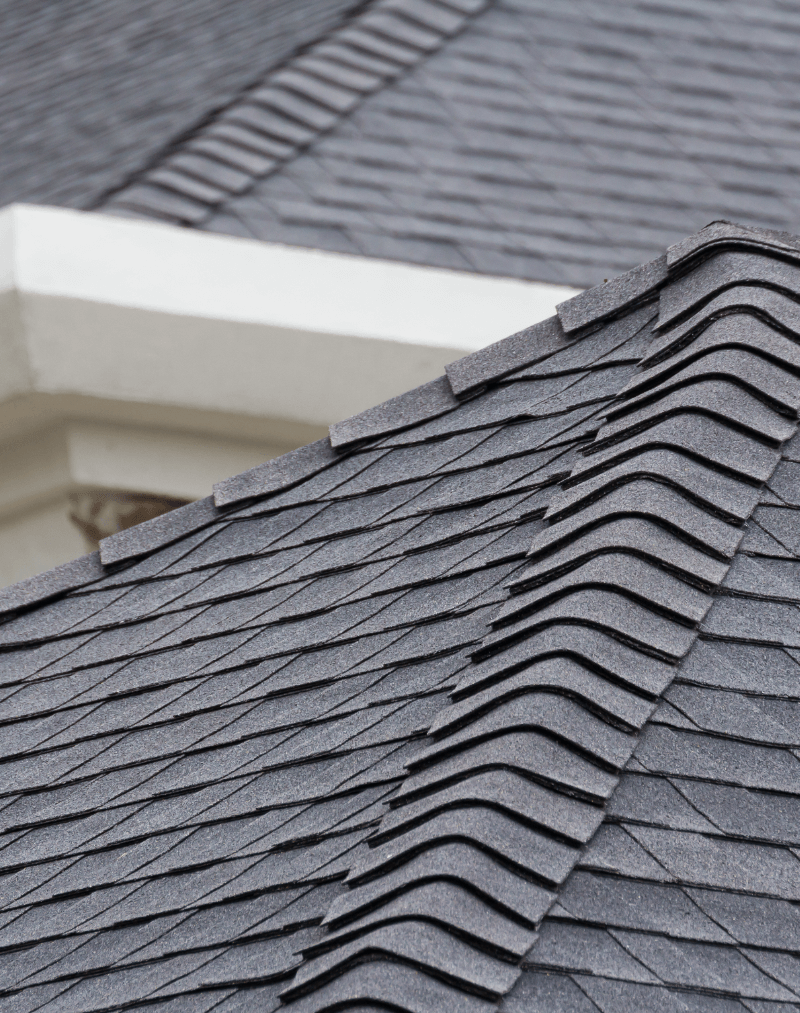
What asphalt shingles are — and the three tiers that matter
An asphalt shingle is built in layers: a fiberglass mat for strength, a coating of asphalt for waterproofing, and a top surface of ceramic-coated mineral granules that block UV rays and give the shingle its color. That granule layer is the part you see, and it is also the part that slowly wears away over the life of the roof. Understanding this construction matters because the differences between cheap and premium shingles come down to how much material is packed into each one.
Asphalt shingles sold in the U.S. fall into three broad tiers, and knowing which tier you are quoting is the single most important factor in comparing prices fairly. A bid that looks cheap may simply be using a lower tier than the bid that looks expensive.
Choosing a tier is a trade-off between budget, how long you plan to stay in the home, and how much wind and weather your region throws at the roof. There is no single 'best' shingle — only the best fit for your situation.
- 3-tab shingles: the flat, uniform, entry-level option. Lowest cost, thinnest profile, shortest lifespan, and the lowest wind ratings. Increasingly being phased out in favor of architectural shingles.
- Architectural (dimensional/laminate) shingles: the most popular choice nationwide. Two layers laminated together create a thicker, textured look, longer life, and better wind resistance — usually for a modest step up in price.
- Premium/designer shingles: heavier, multi-layer shingles engineered to mimic slate or cedar shake. Highest cost, best curb appeal, and often the highest wind and impact ratings.
The pros: why asphalt shingles dominate American roofs
The biggest advantage is value. Asphalt shingles deliver a watertight, attractive, code-compliant roof for a fraction of the cost of metal, tile, or slate. For most homeowners, that cost difference is the deciding factor, and the performance gap has narrowed considerably with modern architectural products.
Beyond price, shingles are versatile and forgiving. They install over almost any roof pitch and shape, come in dozens of colors and profiles, and are stocked by virtually every roofer and supplier in the country — which keeps both material and labor competitive. When a few shingles are damaged in a storm, a roofer can often replace just the affected area rather than the whole roof, something that is far harder with interlocking systems like tile or metal.
- Lowest installed cost of any mainstream roofing material.
- Wide selection of colors, profiles, and styles to match nearly any home.
- Available nationwide, so material and skilled labor are easy to source.
- Repairable in sections — minor damage rarely means a full replacement.
- Modern architectural shingles offer strong wind and (with upgrades) impact resistance.
The cons and trade-offs to weigh
The main drawback is lifespan. Even good architectural shingles will not match the multi-decade service life of metal, tile, or slate, so over a very long ownership horizon you may pay for more than one shingle roof in the time a premium material would have lasted once. For homeowners who plan to stay put for 30-plus years, that math is worth running.
Asphalt is also a petroleum-based product that is sensitive to temperature swings and sun exposure. In hot, high-UV climates, shingles age faster as the asphalt dries out and granules shed. In regions with severe hail, standard shingles can bruise or crack, though impact-rated (Class 4) shingles are available to address that. And while shingles are recyclable in some markets, tear-off waste is a real environmental consideration on a re-roof.
- Shorter lifespan than metal, tile, or slate.
- More vulnerable to heat, intense UV, and hail than premium materials.
- Performance and longevity depend heavily on attic ventilation and installation quality.
- Tear-off generates significant waste; recycling availability varies by area.
Lifespan: what to realistically expect by region
Manufacturers often advertise long warranty periods, but the warranty number and the practical service life are not the same thing. In real-world conditions, 3-tab shingles typically last roughly 15-20 years, architectural shingles roughly 20-30 years, and premium shingles often 25-30-plus years — assuming proper installation and adequate ventilation. Treat these as general ranges, not promises; your roof's actual life depends on your specific conditions.
Climate is the single biggest variable. In the hot, sun-intense South and Southwest, constant heat and UV shorten shingle life toward the lower end of these ranges. In northern and freeze-thaw climates, repeated expansion and contraction plus ice damming stress the roof over winters. Coastal and storm-prone regions add wind uplift and salt exposure, while hail-prone areas in the central U.S. can cut a roof's life short in a single storm. This is why two identical roofs can age very differently depending on where they sit.
Two factors within your control matter as much as climate: ventilation and installation. A poorly ventilated attic traps heat and moisture that cook shingles from below and shorten their life dramatically. And shingles that are nailed incorrectly, under-fastened, or installed over a compromised deck will fail early regardless of how good the product is. Spending on correct installation and proper ventilation is usually the highest-return decision you can make.
- 3-tab: roughly 15-20 years (typical, varies).
- Architectural: roughly 20-30 years (typical, varies).
- Premium/designer: roughly 25-30+ years (typical, varies).
- Hot/high-UV regions trend toward the low end; severe hail can shorten life sharply.
- Proper attic ventilation and correct installation can add years; neglecting them costs years.
Cost: typical ranges and what drives the price
Asphalt shingle roofing is generally priced per square (a 'square' equals 100 square feet of roof area), and the all-in installed cost folds in materials, labor, tear-off of the old roof, underlayment, flashing, disposal, and permits. As a broad national guide, installed asphalt shingle roofing commonly runs somewhere in the range of about $4 to $8 per square foot, with 3-tab at the lower end, architectural in the middle, and premium designer shingles at the upper end and sometimes beyond. These are typical industry estimates that vary widely — they are not a quote.
Several factors push a project up or down within (and outside) those ranges. The points below explain why two homes of similar size can receive very different bids, and why the only reliable figure is one based on an actual look at your roof.
Because so much depends on your specific roof, the right next step is a free assessment rather than a number off a web page. A roofer can measure the actual area, check the deck and ventilation, and account for your region's labor rates and code requirements.
- Roof size and pitch: bigger and steeper roofs cost more in material and labor; steep roofs add safety requirements.
- Shingle tier: premium and impact-rated (Class 4) shingles cost more than 3-tab or standard architectural.
- Tear-off and layers: removing old roofing — especially multiple existing layers — adds labor and disposal cost.
- Roof complexity: valleys, dormers, skylights, chimneys, and steep angles increase flashing work and labor.
- Deck repairs: rotted or damaged sheathing discovered during tear-off adds cost that is hard to predict in advance.
- Region: local labor rates, permit fees, and code requirements vary considerably across the country.
How to choose — and how to protect your investment
Start by matching the shingle tier to how long you intend to own the home and how harsh your climate is. If you expect to move within a decade, a quality architectural shingle is usually the sweet spot. If you are staying long-term in a hail-prone or high-wind region, stepping up to impact-rated or premium shingles can pay off in fewer repairs and a longer interval before the next re-roof.
Just as important as the shingle is the system around it and the crew installing it. Ask any roofer to detail the underlayment, ice-and-water shield in vulnerable areas, flashing approach, ventilation plan, and how they handle unexpected deck damage. Get the scope in writing, compare bids on matching tiers and scope rather than headline price alone, and make sure the work will be permitted where required. A great shingle installed poorly will still fail early.
If your current roof is aging, showing bald spots where granules have worn away, curling or cracked shingles, or leaks, an inspection will tell you whether a repair will hold or whether replacement is the smarter spend. For a clear, no-pressure read on your roof and a realistic estimate for your home and region, call Roof Repairs at (669) 259-2777 for a free roof assessment.
- Match the shingle tier to your climate and how long you'll stay in the home.
- In hail or high-wind regions, consider impact-rated (Class 4) or premium shingles.
- Compare bids on equal tier and scope — not just the lowest sticker price.
- Insist on proper ventilation, quality underlayment, and correct flashing.
- Watch for granule loss, curling, cracking, or leaks as signs it's time for an inspection.