Why Hail Damage Is So Easy to Miss
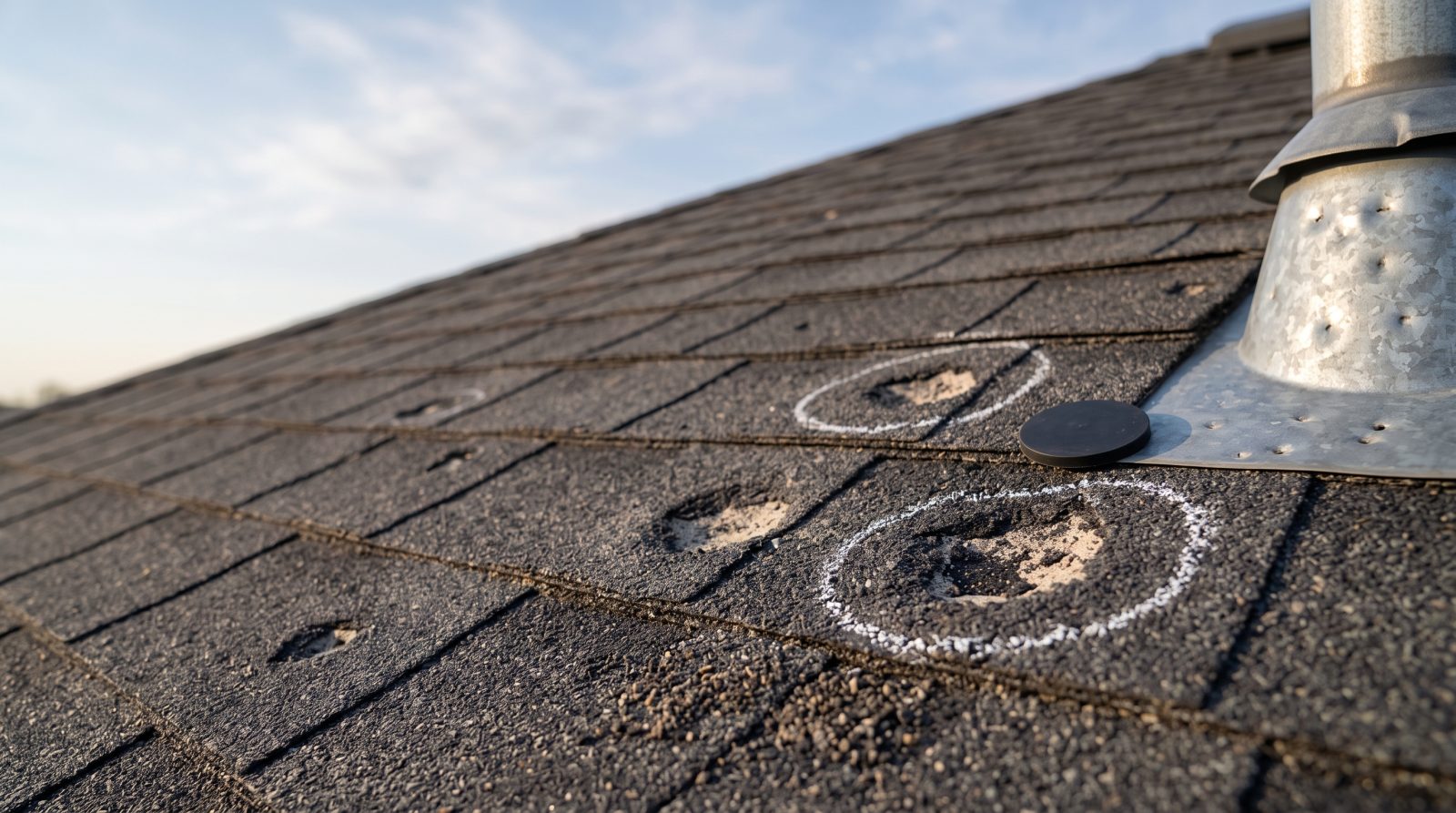
Hail damage is deceptive because the most serious harm is frequently the least visible. A hailstone doesn't have to punch a hole in your roof to do real damage. When ice strikes an asphalt shingle, it can bruise the shingle, fracturing the fiberglass mat underneath and knocking loose the protective granules that shield the asphalt from the sun. From the ground, that shingle can look completely normal. But with its mat cracked and its granule armor thinned, it now ages far faster, becomes brittle, and is much more likely to leak in the next few seasons.
This is what roofers mean by 'functional' versus 'cosmetic' damage. Cosmetic damage affects how a roof looks; functional damage shortens how long it will actually keep water out. A single storm can do both at once, which is why a quick glance is never enough. The goal of a real inspection is to find the functional damage that a casual look would miss.
Climate and region matter, too. Homes across the central United States and Great Plains tend to see larger, more frequent hail, while coastal and southern regions may see hail paired with high winds that lift and crease shingles. Older roofs, roofs that already lost granules to sun exposure, and softer materials like wood shake or older three-tab shingles are all more vulnerable. None of that changes the checklist below, but it does explain why two neighbors can come out of the same storm with very different results.
- Functional damage (cracked mats, exposed asphalt, granule loss) is what threatens your roof's lifespan, not just its looks.
- Damage can stay hidden for months before it produces an interior leak.
- Roof age, prior sun damage, and material type all change how badly a roof reacts to the same hailstorm.
Before You Inspect: Safety and Timing
The single most important rule of any roof inspection is to stay safe. Roofs are steep, slick after rain, and unforgiving of a misstep. You can complete most of this checklist from the ground, from a ladder at the eaves, and from inside your attic, without ever walking the roof surface. If you are not completely comfortable and equipped to be up there, don't be. A view through binoculars and a few good ladder-height photos give you the information you need, and the roof itself can be safely walked by a professional later.
Timing also matters. Inspect as soon as it's safe after the storm passes and the roof is dry. Fresh hail hits look different from old weathering: a recent bruise often shows a clean, dark spot where granules were knocked away, while old damage is faded and rounded at the edges. Documenting promptly also helps if you decide to file an insurance claim, because most policies have time limits for reporting storm damage, and a clear date-stamped record strengthens your case.
Gather a few simple tools before you start. You don't need anything specialized, just enough to look closely and record what you find.
- Never walk a wet, steep, or frosty roof; do as much as possible from the ground, a ladder, and the attic.
- Inspect after the storm passes and surfaces are dry, ideally within days, not weeks.
- Useful tools: binoculars, a phone or camera, chalk to circle hits, a flashlight for the attic, and a tape measure or coin for scale in photos.
- Check the storm date and your insurance policy's reporting window before you wait too long.
The Ground-Level and Perimeter Checklist
Start where it's safest and most revealing: the ground around your house and the metal surfaces at eye level. Hail leaves consistent fingerprints across a property, so if you find clear hits on softer metal items, you have strong reason to believe the roof took hits too. This perimeter walk is also the part of the inspection most homeowners can do confidently on their own.
Walk the full perimeter of the home and look at every soft-metal and painted surface. Hail dents show up readily on these before they're obvious on shingles. Pay attention to the size and spacing of dents, because that tells you how large the hail was and how heavily your property was hit. Then look up at the roof edges, gutters, and any low-slope sections you can see clearly.
If you find damage at this stage, document it carefully. Take wide shots that show the whole surface and close-ups with a coin or tape measure beside the dent for scale. These ground-level findings become important supporting evidence for any roof-level damage you suspect.
- Gutters and downspouts: look for dents and dings on the top edges and faces.
- Metal fascia, flashing, drip edge, and vents: dents and chipped paint are clear hail markers.
- Roof vents, turbines, and chimney caps: soft aluminum dents easily and shows hits well.
- Air conditioner condenser fins, mailbox, garage door, and any metal patio furniture: these confirm hail size and intensity.
- Window screens, wraps, and siding: cracks, dents, and dings round out the picture.
- Ground and deck: scattered granules washed off the roof often collect at downspout outlets and along the base of the house.
Inspecting the Roof Surface by Material
Hail damage looks different depending on what your roof is made of, so it helps to know the specific signs for your material. Whether you're using binoculars from a ladder or a pro is walking the roof, these are the patterns that distinguish genuine hail impacts from ordinary wear, blistering, or foot traffic. The most telling clues are randomness and freshness: real hail damage is scattered with no pattern, and fresh hits expose darker asphalt where granules were knocked free.
For asphalt shingles, the most common roofing material in the country, look for round, dark bruises where granules are missing, soft spots that give slightly when pressed (a sign the mat is fractured), and shiny exposed asphalt. Hail bruises are random in placement, unlike the straight lines left by foot traffic or the uniform pattern of manufacturing blisters. Check all slopes, because hail driven by wind often hits one or two sides much harder than the others.
Other materials each have their own signature. Knowing them helps you avoid both missing real damage and mistaking normal aging for a storm hit.
- Asphalt shingles: random round bruises, missing granules exposing dark asphalt, soft spots underfoot, and fractured or cracked mats.
- Wood shakes/shingles: fresh splits with sharp, unweathered edges, often with impact marks at the center or dents at the corners.
- Metal roofing/panels: visible dents and dimpling; rarely leaks immediately but can compromise coatings and seams over time.
- Tile (clay or concrete): cracked, chipped, or shattered tiles, especially at corners and edges; broken tiles expose the underlayment.
- Flat/low-slope membranes: punctures, fractures, or circular bruise marks in the membrane that can hold water.
- Telltale signs across all types: damage is random (not in lines), edges look fresh and clean, and soft areas indicate the layer beneath is compromised.
Don't Forget the Attic and the Inside
A complete hail inspection doesn't stop at the roof surface. The attic is where you confirm whether any damage has already let water in, and it's often where the earliest evidence of a developing problem appears. Bring a flashlight and look on a day after rain, when fresh moisture is easiest to spot.
Scan the underside of the roof deck, the rafters, and the insulation for any signs of moisture: dark staining, damp spots, drips, or a musty smell. Water travels, so a stain on the ceiling of a room below may originate several feet away along a rafter. Also look for daylight coming through the deck, which points to a puncture, and for any granule buildup that has worked its way into the attic through vents or gaps.
Inside the living space, walk each room and look at ceilings and the tops of walls, especially around light fixtures, vents, and the corners of rooms below the roof. Fresh water stains, bubbling paint, or sagging drywall are signs that hail damage may already be allowing intrusion. Catching this early is the difference between a simple repair and dealing with rot, mold, or damaged insulation later.
- Check the underside of the roof deck and rafters for stains, damp spots, or daylight showing through.
- Inspect insulation for moisture, matting, or granules that washed in.
- Look for a musty, damp smell, which can indicate hidden moisture even without visible stains.
- Inside rooms: scan ceilings and upper walls for new water stains, bubbling paint, or sagging.
Documenting Damage and Knowing When to Call a Pro
Good documentation turns a worried hunch into a clear record you can act on. As you work through the checklist, photograph everything: wide shots that establish which slope or area you're looking at, and close-ups with a coin or tape measure for scale. Note the date of the storm, mark hits with chalk so they show up in photos, and keep a simple written list of where you found damage and what type. If you ever pursue an insurance claim, this organized evidence is far more persuasive than a few blurry photos taken after the fact.
There's a point where a do-it-yourself look should hand off to a professional. If you find soft spots, fractured mats, cracked tiles, punctures, any interior staining, or widespread granule loss, it's time to bring in an experienced roofer who can safely walk the roof and assess the full extent of functional damage. The same is true if you simply can't get a clear view, if the roof is steep or high, or if you're preparing an insurance claim and want a thorough assessment. A professional can also tell the difference between fresh hail damage and ordinary aging, which is often the hardest call to make from the ground.
Roof Repairs offers free roof assessments to homeowners and business owners nationwide. If you've had a hailstorm and want confidence about your roof's condition, or you've already spotted something concerning on this checklist, call (669) 259-2777 for a free assessment and a clear explanation of what your roof needs.
- Photograph wide and close-up shots, with a coin or tape measure for scale.
- Record the storm date, mark hits with chalk, and keep a written list of findings.
- Call a professional if you find soft spots, cracks, punctures, interior stains, or heavy granule loss, or if you can't get a safe, clear view.
- Free nationwide roof assessment available at (669) 259-2777.