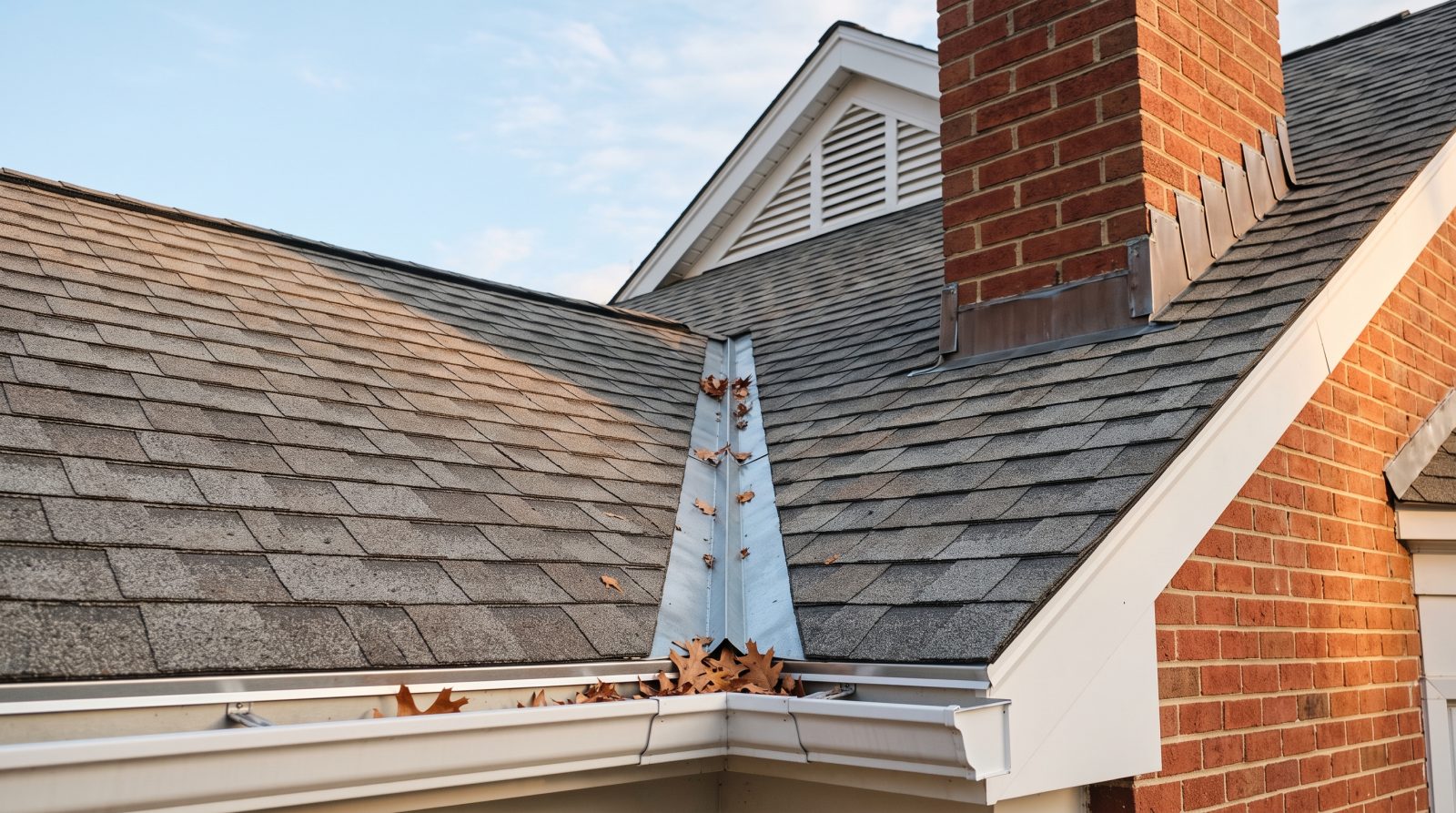
Why Roofs Leak: It's Rarely the Shingles
When people picture a roof leak, they imagine a broken or missing shingle letting water straight through. In reality, the field of the roof — the broad expanse of shingles or panels — is the part engineered most carefully and tends to fail last. Far more leaks begin at the roof's transitions and penetrations: the places where the roofing material stops and meets something else.
Understanding this changes how you protect your roof. Instead of staring at the shingles, you focus your attention on the seams, edges, and any object that pokes through the surface. Water is relentless and patient: it follows gravity, finds the smallest gap, wicks sideways against the slope through capillary action, and can travel several feet from the actual entry point before it shows up as a stain. That's why the visible water spot on your ceiling is almost never directly below the real leak.
A second truth worth internalizing: a roof is a system, not just a surface. Underlayment, flashing, ventilation, gutters, and the decking beneath all work together. A failure in one component — say, an attic that traps humid air — can degrade the others from the inside out long before a single shingle looks worn.
- Flashing failures — around chimneys, walls, skylights, and valleys — are among the most common leak sources on any roof.
- Penetrations: plumbing vent pipes, exhaust fans, and satellite/solar mounts each create a hole that depends on a seal or boot to stay watertight.
- Valleys, where two roof planes meet, concentrate huge volumes of runoff and wear faster than flat areas.
- Clogged or undersized gutters cause water to back up under the roof edge.
- Ice dams in cold climates force melted water uphill, under the shingles.
- Aging sealant and cracked rubber pipe boots — cheap parts that quietly fail in 8–15 years.
Flashing, Seals, and Penetrations: Guard the Weak Points
If you only maintain one part of your roof, make it the flashing and the penetrations. Flashing is the thin metal that bridges the gap between roofing and a vertical surface — a chimney, a dormer wall, a skylight curb. When it's installed correctly and kept sealed, it channels water back onto the roof. When the sealant dries out, the metal lifts, or a counter-flashing pulls loose, water walks straight into the structure.
Rubber pipe boots deserve special attention. Every plumbing vent on your roof passes through a collar of rubber or synthetic material, and that material is exposed to relentless UV and temperature swings. It's one of the most predictable failures on any roof, often cracking right where the pipe exits. A cracked boot can usually be replaced inexpensively — but only if you catch it before water has been seeping into the decking for a season or two.
From the ground with binoculars, or carefully from a stable vantage point, look for sealant that has pulled away or crazed into a network of fine cracks, flashing that no longer sits flush, exposed nail heads (which should be sealed), and any boot that looks dried, split, or sun-bleached. These are the items most worth fixing early, because the repair is small but the damage they enable is not.
- Inspect chimney and wall flashing for lifted edges, rust, or gaps in the sealant line.
- Check every plumbing vent boot for cracks, splits, or a hardened, chalky surface.
- Look for exposed or backing-out nails; each is a pinhole waiting to leak.
- After any roof-mounted work — solar, satellite dish, new vent — confirm the penetration was properly flashed and sealed, not just caulked.
- Re-seal with a roofing-grade sealant, not generic hardware-store caulk, which degrades faster in sun and weather.
Water Has to Go Somewhere: Gutters, Drainage, and Slope
A roof's job is only half done when water reaches the edge — it still has to get away from the house cleanly. Gutters and downspouts are the unglamorous heroes here, and neglecting them is one of the fastest ways to create a leak. When gutters clog with leaves, granules, and debris, water pools and backs up under the lowest course of shingles, where there's the least protection. Over time it rots the fascia, the roof edge, and eventually the decking.
Standing water is the enemy on any roof, but especially on low-slope and flat roofs common on additions, porches, and many commercial buildings. Ponding water finds seams and degrades membranes far faster than water that drains promptly. Keeping drains, scuppers, and the slope itself clear is essential maintenance, not optional.
Drainage problems also extend below the roofline. Downspouts that dump water against the foundation, or gutters pitched the wrong way, push moisture where it shouldn't be. While that's a foundation and basement issue more than a roof one, it's part of the same principle: control where water goes, and you control most of the damage it can do.
- Clean gutters at least twice a year — more often under heavy tree cover or after storms.
- Make sure downspouts are clear and extend water several feet from the foundation.
- On flat or low-slope roofs, keep drains and scuppers free of debris and watch for ponding that lingers more than 48 hours after rain.
- Check that gutters are still firmly attached and pitched toward downspouts, not sagging.
- Trim overhanging branches that drop debris and can scrape or puncture the roof surface in wind.
The Hidden Driver: Attic Ventilation and Insulation
Some of the most damaging 'leaks' never come from rain at all — they come from inside the house. Warm, humid air rises into the attic from kitchens, bathrooms, and daily living. If the attic isn't properly ventilated, that moisture condenses on the cold underside of the roof deck, drips back down, and produces stains, mold, and rot that look exactly like a roof leak. Homeowners often pay to chase a phantom leak that's really a ventilation problem.
Balanced ventilation — intake at the soffits or eaves and exhaust near the ridge — lets the attic breathe, carrying heat and moisture out. In summer it keeps the attic from baking the shingles from below, which can shorten a roof's life. In winter it keeps the roof deck cold and even, which is the single most effective defense against ice dams.
Insulation works hand in hand with ventilation. Adequate, properly placed insulation keeps your living space warm without letting heat escape into the attic and melting the snow above unevenly. Bathroom and kitchen exhaust fans should always vent fully outside — never into the attic, which is a surprisingly common and damaging mistake.
- Confirm soffit/eave intake vents are not blocked by insulation, paint, or debris.
- Ensure ridge, gable, or other exhaust vents are present and unobstructed for balanced airflow.
- Vent all bathroom and kitchen exhaust fans to the exterior, never into the attic.
- Look for attic warning signs: damp insulation, rusted nail tips, musty smell, or dark staining on the underside of the deck.
- In cold regions, prioritize attic air-sealing and insulation to prevent the uneven snowmelt that creates ice dams.
A Seasonal Prevention Routine That Works Across Climates
Roof leaks are best prevented on a schedule, not in a panic. A simple, twice-a-year rhythm — typically spring and fall — catches the small problems while they're still small. Spring inspections reveal damage from winter's freeze-thaw cycles and storms; fall inspections make sure everything is sealed and clear before the harshest season arrives. Adding a quick visual check after any major storm closes the gap.
Climate shapes the priorities. In the hot, sun-baked Southwest, UV degradation of sealants, boots, and shingles is the leading concern, so those components age faster and warrant closer watching. In the freeze-prone North and Midwest, ice dams and freeze-thaw cracking dominate, making attic ventilation and clear gutters critical heading into winter. Hurricane- and storm-belt regions along the Gulf and Southeast contend with wind uplift and wind-driven rain, where loose edges and flashing matter most. In the rainy Pacific Northwest, persistent moisture means moss, algae, and chronic dampness are the bigger threats, calling for cleaning and good drainage.
You don't need to climb on a steep or wet roof to do most of this — much can be assessed from the ground with binoculars, from a ladder at the eaves, or from inside the attic. Document what you see over time so you can spot trends. And know your limit: anything involving walking a steep slope, working at height, or a problem you can't clearly diagnose is the right moment to bring in a professional.
- Spring: inspect for winter damage — lifted shingles, cracked sealant, gutter debris, and attic moisture.
- Fall: clear gutters, reseal questionable flashing, and confirm vents are open before winter.
- After every major storm: scan for missing shingles, displaced flashing, and new debris in gutters.
- Inside the attic: check after heavy rain and during cold snaps for any sign of moisture or condensation.
- Hot/sunny regions: watch sealants, pipe boots, and shingle aging closely. Cold regions: prioritize ventilation and ice-dam prevention. Wet regions: stay ahead of moss and drainage. Storm-prone regions: keep edges and flashing tight.
Early Warning Signs and When to Call a Pro
Catching a leak in its earliest stage is what separates a minor repair from a major one. The cheapest fix is always the one you make before water reaches the structure. Train yourself to notice the quiet, early signals — most of them appear well before you see water actually dripping.
Inside, watch for faint discoloration or 'water rings' on ceilings and upper walls, paint or wallpaper that bubbles or peels, a sudden musty odor, or unexplained spikes in humidity. In the attic, look for dark streaks on rafters and decking, damp or compressed insulation, and daylight showing through gaps. Outside and from the ground, granules collecting in gutters (they look like coarse sand), curling or buckling shingles, and visibly worn flashing all point to a roof nearing trouble.
When you do find a problem, weigh the repair carefully. Small, accessible fixes — resealing a flashing joint, replacing a cracked pipe boot — are reasonable for a capable homeowner who can work safely. But steep roofs, heights, electrical proximity, structural rot, recurring leaks, or anything you can't confidently diagnose are jobs for a professional. The cost of roof repair varies widely by region, roof type, material, pitch, and how far the damage has spread — figures you'll see quoted are typical industry estimates that vary, not fixed prices, and a real assessment is the only way to know what your situation requires.
- Interior signs: ceiling stains or rings, peeling paint, musty smell, rising indoor humidity.
- Attic signs: dark streaks on wood, damp insulation, visible daylight, condensation.
- Exterior signs: shingle granules in gutters, curling/missing shingles, worn or lifted flashing.
- DIY-appropriate: small, safe, ground- or eave-level sealing and boot replacement.
- Call a pro for: steep or wet roofs, heights, structural rot, recurring or unexplained leaks, and full assessments.
- Roof Repairs provides nationwide roofing help — call (669) 259-2777 for a free roof assessment and evaluation before a small issue becomes a costly one.