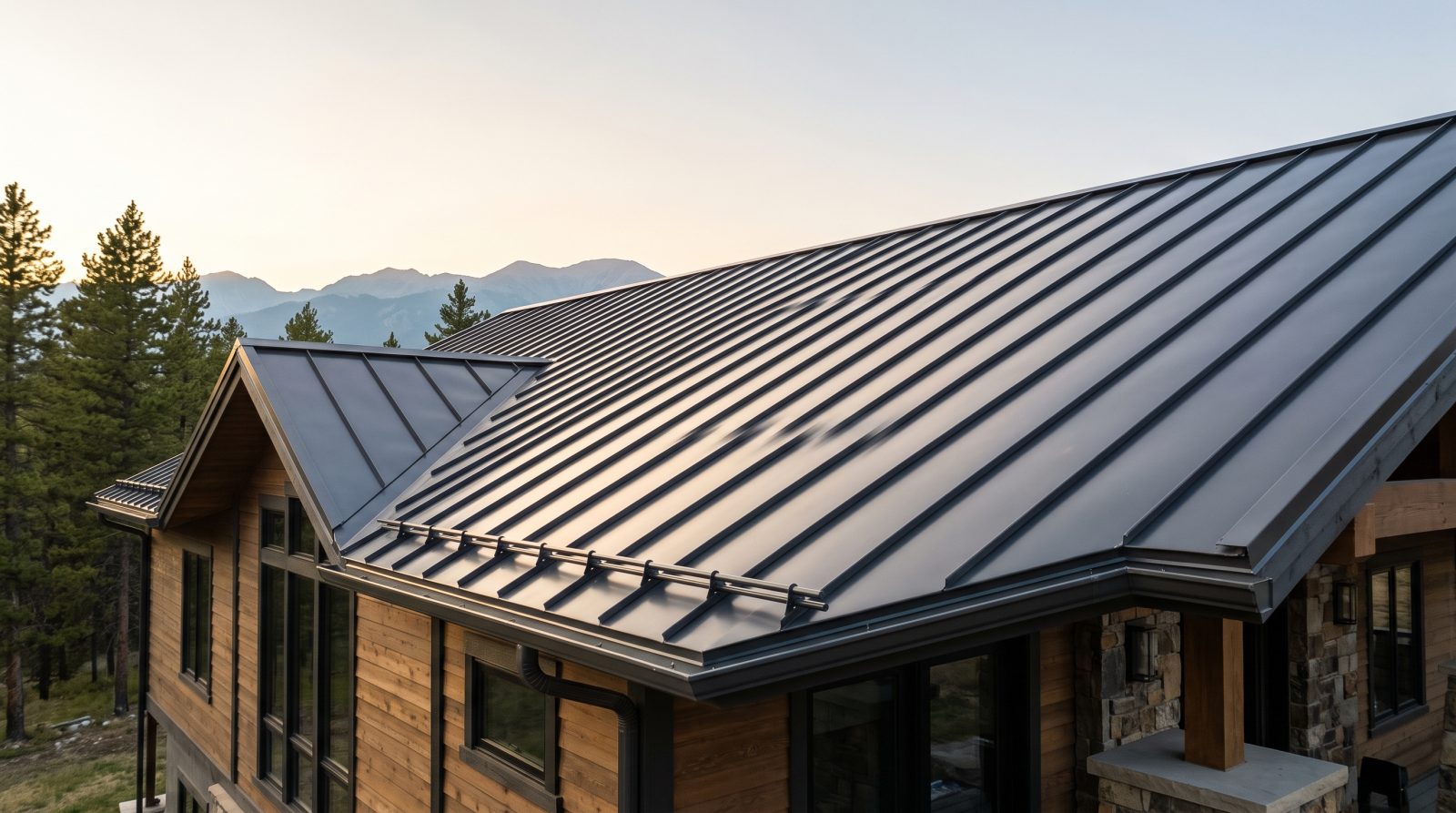
What "Metal Roofing" Actually Means
Metal roofing is a broad category, and the differences between products matter more than most homeowners expect. At the highest level, metal roofs split into two families: standing seam (vertical panels with concealed, raised seams) and exposed-fastener or metal shingle systems (panels or individual pieces fastened through the face, or designed to mimic shingles, tile, and slate). The family you choose drives the look, the lifespan, the installation cost, and how the roof behaves over decades of expansion and contraction.
Just as important is the base metal and its coating. The same panel profile can perform very differently depending on what it's made from and how it's finished. Coatings are what protect the metal from corrosion and hold color, so a quality finish is not a cosmetic upgrade — it's central to how long the roof looks good and stays watertight. Across the United States, the right metal and coating combination depends heavily on your climate: coastal salt air, desert UV, heavy snow loads, and humid storm belts each reward different choices.
- Steel (galvanized or Galvalume): the most common and cost-effective residential metal; strong, widely available, and durable when properly coated.
- Aluminum: naturally corrosion-resistant and a strong pick for coastal and high-salt environments where steel can struggle.
- Copper and zinc: premium, long-lived architectural metals that develop a natural patina; beautiful and extremely durable, but a significant investment.
- Coatings matter: high-performance paint finishes (often PVDF/Kynar-based) hold color and resist fading and chalking far better than economy finishes.
The Main Types of Metal Roofing
Standing seam is the system most people picture when they imagine a modern metal roof: clean vertical lines and no visible screws on the roof field. Because the fasteners are hidden beneath the raised seams, there are fewer exposed penetrations to leak and the panels can expand and contract freely with temperature swings. That movement tolerance is a real advantage in climates with hot days and cold nights, and it's a big reason standing seam tends to be the longest-lasting metal option. It's typically the premium choice for homes and a workhorse for low-slope commercial roofs.
Exposed-fastener panels (sometimes called corrugated or ribbed panels) are fastened through the face of the metal with gasketed screws. They cost less and install faster, which makes them popular for outbuildings, agricultural structures, porches, and budget-conscious projects. The trade-off is that the rubber washers on those exposed screws are the system's weak point — they age, and over the decades they generally need to be inspected and eventually re-fastened or replaced to keep the roof watertight.
Metal shingles, shakes, tiles, and stone-coated steel are designed to deliver the durability of metal in the look of traditional roofing. Stone-coated steel, in particular, carries a layer of stone granules that mute the appearance and the sound while keeping the strength and fire resistance of steel. These products let homeowners get metal performance without the distinctly modern standing-seam aesthetic, and they often suit neighborhoods or HOAs where a more conventional roofline is expected.
- Standing seam: concealed fasteners, sleek vertical panels, excellent longevity — premium residential and commercial.
- Exposed-fastener / corrugated: lower cost, fast install, exposed screws that need periodic attention; great for outbuildings and budgets.
- Metal shingles / shakes / tile profiles: metal durability in a traditional look.
- Stone-coated steel: granule-coated panels that mimic tile or shake with strong fire and impact resistance.
The Real Benefits (and the Honest Trade-Offs)
The headline benefit of metal is longevity. A well-installed, quality metal roof can comfortably outlast multiple asphalt shingle roofs, which is why many homeowners view it as a once-in-a-lifetime decision rather than a recurring expense. Metal is also non-combustible, which is increasingly important in wildfire-prone regions where roofs need to resist airborne embers, and it generally performs well in high wind when the system is engineered and fastened correctly.
Energy performance is another genuine advantage, especially in hot and sunny climates. Reflective and cool-rated metal finishes bounce away a meaningful share of solar heat, which can reduce attic temperatures and ease the load on air conditioning during summer. Metal is also lightweight compared to tile and slate, sheds snow and rain efficiently, and is highly recyclable at the end of its life — points that matter to homeowners thinking about sustainability.
It's only fair to name the trade-offs. Metal costs more up front than asphalt shingles, and the long-term savings only pay off if you keep the home long enough to benefit. Installation is specialized — metal is far less forgiving of poor workmanship than shingles, so the quality of the installer matters enormously. Some homeowners worry about noise, but with proper decking and underlayment a metal roof is generally no louder than other roofs in rain. Lower-quality panels can also show oil-canning (slight waviness) or, with cheap finishes, fade over time, which is why material and installer selection are so important.
- Long service life that can span decades with minimal major work.
- Non-combustible and a strong choice in wildfire and high-wind regions.
- Cool-rated finishes can lower summer cooling costs in hot climates.
- Lightweight, recyclable, and efficient at shedding rain and snow.
- Trade-offs: higher upfront cost, specialized installation, and finish/quality differences that are easy to get wrong with the wrong product or crew.
How Long Does a Metal Roof Last?
Lifespan depends on the metal, the coating, the system, and the installation — but as a general rule, metal roofs are among the longest-lasting options available to homeowners. Standing seam systems with high-performance finishes tend to be the most durable, often lasting several decades when properly installed and maintained. Exposed-fastener panels can also last a long time, but their service life is tied closely to the condition of the rubber washers on the exposed screws, which age faster than the metal itself.
Architectural metals like copper and zinc are in a class of their own and can last generations, which is part of why they command a premium. Aluminum's natural corrosion resistance makes it a standout in coastal and salt-heavy environments where other metals are stressed. In every case, longevity assumes good detailing at the vulnerable points — flashings, valleys, penetrations, and seams — because that's almost always where roofs fail first, regardless of material.
Maintenance for metal is light but not zero. Periodic inspections to check fasteners and sealants, clearing debris that traps moisture, and addressing minor issues before they grow will help any metal roof reach the high end of its potential life. The single biggest variable, more than the brand of panel, is the quality of the original installation.
Typical Metal Roofing Costs
Metal roofing generally costs more up front than asphalt shingles, and the range is wide because it spans everything from basic exposed-fastener panels to premium copper. As a rough national guide, exposed-fastener and entry-level metal systems tend to land at the lower end, standing seam in the middle-to-upper range, and architectural metals like copper and zinc at the very top. These are typical industry ranges, not a quote — your actual price depends on the specifics of your roof.
Several factors move the number significantly. Roof size and pitch affect both material and labor; steep and complex roofs with many valleys, dormers, hips, and penetrations cost more to flash and finish correctly. The metal and coating you choose can swing the price substantially, as can whether the old roof needs to be torn off and whether the decking underneath needs repair. Regional labor rates and climate-driven requirements — wind ratings, snow load detailing, fire-resistant assemblies — also factor in.
The most useful way to think about metal is total cost of ownership rather than sticker price. A roof that lasts decades and may reduce cooling bills can compare favorably over time against cheaper materials that need replacing more often — but only if you plan to stay in the home long enough to capture that value. Because the variables are so specific to each roof, the only way to know your real number is a proper on-site assessment and a written estimate.
- Exposed-fastener / entry-level metal: typically the most affordable metal option (estimate; varies).
- Standing seam: generally a mid-to-upper range investment for its longevity and clean look (estimate; varies).
- Copper / zinc and specialty architectural metals: premium tier, the highest cost (estimate; varies).
- Price drivers: roof size and complexity, metal and coating choice, tear-off and decking repairs, and regional labor and climate requirements.
Is Metal Roofing Right for Your Home?
Metal tends to make the most sense for homeowners who plan to stay in their home for the long haul, who value durability and low long-term maintenance, or who live in regions where fire resistance, wind performance, or summer heat make metal's strengths especially valuable. It's also a natural fit for those drawn to the modern standing-seam look or who want metal performance in a more traditional shingle, shake, or tile profile.
It may be less compelling if you expect to move in a few years and won't be around to recoup the higher upfront cost, or if budget is the single overriding factor. Even then, the right product choice can narrow the gap — and a knowledgeable assessment of your specific roof, climate, and goals is the best way to weigh it honestly. The decision isn't just "metal or shingles"; it's which metal, which coating, and which system for your particular situation.
If you're weighing metal roofing for your home or building anywhere in the country, the smartest next step is an expert eye on your actual roof. Call Roof Repairs at (669) 259-2777 for a free roof assessment and quote, and we'll help you compare your real options based on your roof, your climate, and your plans.