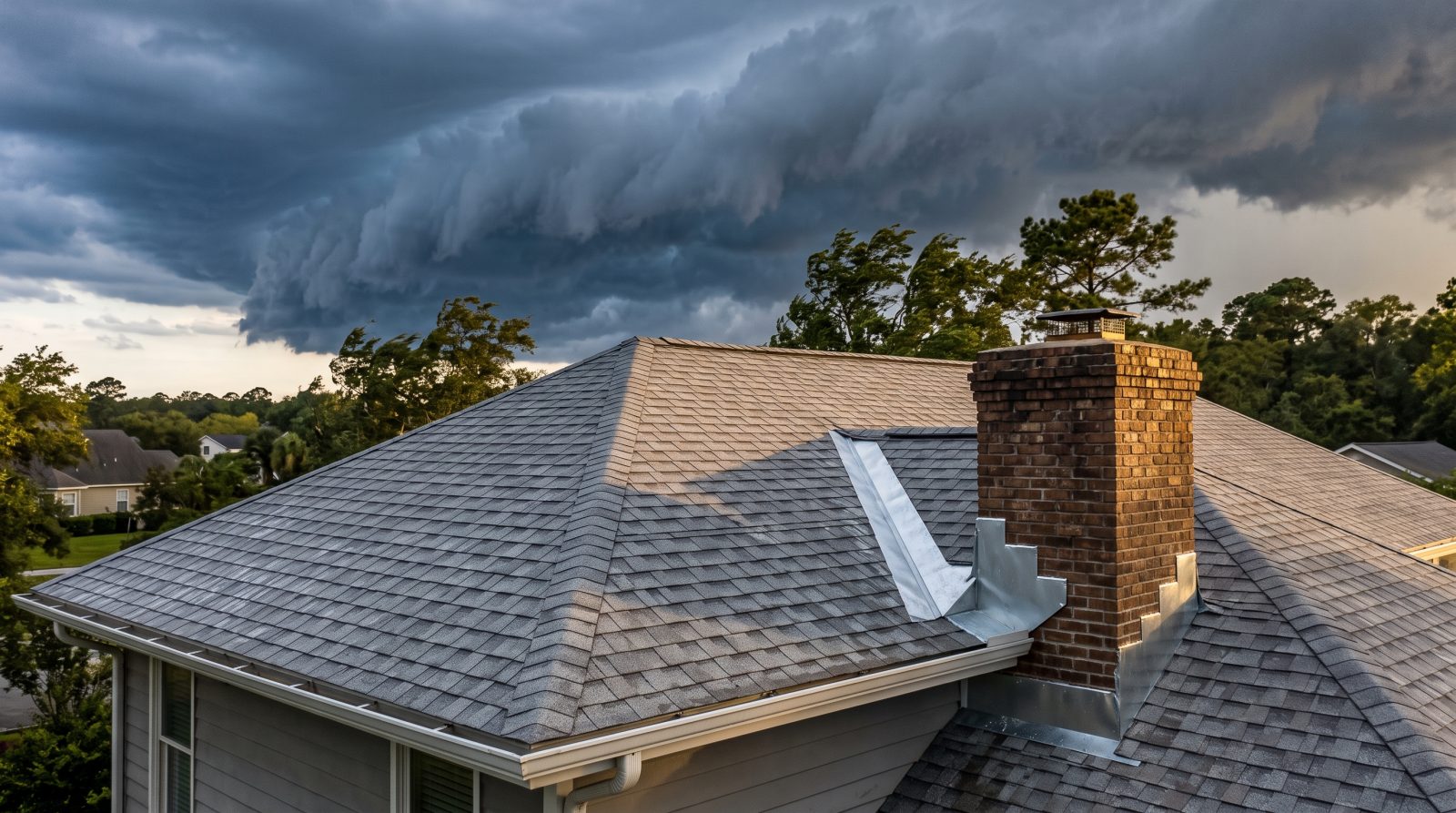
Why Storm Prep Starts Long Before the Forecast
The biggest myth about storm damage is that it is purely a matter of how strong the storm was. In reality, two homes on the same street can take the same wind and rain, and one comes through fine while the other ends up with water in the attic. The difference is almost always condition. Wind finds the loose shingle, the lifted edge, the cracked sealant, or the corroded fastener and works it like a lever. Rain finds the gap that was already there. A storm rarely creates a new problem out of nothing. It exposes and exploits the weaknesses that already existed.
That is why the most valuable storm preparation happens on a clear, calm day, not when the radar is already lighting up. When you inspect and shore up your roof ahead of time, you are removing the easy entry points before the weather can use them. Think of it the way you would think of maintaining brakes on a car: you do not wait for the moment you need them to find out whether they work.
Preparation also changes what happens after the storm. A roof that was documented, photographed, and maintained beforehand gives you a clear before-and-after picture. That makes it far easier to tell genuine storm damage from pre-existing wear, which matters enormously when you are deciding whether to repair, file a claim, or call in a professional for an honest assessment.
- Most storm damage exploits existing weaknesses rather than creating brand-new ones.
- The best prep window is calm weather, not the hours before a storm.
- Pre-storm documentation makes post-storm decisions and claims far clearer.
The Pre-Storm Roof Inspection: What to Check and How
A thorough pre-storm inspection does not require you to climb onto a steep or slick roof, which is genuinely dangerous and best left to professionals. A great deal can be assessed safely from the ground with binoculars, from a stable ladder at the eaves, and from inside your attic. The goal is to find the small things that wind and water love before they become big things.
Start with the roof surface. On asphalt shingle roofs, look for shingles that are curling, cupping, cracked, or missing, and for bald patches where the protective granules have worn away. On metal roofs, look for loose or backed-out fasteners and any lifted or separated panels. On tile roofs, scan for cracked, slipped, or missing tiles. Pay special attention to the edges and ridges, because that is where wind gets its first grip.
Next, examine the flashing, which is the metal that seals the joints around chimneys, vents, skylights, and where the roof meets walls. Flashing failures are one of the most common sources of storm leaks. Look for rust, gaps, lifted edges, or dried, cracked sealant. Then check the gutters and downspouts, because a clogged drainage system turns heavy rain into pooling water that backs up under shingles and overflows against the fascia.
Finally, go into the attic with a flashlight on a dry day. Water stains, dark streaks on the underside of the decking, daylight coming through at the edges, or a damp, musty smell are all signs of an existing leak path that a storm will only widen. If you find any of these and are not comfortable diagnosing the source, that is exactly the point to bring in a professional for a closer look.
- Shingles: curling, cracked, missing, or granule-bald spots, especially at edges and ridges.
- Flashing: rust, gaps, lifted metal, or cracked sealant around chimneys, vents, and skylights.
- Gutters and downspouts: clear of leaves and debris so heavy rain can actually drain.
- Attic: water stains, daylight at the edges, sagging decking, or a musty smell.
- Stay off steep, wet, or high roofs; inspect from the ground, the eaves, or the attic instead.
Reinforcing the Most Vulnerable Spots
Once you know where your roof is weak, the next step is to address the specific spots that fail first. Roofs do not usually peel off all at once. Damage typically begins at a single point of leverage and spreads from there, so reinforcing those points has an outsized payoff.
Loose and lifted shingles are the classic example. A shingle that is no longer fully sealed down acts like a flap in the wind, and once it lifts, the wind can get underneath and tear away the ones around it. Resealing or replacing those shingles before a storm removes that starting point. Damaged or aging flashing is the second priority, because a compromised seal around a chimney or vent is a direct invitation for water. Loose fasteners on metal roofs deserve the same attention.
The areas around roof penetrations, where pipes, vents, and skylights pass through, are perennial trouble spots because every penetration is a hole that has been sealed. Over time those seals dry out and shrink. Trees are another major factor that homeowners often overlook: overhanging branches can scrape granules off shingles in high wind, and a weak or dead limb can come down on the roof entirely. Trimming branches back from the roofline is one of the highest-value things you can do before storm season.
It is worth being honest about the limits of do-it-yourself reinforcement. Resealing a shingle or clearing a gutter is reasonable for many homeowners. Re-flashing a chimney, repairing structural decking, or working on a steep roof is not. When the fix involves the watertight integrity of the roof or your personal safety, having a professional handle it is the right call, and it is far cheaper than repairing the interior water damage that a failed amateur fix can cause.
- Reseal or replace loose, lifted, and missing shingles before they become a starting point for wind.
- Repair worn flashing and dried-out sealant around chimneys, vents, and skylights.
- Tighten or replace backed-out fasteners on metal roofs.
- Trim overhanging and dead tree branches well back from the roofline.
- Leave steep-roof work, re-flashing, and structural repairs to a professional.
Region-by-Region: Matching Prep to Your Climate
Storm preparation is not one-size-fits-all, because the dominant threat changes dramatically depending on where you live. A roof in coastal Florida faces a fundamentally different challenge than one in Minnesota or Arizona. Tailoring your prep to your region's primary risk is what separates generic advice from genuinely useful preparation.
Along the Gulf and Atlantic coasts and throughout hurricane-prone areas, sustained high wind and wind-driven rain are the main concern. Here, the priorities are secure shingle adhesion, strong edge and ridge details, well-fastened flashing, and clear drainage that can handle very heavy rainfall in a short window. In the central states often called Tornado Alley, and across much of the Midwest and Plains, hail and severe straight-line winds dominate. Hail bruises and fractures shingles in ways that may not leak immediately but shorten the roof's life, so post-storm inspection matters as much as pre-storm prep.
In northern and mountain climates, the enemy is snow load and ice. Heavy snow adds weight, and ice dams form when heat escaping the attic melts snow that then refreezes at the cold eaves, forcing water back up under the shingles. Good attic insulation and ventilation are central to prevention here, along with keeping gutters clear so meltwater can escape. In hot, dry regions like the Southwest, intense sun and thermal cycling slowly degrade shingles and dry out sealants, and when the rare heavy monsoon rain arrives, those weakened spots are where leaks appear.
Wherever you live, the underlying principle is the same: identify your region's primary stressor and make sure your roof is specifically ready for it. If you are unsure what your local climate demands of your roof, a professional assessment can map your particular roof against your particular weather risk.
- Hurricane and coastal zones: shingle adhesion, edge and ridge strength, flashing, and high-volume drainage.
- Tornado Alley, Midwest, and Plains: hail-readiness and diligent post-storm inspection.
- Northern and mountain regions: snow load, attic insulation and ventilation, and ice-dam prevention.
- Hot, dry Southwest: sun and heat degradation, with attention to monsoon-season leaks.
- Across all regions: match your prep to your single biggest local weather stressor.
Your Pre-Storm and Post-Storm Action Plan
When a specific storm is on the way, the work shifts from long-term maintenance to short-term readiness. The night before, secure or store loose items in your yard, such as patio furniture and grills, because wind-blown objects cause a surprising amount of roof and window damage. Make a final check that gutters and downspouts are clear so the system can move water away from the house. If you have already documented your roof with photos, you are in good shape; if not, a few quick exterior photos now create a useful baseline.
During the storm itself, stay inside and away from windows. Do not go onto the roof, and do not try to make repairs while weather is active. If you hear or see a problem developing, note it mentally or jot it down, but your safety comes first and there is nothing on a roof worth risking injury for in high wind or lightning.
After the storm passes and conditions are safe, do a careful, ground-level assessment. Walk the perimeter of your home and look for shingles or other roof material on the ground, dented gutters or vents, and any obvious damage to the roof surface. Inside, check the attic and ceilings for new water stains or active drips. Photograph everything you find, with dates, before you touch anything, since that documentation is valuable whether you are paying for repairs yourself or working through an insurance claim.
If you find damage, or even if you suspect it, resist the urge to ignore a small leak in the hope it dries out on its own. Water that gets past the roof surface travels, rots decking, ruins insulation, and feeds mold long after the visible drip stops. A prompt professional assessment turns an uncertain situation into a clear plan. For a free roof assessment after a storm, or to get ahead of the next one, call Roof Repairs at (669) 259-2777.
- Before: secure loose yard items, clear gutters, and take a few baseline photos.
- During: stay inside, away from windows, and never go on the roof in active weather.
- After: inspect from the ground, check the attic and ceilings, and photograph all damage with dates.
- Do not let a small leak sit; trapped water spreads, rots, and grows mold over time.
- When in doubt, get a professional assessment rather than guessing at the damage.