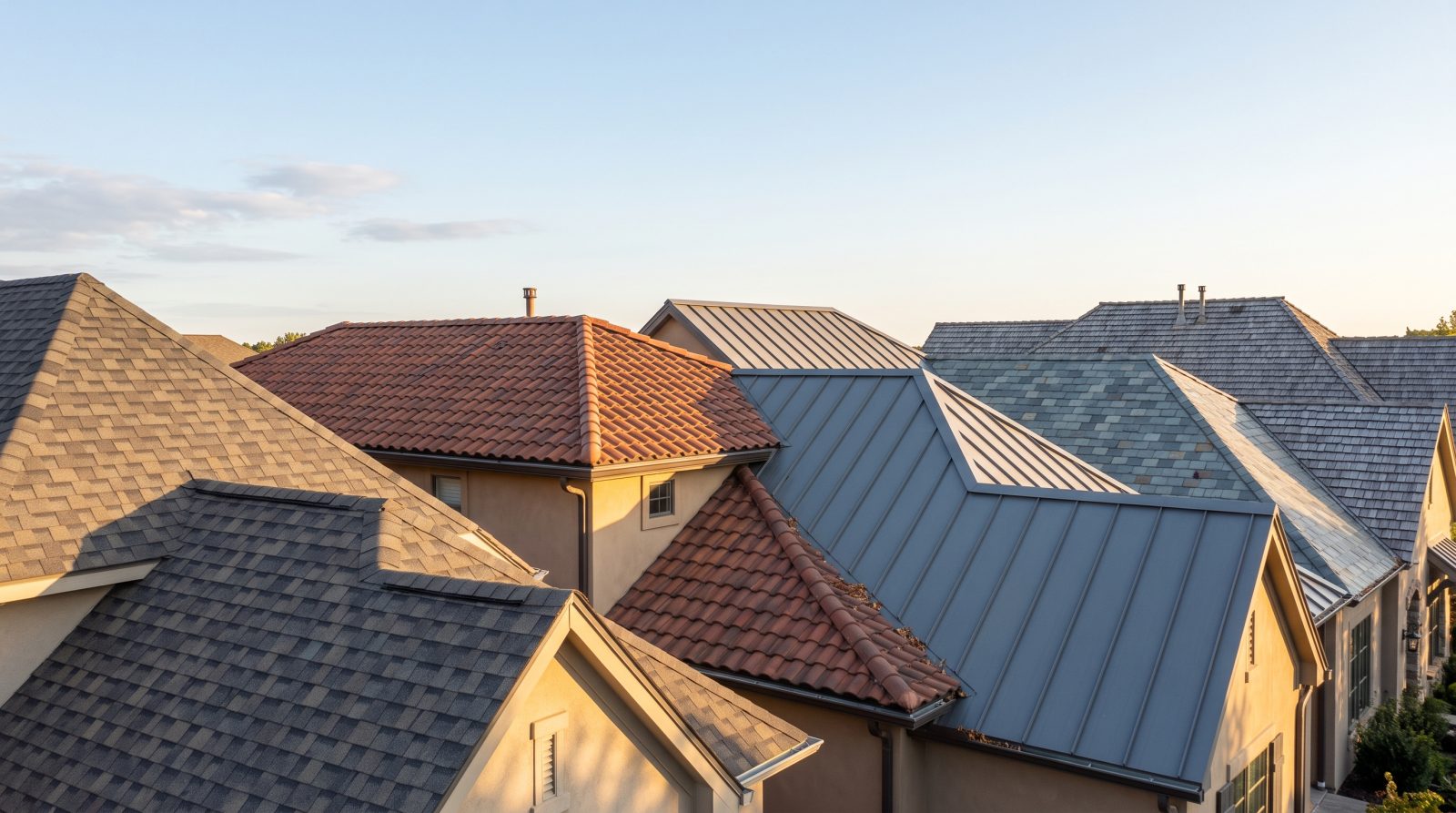
How roofing is priced: squares, materials, and labor
Roofers price work by the "square," which equals 100 square feet of roof surface. A typical single-family home has somewhere between 15 and 30 squares of roof, but that number reflects the actual roof area — including slope and overhangs — not your home's floor footprint. A steep, cut-up roof with lots of valleys, hips, dormers, and penetrations has far more surface area (and far more labor) than a simple gable roof over the same square footage of living space.
Every installed price has two big components: materials and labor, and they don't move together. Material cost is largely set by what you choose — asphalt is cheap, slate is expensive. Labor cost is driven by how hard the roof is to work on and how skilled the installation needs to be. Heavy materials like tile and slate require more structural support and specialized crews, so their labor premium stacks on top of an already higher material price. That's why the gap between the cheapest and most expensive roofs is so wide once everything is installed.
When you compare the ranges below, remember they are installed (materials plus labor) typical estimates. They are starting points for budgeting, not a quote. The only way to know your real number is an on-site measurement and assessment, because two homes with the same square footage can differ by thousands of dollars based on pitch, layers to tear off, deck condition, and access.
- 1 square = 100 sq ft of roof surface (not floor area)
- Most homes: roughly 15–30 squares
- Installed price = materials + labor + tear-off + disposal + flashing/underlayment
- Steeper, more complex roofs cost more to install at any material grade
Typical installed cost ranges by roofing material
The ranges below are typical national estimates for materials installed on a standard residential roof of average complexity. They are not quotes and vary widely by region, roof size, pitch, and scope. Premium product lines, complex roofs, and high-cost-of-living regions push toward (or above) the top of each range; simple roofs in lower-cost areas land near the bottom.
Asphalt shingles are the default choice across most of the United States because they offer the best entry price and easy installation. Three-tab shingles are the budget tier; architectural (dimensional) shingles cost a bit more but look better and last longer, which is why they now dominate new installations. Asphalt typically runs in the lower per-square-foot range of any material, making it the benchmark everything else is measured against.
Metal roofing spans a huge range because the category itself is broad. Exposed-fastener corrugated panels are relatively affordable, while standing-seam metal — with concealed fasteners and a sleek, modern look — sits well above asphalt. Metal's appeal is longevity, fire resistance, energy reflectivity in hot climates, and excellent shedding of snow and rain, which is why it's popular in both Sun Belt and snow-country regions.
Tile (clay or concrete) and slate are the premium, long-life end of the market. They are heavy, beautiful, and extraordinarily durable, but they cost more in both material and labor, and many homes need a structural evaluation to confirm the framing can carry the weight. Wood shakes and shingles offer a natural look at a mid-to-upper price but require maintenance and face fire-code restrictions in many wildfire-prone areas. Synthetic and composite products aim to mimic slate or shake at a lower weight and often a friendlier price, while flat-roof membranes (TPO, EPDM, modified bitumen) serve low-slope and commercial-style roofs.
- Asphalt shingles (3-tab / architectural): the budget-to-mainstream benchmark; lowest installed cost
- Metal — corrugated/exposed-fastener: affordable; standing-seam: premium and long-lasting
- Concrete tile: mid-premium; clay tile: premium and very long-lived
- Slate: among the most expensive, with the longest potential lifespan
- Wood shake/shingle: mid-to-upper; maintenance + fire-code considerations
- Synthetic/composite (faux slate/shake): mid-range, lighter weight
- Flat-roof membranes (TPO/EPDM/modified bitumen): priced by system and roof size
- All figures are typical estimate ranges that vary by region, size, pitch, and scope
Lifespan vs. cost: what you actually pay per year
Sticker price alone is misleading because materials don't last the same length of time. The smarter way to compare is cost over the roof's expected service life. A cheaper roof that needs replacing in 20 years can end up costing more over 50 years than a premium roof installed once, especially when you factor in repeated tear-off, disposal, and labor inflation.
Asphalt architectural shingles commonly last in the range of 20–30 years depending on climate and ventilation. Metal roofs frequently last 40–70 years, with standing-seam at the top of that band. Concrete and clay tile can serve 50 years or more, and slate is famous for lasting 75–100+ years — often outliving the structure's other components. Wood shakes typically fall in the 20–40 year range with upkeep. Flat membranes generally range from about 15–30 years depending on the system and maintenance.
Climate is the great equalizer here. Intense UV in the South and Southwest, freeze-thaw cycles in the North, hail in the Plains, hurricanes along the Gulf and Atlantic coasts, and heavy snow load in the mountains all shorten real-world lifespan and influence which material makes sense. A roof rated for decades on paper performs differently in Phoenix than in Minneapolis. That's why the "best value" material is regional, not universal.
- Asphalt architectural: ~20–30 years (typical)
- Metal: ~40–70 years (standing-seam highest)
- Concrete/clay tile: ~50+ years
- Slate: ~75–100+ years
- Wood shake: ~20–40 years with maintenance
- Flat membranes (TPO/EPDM/mod-bit): ~15–30 years
- Lifespan and value shift with regional climate and ventilation quality
What drives your price up or down (beyond the material)
Two homeowners can pick the same shingle and still get very different numbers, because installed cost is shaped by a stack of factors that have nothing to do with the product on the shelf. Understanding these helps you read an estimate intelligently and avoid sticker shock — or spot a bid that's too good to be true because it skipped something important.
Roof complexity is usually the biggest swing factor after material. Steep pitch requires safety staging and slows the crew; valleys, hips, dormers, skylights, chimneys, and pipe penetrations all add flashing work and labor. Tear-off matters too: removing one existing layer is standard, but multiple old layers, or a deck that turns out to be rotted once exposed, add cost. A roof-over (installing on top of the old roof) can be cheaper short-term but isn't always advisable and isn't allowed everywhere by code.
The parts you don't see also matter. Quality underlayment, ice-and-water shield in cold climates, proper flashing, ridge and soffit ventilation, drip edge, and code-required upgrades all belong in a real estimate. Permits, regional labor rates, disposal fees, and seasonal demand round it out. When comparing bids, make sure they cover the same scope — a lowball that omits ventilation, flashing, or a second tear-off layer isn't actually cheaper, it's just incomplete.
- Roof pitch/steepness and overall complexity (valleys, hips, dormers, skylights)
- Number of existing layers to tear off and any hidden deck rot
- Underlayment grade, ice-and-water shield, flashing, and drip edge
- Ventilation upgrades (ridge/soffit) and other code-required work
- Permits, disposal, regional labor rates, and seasonal demand
- Accessibility — height, stories, and how easily crews can stage the work
How to choose the right material for your roof and region
Start with your honest time horizon and budget. If you may sell within a decade, a quality architectural asphalt roof usually delivers the best return per dollar and the broadest buyer appeal. If this is your forever home, a longer-lived material like metal, tile, or slate can be the cheaper choice across the years you'll actually own it — and it removes the hassle of replacing a roof again.
Then layer in your climate and any local rules. In wildfire-prone regions, fire-rated and non-combustible materials (and sometimes restrictions on wood) matter a great deal. In hurricane and high-wind zones, wind-rating and impact resistance are worth the premium. In hail country, impact-resistant products can reduce damage and sometimes affect insurance considerations. In hot, sunny regions, reflective metal or light-colored materials help with cooling. In heavy-snow areas, slope and shedding behavior come into play. Always confirm what local code and any HOA require before you commit to a look.
Finally, weigh weight and structure. Tile and slate are heavy; older homes may need a structural review to confirm the framing can carry them, which is part of the project cost and timeline. Synthetic slate or shake products can give a similar look at a fraction of the weight if your structure or budget can't accommodate the real thing. The right answer balances upfront cost, lifespan, regional performance, structural reality, and how long you plan to stay — and there's no single winner for every home.
Not sure which material fits your roof, region, and budget? Roof Repairs offers nationwide roofing help and a free roof assessment — call (669) 259-2777 and we'll walk you through realistic options and an honest estimate range for your home.
- Match the material to your time horizon (selling soon vs. forever home)
- Factor climate: fire, wind, hail, heat, and snow performance
- Confirm local code and HOA requirements before choosing a look
- Account for weight — tile/slate may need a structural review
- Consider synthetic/composite for a premium look at lower weight
- Get an on-site measurement before trusting any number