Wood Shakes vs. Wood Shingles: Know the Difference
People use "shake" and "shingle" interchangeably, but in roofing they're two distinct products with different looks, prices, and performance. Both are usually made from western red cedar — prized for its natural decay resistance, dimensional stability, and the oils that help it weather gracefully — though Alaskan yellow cedar and, less commonly, redwood or pine are also used. Understanding the distinction is the first step to specifying the right roof.
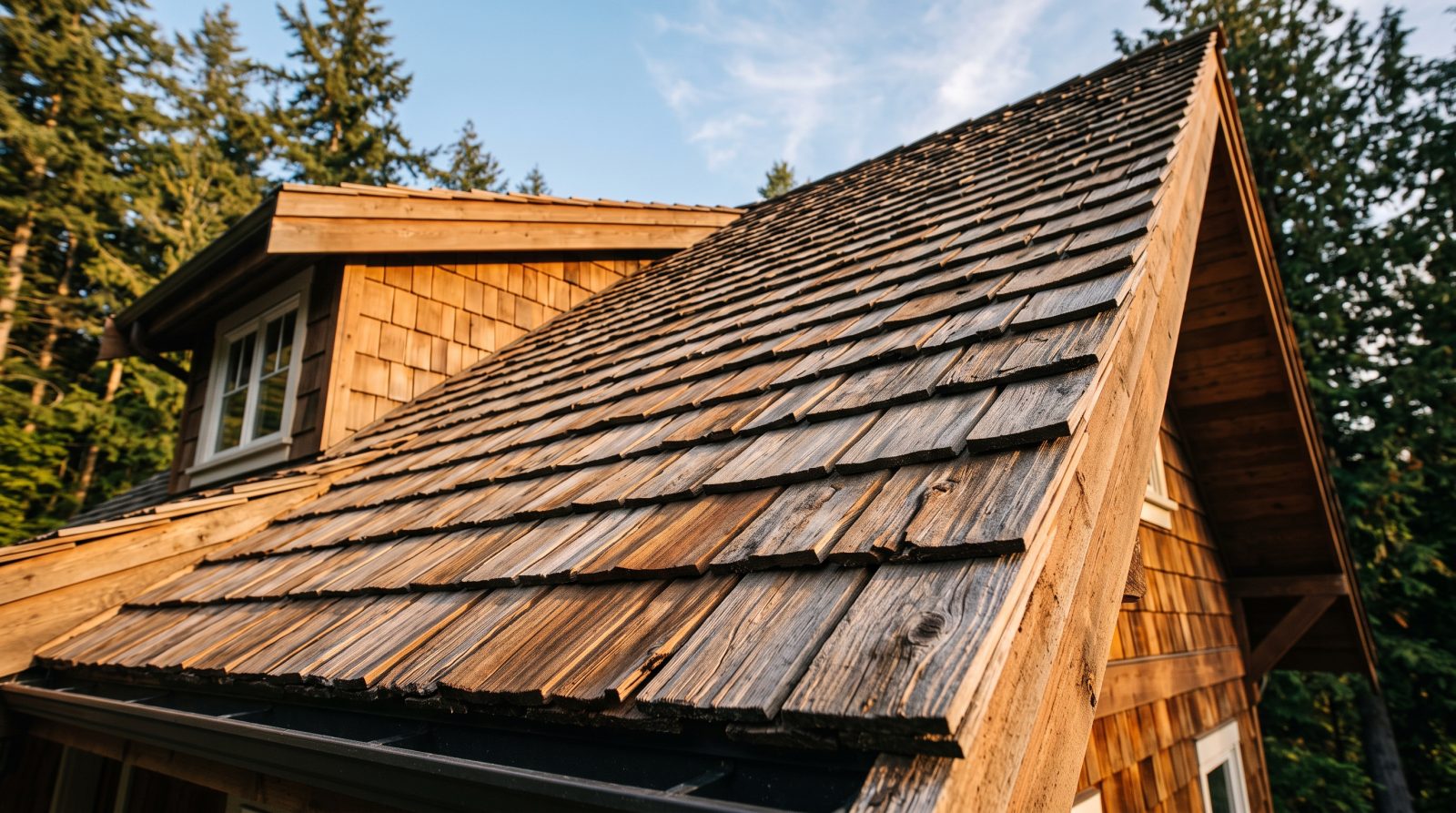
Wood shakes are split (or partially split) from the log, leaving a rough, textured face and an irregular, hand-hewn appearance. That thickness and variation create deep shadow lines and a rustic, substantial look — the classic "mountain home" or estate aesthetic. Wood shingles, by contrast, are sawn on both faces, producing a smoother, thinner, more uniform piece that lays flatter and reads as more refined and tailored. Shingles suit Cape Cod, Colonial, and cottage styles; shakes suit Craftsman, Tudor, ranch, and rustic designs.
Because shakes are thicker and rougher, they cost more, require slightly different installation details, and shed water differently than the tighter, smoother shingle. Neither is automatically "better" — the right choice depends on your architecture, budget, climate, and how much texture you want.
- Shakes: split, thick, rough-textured, irregular — bold shadow lines, higher cost
- Shingles: sawn, thinner, smooth, uniform — refined, tailored, lays flatter
- Both commonly western red cedar; grades run from premium #1 (100% heartwood, edge-grain) down to lower grades with more sapwood and flat grain
- Higher grades resist decay and cupping better and generally last longer
- Treatments matter: look for products that are kiln-dried and, where code requires, pressure-treated with fire retardant
How a Cedar Roof Is Built — and Why Installation Is Everything
More than almost any other roof, a cedar roof lives or dies by its installation. Wood is a breathing material: it expands when it absorbs moisture and contracts as it dries. A correctly built cedar roof is engineered to let the wood breathe and dry from both sides, which is what allows it to resist rot for decades. Get that wrong and even premium shakes can fail in a fraction of their expected life.
Traditional best practice installs cedar over spaced sheathing (skip sheathing) — typically 1x4 boards with gaps — rather than solid plywood, so air can circulate beneath the shakes and dry them out after rain. When solid decking is used, many specifiers add a ventilated underlayment or batten system to recreate that airflow. Each course is offset so joints don't line up, and the exposure (how much of each piece is left to the weather) is controlled tightly, because over-exposing pieces is a common cause of leaks.
Fasteners and flashings are just as critical. Cedar should be fastened with hot-dipped galvanized or stainless nails — ordinary nails corrode and stain the wood — and valleys, chimneys, walls, and penetrations need durable metal flashing detailed to handle the heavier water flow a textured roof produces. These details aren't visible from the street, but they're the difference between a roof that lasts and one that doesn't.
All of this is why cedar is not a beginner installation. It rewards experienced, detail-oriented workmanship and punishes shortcuts. If you're considering cedar, the quality of the installer matters as much as the quality of the wood.
- Spaced/skip sheathing or a ventilated assembly so shakes dry from both sides
- Correct exposure and offset joints to keep water moving off, not into, the roof
- Hot-dipped galvanized or stainless fasteners to prevent corrosion and staining
- Robust metal flashing at valleys, walls, chimneys, and penetrations
- A breathable, properly specified underlayment matched to the assembly
Lifespan, Climate Fit, and the Fire Question
A well-installed, well-maintained cedar roof can realistically last around 25 to 40 years, with premium-grade shakes on a breathable, well-ventilated assembly reaching the upper end of that range. Cut corners on grade, ventilation, or maintenance and the same roof might struggle to reach 20. Lifespan is less about the wood alone and more about the whole system plus your local climate.
Climate is the biggest variable, and it cuts both ways. In dry, temperate, and well-ventilated settings, cedar can perform beautifully for a long time. In hot, humid regions, or anywhere the roof stays shaded and damp under tree cover, cedar is far more prone to moss, algae, fungal growth, and rot — moisture that can't dry out is cedar's enemy. Heavy snow regions add freeze-thaw stress, and intense UV exposure in sunny climates accelerates the silver-gray weathering and surface checking that cedar naturally develops over time. None of this rules cedar out, but it does mean the right maintenance plan and ventilation strategy vary a lot by region.
Fire deserves its own honest conversation. Untreated wood roofing is combustible, and in wildfire-prone areas — much of the western United States and other high-risk zones — local codes may restrict or prohibit wood roofs, or require pressure-impregnated, fire-retardant-treated (FRT) products that carry a recognized fire-resistance class. Treatments and recognized assemblies can meaningfully improve fire performance, but they're not a substitute for checking what your local jurisdiction actually allows. Before committing to cedar, confirm both code requirements and any homeowners-insurance considerations in your area.
- Typical lifespan: roughly 25–40 years when properly installed and maintained
- Best fit: drier, temperate, well-ventilated, sun-and-airflow exposures
- Higher risk: humid, heavily shaded, tree-covered, or chronically damp roofs
- Fire: untreated wood is combustible; many wildfire areas restrict it or require fire-retardant-treated products
- Always verify local building code and insurance requirements before choosing wood
What Cedar Costs — Typical Estimate Ranges
Cedar is a premium roof, and its price reflects the material grade, the labor skill required, and the detailing involved. The figures below are typical industry estimate ranges that vary significantly by region, material grade, roof size and pitch, complexity (valleys, dormers, chimneys), tear-off and disposal of the old roof, whether fire-retardant-treated product is required, and current market conditions for both cedar and skilled labor.
As a rough, estimated frame of reference, installed wood shake and wood shingle roofing commonly runs in the higher tiers of residential roofing — generally several times the cost of a basic asphalt shingle roof on the same home. Within cedar, hand-split shakes typically cost more than sawn shingles, premium #1 grade costs more than lower grades, and fire-retardant-treated product adds cost over untreated. A complex roof with many penetrations and steep, cut-up planes will always price higher than a simple gable roof of the same square footage.
It's worth weighing cost over the full life of the roof, not just the install day. Cedar's higher upfront price buys a look and character that's hard to match, but it also carries ongoing maintenance costs that lower-maintenance materials don't. The honest way to evaluate it is total cost of ownership — purchase, plus expected upkeep, plus realistic lifespan in your specific climate. For an estimate on your actual roof, call (669) 259-2777 for a free assessment.
- All figures are typical estimates that vary by region, material, roof size, and scope
- Cost drivers: grade, shake vs. shingle, roof size/pitch, complexity, tear-off, FRT treatment, region, market
- Shakes generally cost more than shingles; premium grades cost more than lower grades
- Cedar typically sits in the premium tier — well above basic asphalt on the same home
- Evaluate total cost of ownership: install + maintenance + realistic lifespan, not just day-one price
Maintaining a Cedar Roof — The Part Nobody Skips
The single biggest difference between cedar and "set it and forget it" roofing is maintenance. A cedar roof is an investment that needs care, and homeowners who understand that up front are the ones who get 30-plus years out of it. The good news is that the maintenance is mostly about one thing: keeping the wood able to dry out.
Keep the roof clear of debris. Leaves, pine needles, and dirt trapped between shakes hold moisture against the wood and become a seedbed for moss and rot — especially in the gaps and at the bottom of each course. Keep gutters clean and trim back overhanging branches so the roof gets airflow and sunlight; persistent shade is one of cedar's worst enemies. After storms, check for split, cracked, curled, or missing shakes and have them replaced promptly, since a single failed piece can let water reach the deck.
In damp and shaded climates, periodic professional cleaning and treatment to control moss and fungal growth can extend a cedar roof's life considerably. Cleaning should be gentle — aggressive high-pressure washing can erode the soft wood surface and shorten the roof's life — so it's best handled by someone who understands cedar specifically. Many owners also have the roof inspected periodically so small issues get caught while they're still cheap fixes rather than deck repairs.
If that level of attention doesn't fit how you live or where you live, that's useful information too — it may point you toward a lower-maintenance material, or toward a cedar-look alternative. The goal is a roof you'll actually keep up, because a neglected cedar roof underperforms any of its honest selling points.
- Keep shakes, gutters, and valleys clear of leaves and debris that trap moisture
- Trim back branches; sunlight and airflow are what keep cedar healthy
- Replace split, curled, cracked, or missing shakes promptly after storms
- In damp/shaded climates, use gentle professional cleaning and moss/fungus control — avoid aggressive pressure washing
- Schedule periodic inspections so small problems don't become deck repairs
Is Cedar Right for You — or Is a Look-Alike Smarter?
Cedar makes the most sense for homeowners who want its specific, irreplaceable character and are prepared to invest in upkeep — and whose climate, local fire code, and insurance situation all support it. If you love the texture and warmth of natural wood, live somewhere it can dry out, and you'll commit to maintenance, cedar can be deeply rewarding and add real curb appeal and architectural authenticity.
If you love the look but the maintenance, fire restrictions, or cost give you pause, you have strong alternatives. Synthetic and composite shake products are designed to mimic cedar's deep, textured profile while offering greater fire and impact resistance and far less upkeep. Certain laminated asphalt and metal profiles also evoke a wood-shake feel at a lower price point. These won't perfectly replicate real cedar up close, but they capture much of the character with fewer demands — a genuinely sensible path for many homes and many climates.
The right decision is the one that fits your home, your region, your budget, and how you actually live. A good roofing professional should be willing to walk you through the honest trade-offs of cedar versus the alternatives for your specific roof rather than pushing one answer. Roof Repairs provides nationwide roofing help for homeowners and businesses across the United States — for a straightforward conversation and a free roof assessment, call (669) 259-2777.
- Choose cedar if: you want its true character, your climate suits it, code/insurance allow it, and you'll maintain it
- Consider an alternative if: maintenance, fire rules, or cost are concerns
- Look-alikes: synthetic/composite shakes (more fire/impact resistance, less upkeep), plus some asphalt and metal profiles
- Decide on total fit — home style, region, budget, lifestyle — not just looks
- Get a free roof assessment: call (669) 259-2777