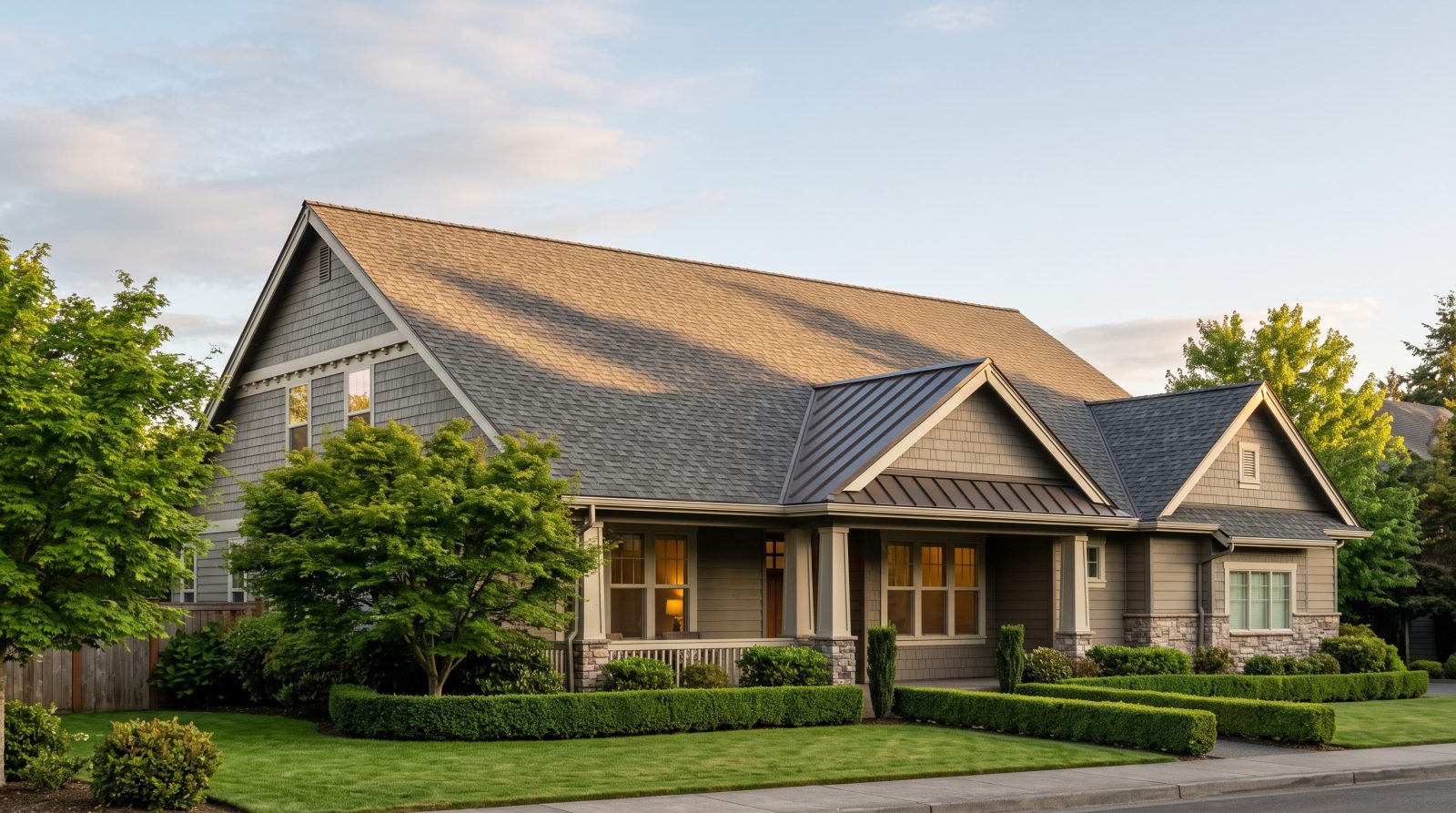
What a Roof Project Typically Costs (and Why Financing Matters)
Before you choose how to pay, it helps to understand what you may be financing. Roofing costs vary widely across the United States based on roof size, pitch and complexity, the material you choose, regional labor rates, and whether you're doing a repair, a partial replacement, or a full tear-off. The figures below are typical industry estimate ranges only, not quotes, and your actual price can fall outside them depending on your home and local market.
As a general guide, a moderate repair (flashing, a section of shingles, a small leak) often runs in the low-to-mid hundreds up through a few thousand dollars. A full asphalt shingle replacement on an average single-family home commonly lands somewhere in the roughly $8,000 to $20,000+ range nationally, while premium materials like metal, tile, or slate can push well above that. Larger homes, steep or cut-up roofs, and multiple layers to remove all add cost. Regional differences are real: labor and permit costs in high-cost metros and coastal or storm-prone areas tend to run higher than in lower-cost inland regions.
Because the total is often a five-figure number, financing isn't a sign of poor planning, it's a normal way to spread a necessary, value-protecting investment over time. The right structure can let you fix the roof now, before water damage compounds, while keeping monthly payments manageable. For a free roof assessment and a written estimate specific to your home, call (669) 259-2777.
- Repair / partial work: typically a few hundred up to a few thousand dollars (estimate, varies widely)
- Full asphalt shingle replacement: commonly ~$8,000–$20,000+ nationally (estimate, varies)
- Premium materials (metal, tile, slate): typically higher, often well above shingle ranges
- Cost drivers: roof size, pitch/complexity, material, layers to remove, region, permits, and labor rates
The Main Roof Financing Options Compared
There is no single best way to finance a roof; the right choice depends on how much you're borrowing, your credit, your home equity, and how fast you need the work done. Below are the most common paths homeowners use across the country, with the general trade-offs of each. Specific rates, terms, and eligibility are set by lenders and change over time, so treat any rate language here as general context rather than an offer.
Contractor and in-house financing or payment plans are often the fastest path because they're arranged at the point of sale. Many roofers partner with third-party lenders to offer installment plans, deferred-interest promotions, or 'same-as-cash' windows. These are convenient and can be very competitive, but read the fine print: promotional 0% offers usually require full payoff within the promo window or interest is charged retroactively.
Home improvement personal loans are unsecured (no collateral), fund quickly, and keep your home out of the equation. Rates are typically higher than secured options and depend heavily on credit, but they're a strong fit for mid-sized projects when you don't want to tap equity. Home equity loans and HELOCs use your home as collateral, generally offer lower rates and longer terms, and may have potential tax considerations on interest (confirm with a tax professional), but they put your home at risk if you default and take longer to set up. Cash-out refinancing rolls the roof into a new, larger mortgage, which can make sense when current rates are favorable. Finally, credit cards work for small repairs or short-term bridging but carry the highest typical rates, so they're best paid off quickly or used only with a genuine 0% intro offer.
- Contractor / in-house payment plans: fast, convenient, point-of-sale; watch deferred-interest fine print
- Home improvement personal loan: unsecured, quick funding, no collateral; rate depends on credit
- Home equity loan: secured, fixed payments, typically lower rate; uses home as collateral
- HELOC: secured revolving line, flexible draws; variable rate, home as collateral
- Cash-out refinance: rolls roof into mortgage; depends on current rate environment
- Credit card: easy for small jobs; highest typical rates unless using a true 0% intro period
Insurance, Manufacturer, and Government Programs
Financing isn't only about loans. Depending on why you need the roof, other funding sources may cover part or all of the cost. If your roof was damaged by a covered event, like a storm, hail, wind, or a fallen tree, your homeowners insurance may pay for repair or replacement after your deductible. Coverage and payout structure (actual cash value vs. replacement cost) vary by policy, so review your declarations page and document the damage thoroughly before filing. A roofer can help you understand the scope of storm damage, but the claim itself is between you and your insurer.
Manufacturer and material rebates or promotions can occasionally offset cost, and some energy-efficient roofing materials (such as certain 'cool roof' or reflective products) may qualify for utility rebates or federal energy-efficiency tax incentives. These programs change frequently and vary by state and utility, so verify current eligibility with the program administrator or a tax professional rather than assuming.
Government-backed options exist for qualifying homeowners. FHA Title I home improvement loans and FHA 203(k) renovation loans can finance roofing as part of broader improvements. The USDA offers home repair loans and grants in eligible rural areas, and the VA has renovation-related loan options for eligible veterans. Many states and municipalities also run home-repair assistance or weatherization programs, and PACE financing (Property Assessed Clean Energy) is available in some areas for energy-related improvements, repaid through your property tax bill. Eligibility, availability, and terms differ widely by location, so check what applies where you live.
- Homeowners insurance: may cover storm/hail/wind damage after your deductible (depends on policy)
- Energy/utility rebates & tax incentives: possible for qualifying efficient or reflective roofing (verify current rules)
- FHA Title I / 203(k): government-backed home improvement and renovation loan paths
- USDA & VA programs: repair loans/grants for eligible rural homeowners and veterans
- State, local, and PACE programs: availability and terms vary by region
How to Choose the Right Financing for Your Situation
Start with two questions: how much do you need to borrow, and how quickly do you need the work done? For an urgent leak or active water intrusion, speed matters, an unsecured personal loan or a contractor payment plan can fund in days, whereas equity-based options take longer to underwrite. For a planned, larger replacement where you have time, a home equity loan, HELOC, or cash-out refinance often delivers the lowest overall cost if you have equity and strong credit.
Next, weigh total cost, not just the monthly payment. A low monthly figure stretched over a very long term can mean paying far more in interest. Always compare the APR (which includes fees), the term length, any prepayment penalties, and the true cost of 'deferred interest' promotions. Get the full repayment picture in writing before you sign anything. It's smart to get pre-qualified with more than one lender so you can compare real numbers, and pre-qualification typically uses a soft credit check that won't ding your score.
Finally, protect yourself on the contractor side. A trustworthy roofer will give you a clear, itemized written estimate and never pressure you into a same-day signature or an unusually large upfront deposit. Be cautious of anyone who insists you finance only through them with no breakdown of terms. You should always be free to compare your financing independently. When you're ready, Roof Repairs provides nationwide roofing help and a free roof assessment so you know exactly what the work involves before you decide how to pay, call (669) 259-2777.
- Match the tool to the timeline: fast leak fix vs. planned replacement
- Compare APR + term + fees, not just the monthly payment
- Pre-qualify with multiple lenders (soft pulls) to compare real offers
- Insist on an itemized written estimate; avoid high-pressure or all-cash-upfront demands
- Confirm any promo terms (0%/'same as cash') and payoff deadlines in writing
Smart Tips to Lower What You Borrow
The cheapest financing is the financing you don't need, so it's worth reducing the loan amount where you reasonably can. Timing can help: roofing demand and pricing often shift with the seasons and with local storm cycles, and off-peak scheduling can sometimes mean more competitive pricing in some markets. That said, never delay urgent repairs to chase a season, water damage compounds fast and can turn an affordable repair into a structural problem.
Scope discipline matters too. A thorough inspection can tell you whether a targeted repair will genuinely solve the problem or whether you're better off replacing, paying twice for repairs that don't hold is the costliest outcome. Where a repair is the right call, doing it promptly protects the decking and interior and keeps the bill smaller. Maintaining the roof afterward (clearing debris, keeping gutters flowing, addressing flashing early) extends its life and pushes the next big expense further out.
Don't overlook 'free money' before you borrow: confirm whether insurance, rebates, or incentive programs apply to your project, and combine them with financing for the remainder. And always gather more than one estimate, scope and pricing can differ meaningfully between contractors. A clear, honest assessment is the foundation for both a good repair and a smart way to pay for it. For a free roof assessment anywhere in the U.S., call Roof Repairs at (669) 259-2777.
- Fix urgent leaks promptly, water damage makes future costs balloon
- Get a proper inspection so you finance the right scope (repair vs. replace)
- Stack insurance, rebates, and incentives before borrowing the remainder
- Maintain the roof afterward to delay the next major expense
- Compare multiple written estimates before committing