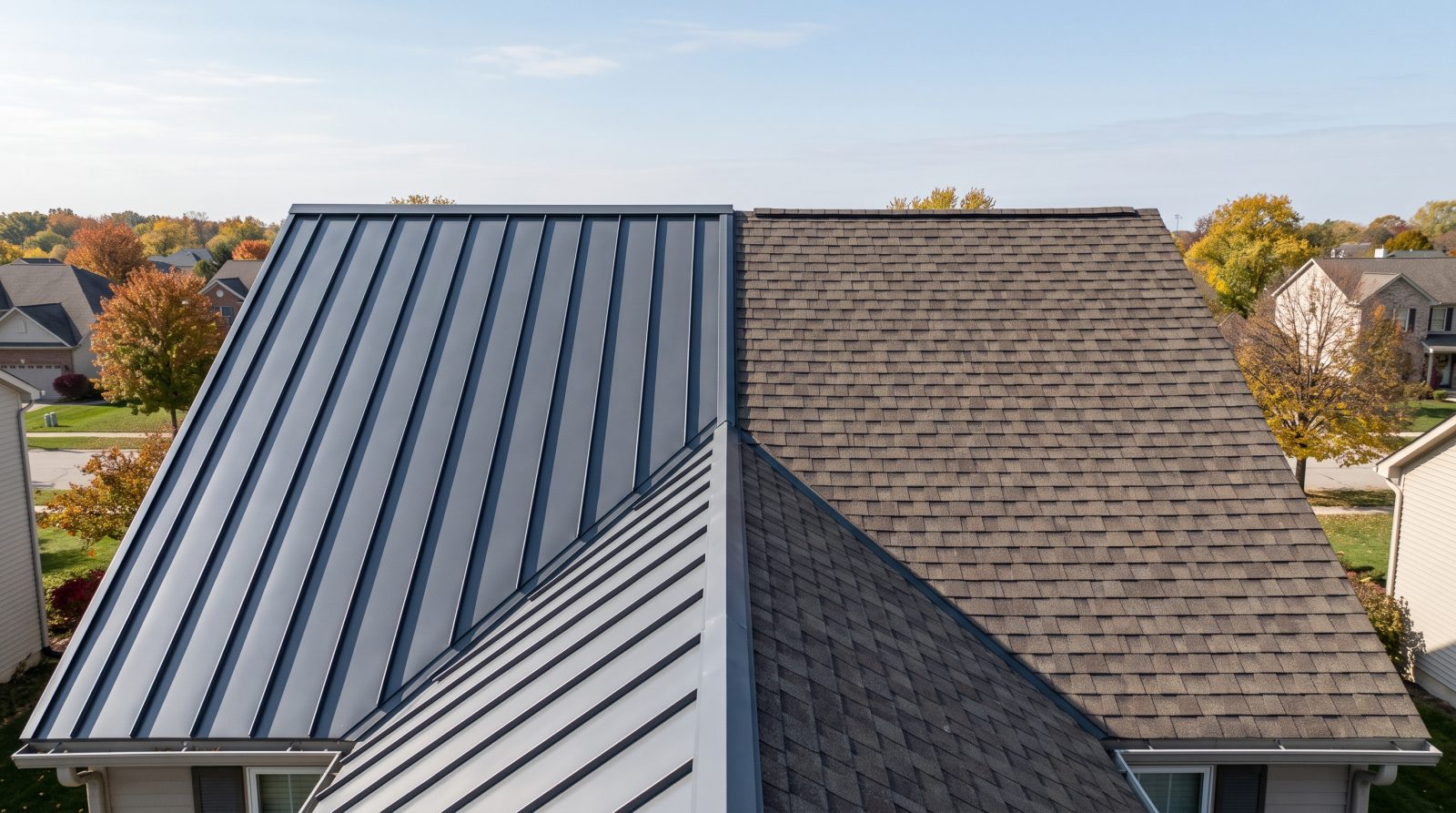
The Two Systems at a Glance
Asphalt shingles and metal roofing solve the same problem in very different ways. Asphalt shingles are individual overlapping pieces made of a fiberglass mat saturated with asphalt and surfaced with mineral granules. They are the default residential roof across most of the United States because they are affordable, widely available, fast to install, and easy for nearly any contractor to repair. The two common grades are 3-tab shingles (the thinnest, most economical option) and architectural or 'dimensional' shingles (thicker, heavier, more wind-resistant, and the most popular choice today).
Metal roofing is a completely different category. Instead of small overlapping pieces, it uses large panels or interlocking shingles made from steel, aluminum, zinc, or copper. The most recognizable residential type is the standing-seam metal roof, where vertical panels lock together with raised seams and the fasteners are hidden underneath, protecting them from weather. There are also exposed-fastener panels (more economical, common on barns, outbuildings, and budget-conscious homes) and stamped metal shingles or tiles designed to mimic the look of slate, wood shake, or traditional shingles.
Because the systems are built so differently, they behave differently over their lifetimes. Asphalt is a 'consumable' roof you expect to replace once or twice during a long stay in a home. Metal is closer to a permanent building component you may only install once. Understanding that core difference makes every other comparison below easier to interpret.
- Asphalt shingles: fiberglass-and-asphalt pieces; grades range from basic 3-tab to thicker architectural shingles
- Metal roofing: large panels or metal shingles in steel, aluminum, zinc, or copper; standing seam is the premium residential style
- Asphalt is easy to source and repair almost anywhere; metal often needs a contractor experienced specifically with metal systems
- Both can perform extremely well when installed correctly — installation quality matters as much as the material itself
Cost: Up-Front Price vs. Lifetime Value
Cost is usually the first question, and it is also where the comparison is most misunderstood. The figures below are typical industry ranges and rough estimates only — real pricing varies significantly by region, labor market, roof size and pitch, complexity (valleys, dormers, skylights), tear-off requirements, and the specific product line you choose. Treat these as ballpark planning numbers, not quotes.
As a general rule, asphalt shingle roofs commonly fall somewhere in the range of roughly $4 to $8 per square foot installed, with architectural shingles toward the higher end and basic 3-tab toward the lower end. Metal roofing typically costs more up front — often in the range of about $9 to $16+ per square foot installed for standing seam, with stamped metal shingles and premium metals like copper or zinc running considerably higher. In practical terms, a metal roof frequently costs two to three times what a comparable asphalt roof costs at installation.
The honest counterpoint is lifetime cost. Because asphalt typically needs replacement roughly every 15 to 30 years and metal can last 40 to 70 years or more, a homeowner who stays in the same house for decades may install asphalt two or three times in the same span that a single metal roof would cover. When you spread the cost across the years of service, the gap narrows and can even reverse — though only if you actually keep the home long enough to capture that value. For someone planning to move in five to ten years, the lower up-front asphalt cost is usually the more rational choice.
- Asphalt installed: typically ~$4–$8 per sq ft (estimate; 3-tab lower, architectural higher)
- Metal installed: typically ~$9–$16+ per sq ft for standing seam; premium metals (copper, zinc) cost more (estimate)
- Metal commonly runs 2–3x the up-front cost of asphalt for a comparable roof
- Lifetime math favors metal for long-term owners; up-front math favors asphalt for shorter stays
- All numbers are general industry estimates that vary by region, roof size, pitch, and scope — not a quote
Lifespan and Durability
Longevity is metal's strongest advantage. A quality asphalt shingle roof generally lasts in the range of 15 to 30 years depending on the shingle grade, ventilation, installation quality, and climate. Hot, sun-drenched regions tend to age asphalt faster as UV exposure dries out the asphalt and granules shed over time, while cooler climates are gentler on it. Architectural shingles outlast basic 3-tab products and resist wind better.
Metal roofing routinely lasts 40 to 70 years, and premium metals such as copper or zinc can last well beyond that — sometimes a century. Metal does not rot, will not host moss or fungus the way some roofs can, is non-combustible, and sheds snow and rain efficiently. Properly finished steel and aluminum panels resist rust for decades, and standing-seam systems hide their fasteners so there is far less to fail over time.
Durability in extreme weather is more nuanced than 'metal always wins.' Metal generally excels in wildfire-prone areas (it is non-combustible), in heavy-snow regions (snow slides off), and against high winds when properly installed and seamed. Asphalt is vulnerable to wind uplift and to granule loss from large hail, though it absorbs impact without the cosmetic denting that hail can leave on some metal panels. In hail-heavy areas, metal can dent while still remaining watertight, whereas asphalt may suffer functional damage that requires repair or replacement. The right choice genuinely depends on which threats dominate your region.
- Asphalt lifespan: typically ~15–30 years, shorter in intense-sun climates, longer for architectural grades
- Metal lifespan: typically ~40–70+ years; copper and zinc can last a century
- Metal is non-combustible — a strong advantage in wildfire-prone regions
- Metal sheds snow well; an advantage in heavy-snow northern climates
- Hail can cosmetically dent metal while it stays watertight; hail can functionally damage asphalt granules
Energy Efficiency, Noise, and Comfort
Energy performance is where many homeowners are surprised. Metal roofing, especially in lighter colors or with reflective 'cool roof' coatings, reflects a large share of the sun's radiant heat rather than absorbing it. In hot and sun-intensive regions, this can meaningfully reduce attic heat gain and cooling loads during peak summer. Dark asphalt shingles, by contrast, tend to absorb heat, although modern reflective and lighter-colored shingle lines have narrowed that gap considerably. In cold-dominated northern climates the cooling advantage matters less, and proper attic insulation and ventilation drive comfort far more than the roof color in either system.
Noise is the most common worry about metal — the mental image of rain hammering on a tin roof. In practice, a properly installed residential metal roof over solid sheathing, with underlayment and adequate attic insulation, is much quieter than people expect and is often comparable to other roof types from inside the home. Bare metal over open framing (like an old barn) is loud; a modern insulated residential assembly is not. Asphalt is naturally quiet because its mass and granular surface dampen sound, so it has a slight edge here but the difference in a finished home is usually modest.
Comfort also ties to ventilation. Neither material can overcome a poorly ventilated attic. A balanced intake-and-exhaust ventilation system keeps summer attic temperatures down and helps prevent winter moisture and ice-dam problems regardless of which roof you choose — it is one of the highest-value, least-glamorous parts of any roof.
- Reflective or light-colored metal can cut cooling loads in hot, sunny regions
- Modern reflective and lighter asphalt shingles narrow the energy gap versus older dark shingles
- A properly insulated residential metal roof is far quieter than the 'rain on tin' stereotype suggests
- Asphalt has a slight natural noise-dampening edge, but the in-home difference is usually small
- Attic insulation and balanced ventilation affect comfort more than roof material in either system
Installation, Repair, and Resale Considerations
Installation realities differ a lot. Asphalt is fast, forgiving, and within the skill set of nearly every roofing crew, which keeps labor costs down and makes scheduling easier. Metal — particularly standing seam — demands specialized tools, precise panel fabrication, and a crew experienced specifically with metal. A poorly installed metal roof can leak or oil-can (show visible waviness), so contractor experience matters even more than usual. This is one reason metal pricing carries a premium.
Repairs follow the same pattern. A damaged asphalt shingle is inexpensive and simple to swap, and matching replacement shingles are usually easy to find. Metal repairs are less frequent because the roofs last so long, but when they are needed they can be more involved and may require matching the original panel profile and finish. On the upside, metal's long service life means most owners rarely face repairs at all.
On resale, both roofs help — buyers value a sound, recently updated roof in any material. Metal can be a differentiating selling point in regions where wildfire, snow, or longevity are top of mind, and its 'won't need replacing' reputation appeals to long-term buyers. Asphalt rarely hurts a sale because it is the expected, familiar standard. Also consider HOA rules and neighborhood character: some communities have aesthetic guidelines, and a roof that looks out of place can affect appeal even if it performs well. When in doubt, choose the system that fits your climate threats, your timeline in the home, and your budget — and have a professional assess your specific roof before deciding. For a free roof assessment and a straight answer on which system fits your home, call Roof Repairs at (669) 259-2777.
- Asphalt installs fast and almost any crew can do it well, keeping labor affordable
- Metal (especially standing seam) needs specialized, experienced installers — quality varies more
- Asphalt repairs are cheap and easy to match; metal repairs are rarer but can be more involved
- Both materials support resale; metal can stand out in wildfire-, snow-, or longevity-focused markets
- Check HOA and neighborhood aesthetic rules before committing to a non-standard roof look