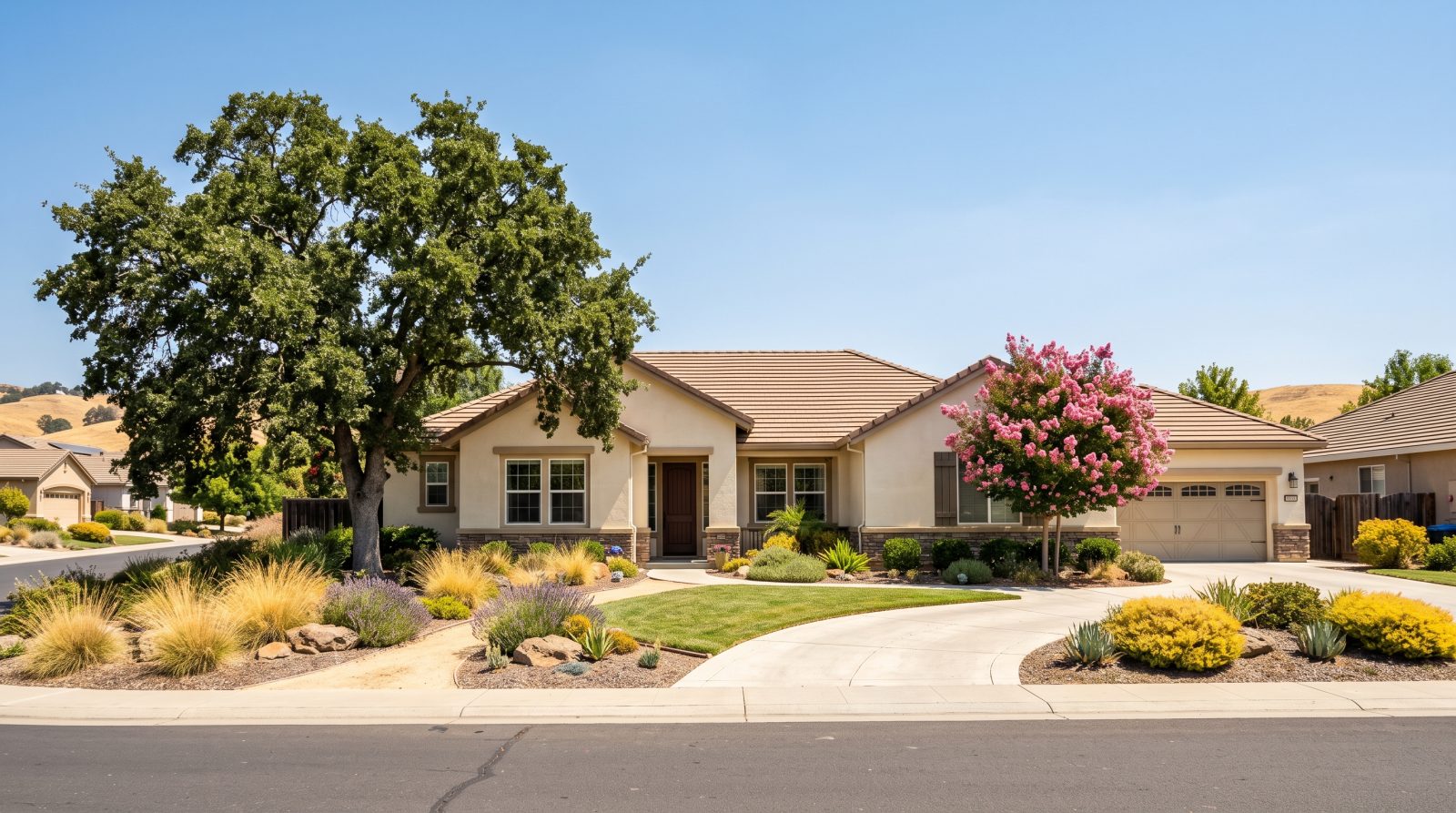
What Sacramento's climate does to your roof
Sacramento has one of the more punishing roofing climates in California, even though it rarely makes headlines for it. Our summers routinely push past 100 degrees for days at a time, and a dark roof surface in direct Valley sun can run far hotter than the air temperature. That sustained heat, combined with intense ultraviolet exposure, slowly bakes the oils and protective granules out of asphalt composition shingles. Over years, shingles dry out, curl at the edges, lose granules into the gutters, and become brittle.
The second hidden stressor is thermal cycling. A summer roof can be scorching by afternoon and cool sharply overnight, and that daily expand-and-contract motion fatigues materials, loosens fasteners, and opens tiny gaps around flashing, vents, and seams. Then winter arrives with its concentrated rain and the occasional wind-driven storm rolling in off the Delta and the Sierra foothills, and every gap that opened up during the dry months becomes a potential leak path. This is why so many Sacramento-area leaks surface in the first heavy rains of the season, not during summer.
Understanding this cycle matters because it changes what good repair looks like here. A patch that ignores heat-aged surrounding material or skips proper flashing detail will not last through the next summer-to-winter swing. Repairs in our climate need to account for both the UV damage you can see and the thermal stress you cannot.
- UV and extreme heat dry out and embrittle composition shingles over time
- Daily temperature swings loosen fasteners and open flashing and seam gaps
- Most leaks show up during the first concentrated winter rains, not in summer
- Wind-driven storms off the Delta and foothills can lift shingles and crack tile
The most common roofing problems we see in the Sacramento area
Across Sacramento County and the surrounding suburbs, a handful of issues come up again and again, and most trace directly back to our heat-then-rain climate. On older composition shingle roofs, the classic signs are heavy granule loss, curling or cupping shingles, and cracked or blistered surfaces that have simply aged out under the sun. These roofs often look fine from the ground but reveal widespread brittleness once you are up close.
On the many tile roofs across the region, especially in newer Elk Grove, Roseville, and Folsom subdivisions, the tiles themselves can last for decades, but the underlayment beneath them does not. Tile roof leaks are frequently an underlayment problem, not a tile problem, and they are commonly accompanied by cracked or slipped tiles from foot traffic, wind, or impact. Flashing failures around chimneys, skylights, vents, and wall-to-roof junctions are another leading leak source on every roof type, because flashing sits right where thermal movement is greatest.
We also see clogged or undersized gutters and valleys backing water up under shingles during heavy rain, and aging roof penetrations, such as pipe boots and vents, whose rubber gaskets crack in the sun and let water in. Identifying which of these is actually causing your problem is the entire point of a proper assessment, because the visible stain inside is often nowhere near the real entry point on the roof.
- Granule loss, curling, and cracking on sun-aged composition shingles
- Tile roof leaks driven by failed underlayment beneath intact tiles
- Cracked or slipped concrete and clay tiles from wind, impact, or foot traffic
- Flashing failures at chimneys, skylights, vents, and wall junctions
- Dried-out pipe boots and vent gaskets cracked by UV exposure
- Valley and gutter backups forcing water under the roof during storms
Composition shingle vs. tile: how we repair each
The two dominant roofing materials in the Sacramento area, asphalt composition shingle and concrete or clay tile, fail differently and are repaired differently, so it helps to know what to expect for yours.
Composition shingle repairs typically involve replacing damaged, missing, or heavily worn shingles, resealing or rebuilding flashing details, and replacing failed pipe boots and vents. The key in our climate is color and age matching plus correct sealing, because a small repair surrounded by heat-degraded shingles needs to integrate cleanly so it does not become the next weak spot. Where a roof is broadly worn from years of sun, we will tell you honestly whether targeted repair makes sense or whether you are better served planning for replacement.
Tile repairs are more specialized. Because the tiles often outlive everything under them, real tile repair frequently means carefully lifting tiles, addressing the underlayment and flashing beneath, and resetting or replacing individual cracked tiles, all without creating new breakage from foot traffic. Done right, a tile roof can be repaired in sections and keep performing for a long time. Done carelessly, walking a tile roof causes more cracks than it cures, which is why technique matters so much on these roofs.
- Shingle: replace damaged shingles, rebuild flashing, swap failed boots, match and seal
- Tile: lift tiles to repair underlayment and flashing, then reset or replace cracked tiles
- Honest guidance when a sun-worn roof is past the point of cost-effective repair
Leak and storm damage repair
When Sacramento's winter storms hit, they tend to arrive as concentrated rain over a short window, sometimes with gusty wind, and that is when hidden weaknesses turn into active leaks. The most important thing to know about roof leaks is that water rarely enters where it shows up inside. It travels along rafters, decking, and underlayment before dripping through a ceiling, so chasing the stain instead of the source is a common and costly mistake.
Our leak work starts with finding the true entry point, then correcting it properly, whether that is flashing, a failed penetration, lifted shingles, or compromised underlayment. After a wind event, we look for lifted or torn shingles, cracked or displaced tiles, debris damage from overhanging trees, and stressed flashing. If you have water actively coming in, getting a temporary protective measure in place to limit interior damage before a full repair is often the right first step.
If the damage is significant enough to involve a homeowner's insurance claim, we can document the roof condition with photos and clear notes so you have an accurate record of what happened and what the repair requires. We focus on giving you honest, factual documentation of the roof's actual condition rather than steering the claim itself.
- We trace leaks to the true entry point, not just the interior stain
- Post-storm checks for lifted shingles, cracked tile, debris and flashing damage
- Temporary protection to help limit interior damage before full repair
- Clear photo documentation of roof condition to support an insurance claim
Cool and energy-efficient roofing for Sacramento heat
Because so much of the wear on local roofs comes from heat, repairs and re-roofs are also a chance to make your roof work better against the sun. Cool roofing, which uses more reflective, higher solar-reflectance materials, can reduce how much heat the roof absorbs, which helps lower attic temperatures and ease the load on air conditioning during long Valley summers. For many Sacramento-area properties, especially homes with hot upstairs rooms or businesses with large flat or low-slope sections, this is a meaningful comfort and efficiency consideration.
Adequate attic ventilation goes hand in hand with this. A roof that cannot breathe traps heat and moisture, which accelerates shingle aging from below and can worsen condensation issues in winter. When we repair or evaluate a roof, we look at the whole system, surface, flashing, underlayment, and ventilation, because in this climate they all affect how long the next repair will last.
We will explain cool-roof and ventilation options in plain terms and let you decide what fits your goals and budget. Local utility or efficiency incentives are sometimes available for qualifying cool-roof upgrades, and we can point you toward checking current programs so you can see what you might be eligible for.
- Reflective cool-roof materials reduce heat absorption in intense Valley summers
- Proper attic ventilation slows heat-driven shingle aging and winter condensation
- Whole-system evaluation: surface, flashing, underlayment, and airflow together
Areas we serve and the right time to repair
Roof Repairs serves Sacramento and surrounding areas, including Elk Grove, Roseville, Folsom, Rancho Cordova, Citrus Heights, Carmichael, Fair Oaks, and communities throughout Sacramento County, for both residential and commercial roofs. From older established neighborhoods with aging composition roofs to newer tile-roofed subdivisions out in the suburbs, we work across the full range of roof types common to the region.
Timing matters here more than in milder climates. The ideal window for non-emergency repairs is generally the dry stretch from late spring through early fall, before the winter rains arrive, which lets you fix small problems while they are still small. The frustrating reality is that many people only discover a leak during the first big storm, which is exactly when conditions are hardest and demand is highest. If you can have your roof assessed during the dry months, you give yourself the best shot at affordable, proactive repair instead of an urgent winter scramble.
On cost, every roof and every problem is different, so we work in ranges rather than blind numbers. A minor shingle or flashing repair sits at the lower end, while extensive tile and underlayment work or storm repair across a larger area sits higher. We will assess your specific roof and explain the realistic range for your situation before any work begins.
- Serving Sacramento, Elk Grove, Roseville, Folsom, Rancho Cordova and Sacramento County
- Both residential and commercial roof repair
- Best repair window: late spring through early fall, ahead of winter rains
- Honest cost ranges based on your actual roof, never a blind fixed quote