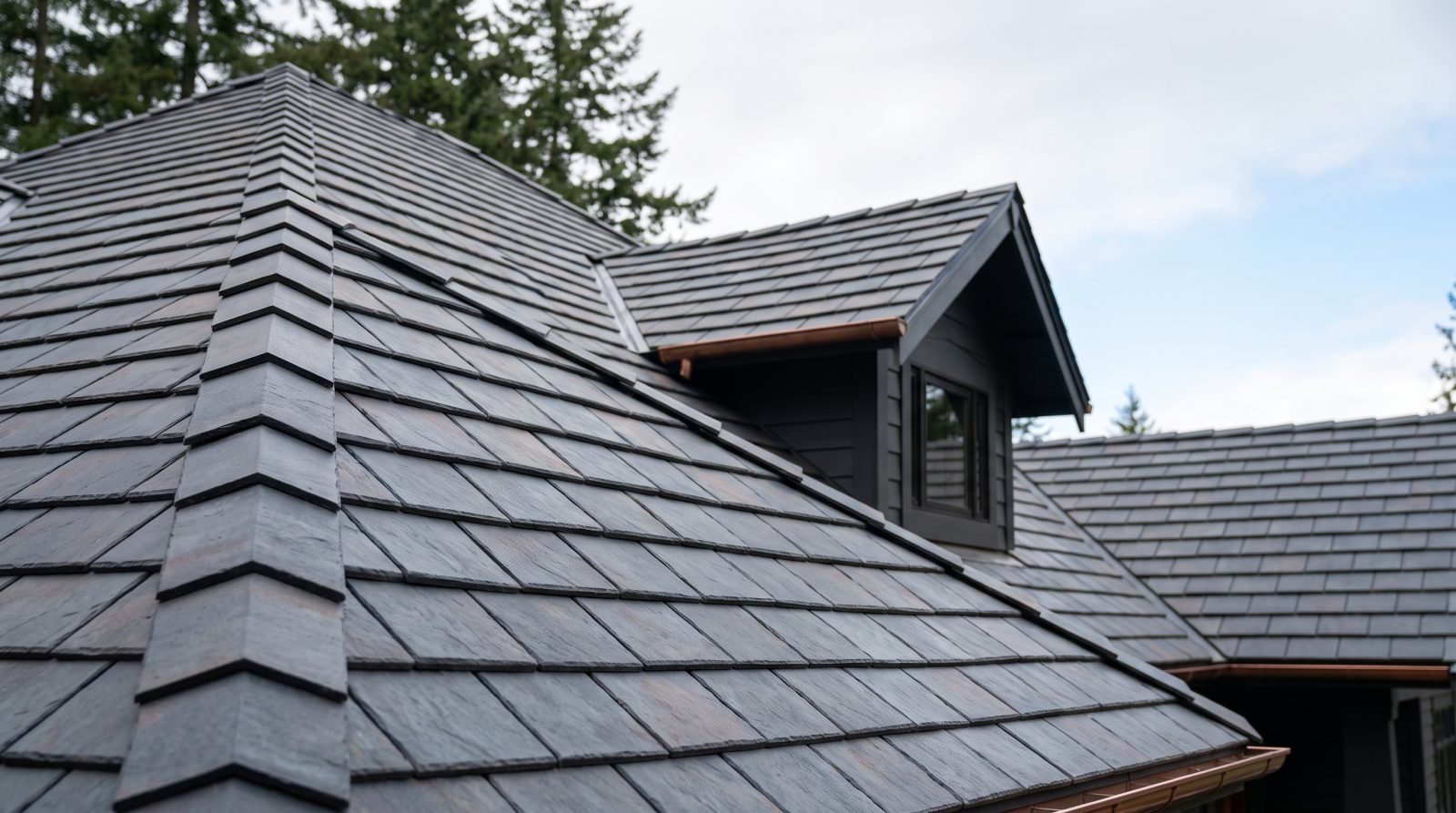
What "Synthetic" and "Composite" Roofing Actually Mean
The terms get used loosely, so it helps to define them. "Synthetic" roofing refers to roofing products manufactured primarily from engineered polymers — materials like polypropylene, polyethylene, PVC, or rubber compounds — often blended with mineral fillers, UV stabilizers, and fire retardants. "Composite" overlaps heavily and usually describes a product made from a mix of materials (for example, a polymer base combined with recycled rubber, plastics, or limestone) pressed and molded to imitate a traditional roofing texture. In practice, most homeowners use the two words interchangeably, and you'll see products marketed as composite slate, synthetic shake, or polymer roofing tiles.
The whole point of the category is to deliver the appearance and architectural character of a high-end roof — natural slate, hand-split cedar shake, or clay tile — while solving the practical problems those traditional materials carry. Real slate is beautiful and lasts a century, but it's extraordinarily heavy and brittle. Cedar shake has unmatched warmth but demands maintenance and can be a wildfire concern. Clay tile is gorgeous in the right setting but heavy and prone to cracking. Synthetic and composite products are engineered to capture the look while shedding the weight, fragility, and upkeep.
Quality varies widely in this category. The best composite products are molded from real slate and shake samples, so the surface detail and color variation read as authentic from the ground and even up close. Lower-end products can look plasticky and fade unevenly. This is a space where the manufacturer and product line matter a great deal, which is why a professional assessment of specific products for your home is worth more than a generic spec sheet.
The Main Types of Synthetic & Composite Roofing
Within the category, products are generally grouped by the traditional material they imitate. Understanding these buckets makes it much easier to compare quotes and product lines.
Each type has a distinct profile, weight, and price point, and not every product is sold or stocked in every region. The right choice depends on the architectural style of your home, your local climate, your roof's structure, and your budget — all things a roofing professional can weigh together during an on-site assessment.
- Composite / synthetic slate: Molded polymer or composite tiles that replicate the dimension and color depth of natural slate. The flagship of the category for steep-slope, high-end homes — far lighter than real slate, so it often doesn't require the structural reinforcement true slate demands.
- Synthetic shake (faux cedar): Engineered shingles that mimic hand-split cedar's grain and irregular edges, without the rot, insect, or maintenance issues of real wood, and typically with a much better fire rating.
- Polymer / composite tile (faux clay or concrete): Lighter-weight imitations of barrel or S-shaped clay tile, popular for Spanish, Mediterranean, and Southwestern architecture where the look matters but the weight of real tile is a concern.
- Rubber and recycled-content shingles: Often made from recycled tires or plastics, valued for impact resistance and sustainability messaging; appearance ranges from slate-like to a more uniform modern profile.
- Synthetic underlayment (a related but different product): Worth noting because it shares the "synthetic" label. This is the engineered sheet that goes under your shingles in place of felt paper — it is not a finished roof surface, but it's a common upgrade across nearly all roof types.
Lifespan, Durability & How It Performs by Climate
One of the strongest arguments for synthetic and composite roofing is longevity relative to maintenance. Well-made composite products are engineered for long service lives, and many carry lengthy manufacturer warranties — though warranty terms, coverage, and what voids them vary significantly by product, so always read the actual warranty document rather than the brochure headline. The real-world lifespan depends heavily on installation quality, ventilation, and your climate.
Durability is where these products tend to impress. Because they're molded from flexible, impact-tolerant polymers rather than brittle stone or fired clay, many composite roofs perform well against hail and falling debris, and quality lines often carry strong impact and fire ratings. They also resist the specific failure modes that plague the materials they imitate: composite slate won't shatter like natural slate, synthetic shake won't rot or invite insects like cedar, and composite tile won't crack as readily as clay underfoot.
Climate plays a larger role than any brochure suggests, and the United States contains nearly every climate a roof can face. In hot, sun-intense regions like the Southwest, UV exposure is the main long-term stressor, so UV-stabilized formulations and lighter colors that reflect heat are worth discussing. In the freeze-thaw zones of the North and Mountain West, a material's ability to flex without cracking through repeated expansion and contraction is a genuine advantage composites tend to have. In hurricane- and high-wind-prone coastal areas of the Gulf and Southeast, wind-uplift ratings and fastening details become the deciding factors. In hail-prone areas of the Plains and Midwest, impact resistance can directly affect both performance and, sometimes, insurance considerations. Because the right product genuinely changes from region to region, a local-conditions conversation is part of any good roofing assessment.
Cost: What to Realistically Expect
Synthetic and composite roofing sits in the premium tier of residential roofing — above asphalt shingles, but typically well below the installed cost of genuine natural slate or clay tile. That positioning is exactly the appeal: you get a high-end look and long service life without paying natural-slate prices.
The figures below are typical industry ranges intended for planning only. They are estimates, not quotes, and your actual price will vary with your region's labor and material costs, the size and complexity of your roof (steep pitches, multiple valleys, dormers, and skylights all add labor), the specific product line you choose, tear-off and disposal of the old roof, and any decking or structural repairs discovered once work begins. A flat per-square-foot number from a website can't account for any of that — only an on-site measurement can.
Because the spread is wide and driven by so many home-specific factors, the most useful next step is a free, no-obligation assessment where a professional measures your actual roof and walks you through product options at different price points. Call (669) 259-2777 to set one up.
- Asphalt shingles (for reference): the budget benchmark most homeowners compare against — typically the lowest installed cost of common roofing types.
- Synthetic / composite roofing: generally a mid-to-upper premium range per square foot installed — more than asphalt, less than natural slate or clay, with the exact figure driven by product line and roof complexity.
- Natural slate or clay tile (for reference): typically the most expensive installed options, often requiring structural reinforcement that adds further cost.
- Cost drivers to budget for beyond materials: tear-off and disposal, underlayment and flashing, ventilation upgrades, decking or structural repairs, and the difficulty of your roof's pitch and layout.
Pros, Trade-offs & Whether It's Right for Your Home
No roofing material is perfect for every home, and the trade-offs deserve as much attention as the strengths. Synthetic and composite roofing earns its reputation, but it's not automatically the right call for every budget or every house.
On balance, composite roofing tends to be an excellent fit for homeowners who want the character of slate, shake, or tile, plan to stay in the home long enough to value durability and low maintenance, and have a roof structure and budget that suit a premium product. It can be a weaker fit when budget is the overriding priority, when a home's existing roof and structure point clearly toward a simpler material, or when a specific product line isn't well supported in your area.
Whether synthetic roofing is right for you is ultimately a home-specific question. It depends on your architecture, your climate, your roof's current condition, how long you plan to stay, and which products are actually available and well-installed near you. That kind of judgment benefits from a real set of eyes on your roof.
- Strengths: premium slate/shake/tile appearance, much lighter weight than the materials it imitates, strong impact and (often) fire performance, low maintenance, long potential service life, and consistent color and quality versus natural materials.
- Trade-offs: higher upfront cost than asphalt, real quality variation between product lines, appearance that — while excellent on top-tier products — may not satisfy purists who want genuine natural material, and availability and installer experience that differ by region.
- Best fit: homeowners prioritizing curb appeal and longevity who plan to stay put, and homes where the structure favors a lightweight premium product over heavy natural slate or tile.
- Worth a professional opinion: matching a specific product line to your climate, confirming your roof structure and decking, and getting an accurate measured estimate rather than a ballpark.
Installation, Repair & Getting It Done Right
Synthetic and composite roofing rewards careful installation. These products have specific fastening patterns, exposure measurements, flashing details, and ventilation requirements, and many manufacturer warranties are tied to following those instructions precisely. An otherwise excellent product installed poorly can leak, lift in wind, or void its coverage — so installation quality is not a place to cut corners.
Repairs on composite roofs are generally straightforward when handled correctly: individual damaged tiles or shingles can often be replaced, and because composite products resist many of the failure modes of natural materials, repairs are frequently needed less often than on the roofs they imitate. The key is matching the product line, color batch, and profile, and respecting the original fastening and flashing scheme — which is exactly why working with roofers experienced in these specific systems matters.
Whether you're weighing a full composite roof replacement, considering an upgrade from an aging asphalt or cedar roof, or dealing with damage on an existing synthetic roof, the right starting point is an assessment. Roof Repairs provides nationwide roofing help for homeowners and business owners across the United States. Call (669) 259-2777 for a free roof assessment and a clear conversation about your options.