Clay vs. Concrete Tile: What's the Real Difference?
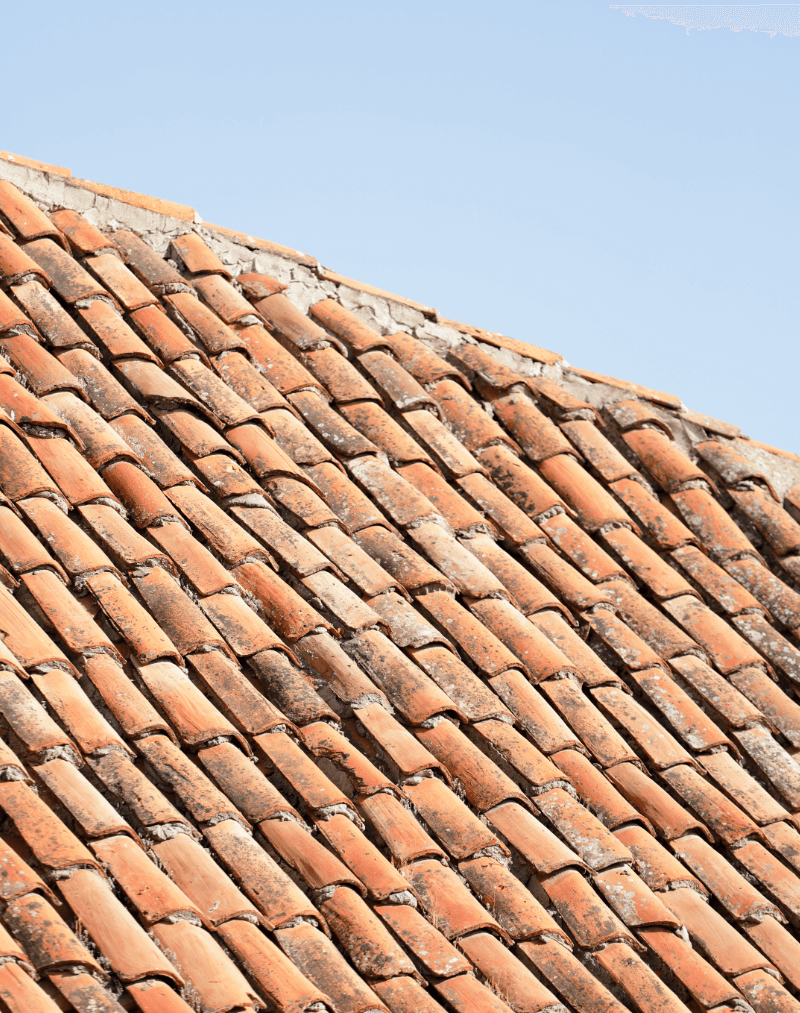
Both clay and concrete tiles create the same iconic look, but they are made differently and behave differently over time. Clay tile is formed from natural earthen clay and fired in a kiln at high temperatures, which is what gives it that deep, color-fast terracotta tone and exceptional resistance to fading and decay. Concrete tile is molded from a mix of sand, cement, and water, then cured and surface-coated with color pigment. From the street they can look nearly identical, especially when concrete is made to mimic a barrel or Mission clay profile.
The practical differences show up in three areas: longevity, weight, and color behavior. Clay generally holds its color for the life of the tile because the color is inherent to the fired material, while concrete's surface pigment can soften or lighten over the decades as the coating weathers. Concrete tile is typically heavier per square than clay, which matters for structural load. Clay usually carries a higher material cost, while concrete is often the more budget-friendly route to the same silhouette.
Neither is universally 'better' — the right choice depends on your structure, your climate, and your budget. A coastal or hot-arid home leaning into authentic Mediterranean or Spanish architecture often favors clay; a homeowner who wants the tile look at a lower price point and doesn't mind eventual color softening may be perfectly happy with concrete.
- Clay tile: kiln-fired natural clay, color is integral and fade-resistant, very long service life, higher cost, lighter than concrete (but still heavy).
- Concrete tile: molded cement/sand mix with surface pigment, lower cost, heavier per square, color can soften over decades.
- Profiles for both: flat/slate-look, low 'S'/Mission barrel, and high-barrel — the profile affects look, water shedding, and weight.
- Glazed vs. unglazed clay: glazing adds a protective, color-locked finish and can improve moisture resistance.
How Long Tile Roofs Last — and Why the Tile Isn't the Whole Story
Tile is prized for longevity, and for good reason: well-made clay and concrete tiles can remain serviceable for many decades, often outlasting the home's original asphalt-shingle alternative several times over. Manufacturers frequently offer very long warranties on the tile itself, and it's common for the tiles to outlive the roof system around them.
Here's the critical detail most homeowners miss: on a tile roof, the tiles are largely the armor, not the actual waterproofing. Underneath the tile sits the underlayment — a waterproof membrane — plus flashing at penetrations, valleys, and walls, along with fasteners, battens, and ridge/hip components. These underlying materials have a shorter lifespan than the tile above them. In many cases the tile is still perfectly intact while the underlayment beneath it has reached the end of its life.
This is why an aging tile roof often needs a 'lift and relay' rather than a full tear-off: a roofer carefully removes and stockpiles the sound tiles, replaces the worn underlayment and flashing, and reinstalls the original tile. It's a major reason tile can be cost-effective over the very long term — you may not have to buy new tile, only renew the system beneath it.
- The tile (clay or concrete) is the most durable layer and frequently outlasts everything beneath it.
- Underlayment, flashing, and fasteners are the wear items — they typically need renewal before the tile does.
- A 'lift and relay' reuses good tile and replaces the worn waterproofing layer, often extending roof life substantially.
- Leaks on a 'good-looking' tile roof usually trace to failed underlayment, cracked flashing, or slipped/broken individual tiles — not the tile field as a whole.
Tile Roofing Cost: Typical Ranges to Plan Around
Tile roofing sits at the premium end of residential roofing. As a general industry guide, installed tile roofs commonly run in the range of roughly $10 to $25+ per square foot of roof area, with concrete tile typically landing lower in that band and clay (especially specialty or imported profiles) reaching the higher end. Treat these as typical estimates that move with your region, the material and profile you choose, roof size and pitch, complexity, and whether structural or underlayment work is required.
Several factors push tile projects up or down. Roof complexity (lots of valleys, hips, dormers, skylights, and penetrations) increases labor and flashing work. Steep or hard-to-access roofs cost more to work on safely. The big one unique to tile is structural capacity: because tile is heavy, a home not originally built for it may need an engineer's review and framing reinforcement, which adds cost. Tear-off and disposal of an old roof, and the condition of the decking underneath, also factor in.
For an existing tile roof, a lift-and-relay (reusing tile, replacing underlayment and flashing) is usually less expensive than a full new tile installation because you're not repurchasing tile. Spot repairs — replacing a handful of cracked or slipped tiles and sealing flashing — are far cheaper still. The right scope depends entirely on what's actually failing, which is why an on-roof assessment matters before settling on a number.
- Typical installed range (industry estimate, varies widely): about $10–$25+ per sq. ft.; concrete generally lower, clay generally higher.
- Cost drivers: roof size, pitch/access, complexity, structural reinforcement needs, tear-off/disposal, decking condition, material/profile choice.
- Lift-and-relay (reuse tile, renew underlayment/flashing) usually costs less than a full new tile roof.
- Ranges shift with region, material, roof size, and scope, so an on-roof look comes first. Call (669) 259-2777 for a free assessment.
Weight & Structure: The Question to Settle First
Tile is heavy — meaningfully heavier than asphalt shingles, and concrete tile is generally heavier than clay. This is the single most important consideration when adding tile to a home that didn't originally have it. The roof framing and walls must be able to carry the dead load of the tile system continuously, not just briefly.
If you're replacing an existing tile roof with comparable tile, the structure already supports the weight and this is usually a non-issue. But switching from shingles to tile, or from a lightweight tile to a heavier profile, can require a structural evaluation by a qualified engineer and, in some cases, framing reinforcement. Skipping this step is a serious mistake — overloading a roof structure is both a safety and a code problem.
There are 'lightweight' concrete and engineered tile options designed to reduce load while keeping the tile look, which can be part of the solution for borderline structures. The honest answer for any homeowner considering a switch to tile is: confirm structural capacity first, before falling in love with a particular tile. A good roofing assessment will flag whether an engineering review is warranted.
- Tile adds substantial dead load; concrete is typically heavier than clay.
- Replacing like-for-like tile: structure already supports it.
- Switching from shingles to tile (or going heavier): often needs an engineer's review and possibly reinforcement.
- Lightweight tile options exist for structures with limited load capacity — confirm capacity before choosing tile.
Tile Roofing Across U.S. Climates
Tile is a strong performer in hot, sunny, and arid regions — think the Southwest and parts of the South and West. The thermal mass of tile and the air gap created by its contoured, raised profile help reduce heat transfer into the attic, which is part of why tile is so common on Spanish- and Mediterranean-style homes in warm climates. Clay's color stability under intense UV is a genuine advantage in high-sun areas.
In coastal areas, tile (especially clay) resists salt-air corrosion better than many metal fasteners and components would on their own, though the underlying flashing and fastener selection still need to suit a marine environment. In wildfire-prone regions, tile's noncombustible nature is a meaningful benefit, provided the whole assembly — including underlayment and the spaces under tiles at eaves — is detailed to resist ember intrusion.
Cold and freeze-thaw climates require more care. Water that gets absorbed into a tile (more of a concern with some materials than others) and then freezes can cause cracking over repeated cycles, so freeze-resistant tile rated for the climate and correct installation details matter a great deal in northern regions. Heavy snow load also stacks on top of tile's own weight, reinforcing the structural conversation. The bottom line: tile can work in many climates, but the material grade, underlayment, and detailing should be matched to the local conditions rather than treated as one-size-fits-all.
- Hot/arid & high-UV regions: excellent fit — thermal mass, airflow under tile, and color stability (especially clay).
- Coastal: good corrosion resistance, but flashing and fasteners must suit salt air.
- Wildfire-prone: noncombustible tile is a plus when the full assembly is detailed against embers.
- Cold/freeze-thaw & heavy snow: use freeze-rated tile and correct detailing; factor snow load into the structural review.
Repair, Maintenance & Common Tile Roof Problems
Tile roofs are low-maintenance, not no-maintenance. The most common issues aren't failures of the tile field but of individual components: cracked or broken tiles (often from impact, foot traffic, or freeze-thaw), tiles that have slipped out of position, deteriorated underlayment showing up as leaks, and failed or corroded flashing around chimneys, walls, valleys, and penetrations. Mortar at ridges and hips can also crack and loosen over time on older installations.
Walking a tile roof is genuinely hazardous to both the walker and the tiles — tiles crack under concentrated weight, and the surface can be slippery. This is one area where DIY inspection is strongly discouraged; cracked tiles created by an untrained person on the roof can turn a small concern into a new leak path. A roofer who works on tile knows how to distribute weight and step on the strong points of each tile, or to work from the eaves and use proper equipment.
Sensible tile-roof maintenance includes periodic professional inspections, keeping the roof and especially the valleys clear of leaves and debris that trap moisture, addressing cracked or slipped tiles promptly before water reaches the underlayment, and keeping flashing and any ridge/hip mortar in good condition. Catching a few broken tiles or a bit of failing flashing early is inexpensive; letting water sit on aging underlayment is what turns into a costly deck-and-structure repair. If you're seeing leaks, cracked tiles, or daylight at flashing, a professional roof assessment is the right next step. Call Roof Repairs at (669) 259-2777 for a free, no-pressure evaluation anywhere in the U.S.
- Most-common issues: cracked/broken tiles, slipped tiles, worn underlayment (leaks), failed flashing, cracked ridge/hip mortar.
- Don't walk a tile roof yourself — you risk both injury and new cracks that become leaks.
- Routine care: professional inspections, keep valleys/debris clear, replace broken tiles promptly, maintain flashing and mortar.
- Early small fixes are cheap; ignored leaks reaching the deck and structure are expensive.