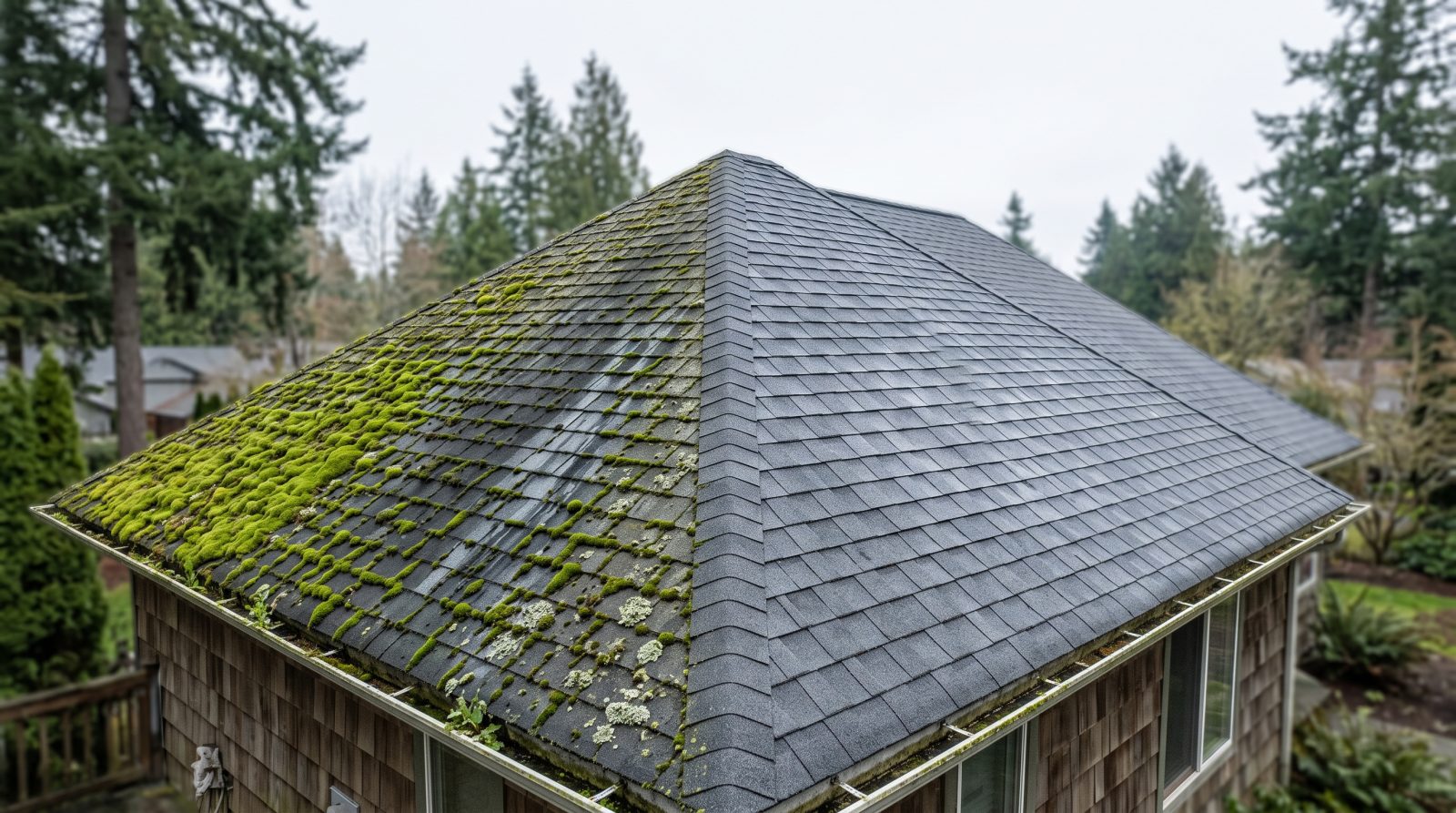
What's Actually Growing on Your Roof: Moss vs. Algae vs. Lichen
Homeowners tend to lump every kind of roof growth into one category, but moss, algae, and lichen are three distinct organisms that behave differently and require slightly different treatment. Knowing which one you have helps you choose the right cleaning approach and the right prevention.
Algae is the most common and usually shows up first. The black streaks running down a roof are typically a blue-green algae called Gloeocapsa magma, which feeds on the limestone filler in asphalt shingles. It forms a thin, flat film and spreads with airborne spores, which is why one streaked roof in a neighborhood often signals several more nearby. Algae is mostly a surface and curb-appeal problem early on, but the dark colonies absorb heat and trap moisture over time.
Moss is the thick, spongy green growth that builds up in three dimensions, especially along the shaded north-facing slope and in the gaps between shingles. Because moss holds water like a sponge, it is the most damaging of the three. As it grows under and between shingle edges, it lifts them, exposes the underlayment, and creates pathways for water to reach the deck.
Lichen is a tougher, crusty growth — a partnership of algae and fungus — that bonds tightly to the shingle surface and can leave pitting or staining even after removal. It is the most stubborn to clean and often the clearest sign that growth has been established for a while.
- Algae: flat black or dark-green streaks, spreads by spores, mostly cosmetic at first but traps heat and moisture
- Moss: thick, spongy, three-dimensional green mounds that hold water and lift shingle edges — the most damaging
- Lichen: crusty, tightly bonded patches that resist cleaning and can permanently mark the surface
- All three thrive on shaded, damp, debris-covered roof areas and slopes that dry slowly
Why Roof Growth Forms — and How It Varies by Region
Moss and algae need the same basic conditions to thrive: moisture, shade, and a food source. Anywhere those three overlap on your roof, growth tends to follow. North-facing slopes (in the Northern Hemisphere) stay shaded and damp longest, which is why they're usually the worst. Overhanging tree branches make it worse by dropping shade, debris, and organic matter that feeds growth and holds water against the surface.
Climate plays a major role, and this is where region matters. In the humid Southeast and along the Gulf Coast, warm temperatures and high humidity make black algae streaking extremely common. In the rainy Pacific Northwest and other cool, damp climates, thick moss is the dominant problem because surfaces rarely dry out fully. In the arid Southwest, roof growth is far less common, though shaded valleys and north slopes can still develop it. Northern and mountain regions deal with prolonged moisture from snowmelt and ice that keeps roofs wet for weeks.
Roof design and materials influence vulnerability too. Low-slope roofs drain and dry more slowly than steep ones, giving growth more time to take hold. Asphalt shingles with limestone filler give algae a food source, while wood shakes hold moisture and are highly moss-prone. Roof age matters as well — older shingles have a rougher, more porous surface that gives spores something to cling to.
- Moisture: shaded slopes, clogged gutters, and slow-draining low-slope roofs stay wet longer
- Shade: overhanging trees and north-facing slopes block the drying sun
- Food source: limestone filler in asphalt shingles and organic debris feed growth
- Regional pattern: algae streaks dominate the humid South; thick moss dominates the cool, wet Pacific Northwest and Northeast
How to Safely Remove Moss and Algae
The single most important rule of roof cleaning is this: never pressure wash an asphalt shingle roof. High-pressure water blasts away the protective granules that shield shingles from UV and weather, strips years off the roof's life, and can force water under the shingles. Professional roof cleaning relies on low-pressure or no-pressure soft-wash methods and the right cleaning solution — not brute force.
The widely recommended cleaning solution is a diluted mix based on sodium hypochlorite (chlorine bleach) or a dedicated commercial roof-cleaning product, applied at low pressure and allowed to dwell so it kills the organisms at the root. Some homeowners and pros use sodium percarbonate (an oxygen bleach) as a less corrosive alternative that is gentler on surrounding plants. After the solution does its work, a gentle rinse and light brushing in the downward direction (never upward, which lifts shingles) removes the dead material. Thick moss is best loosened by hand or with a soft brush after it has been killed and has dried out — scraping live, wet moss tends to pull granules with it.
Cleaning works best on a cool, overcast day so the solution doesn't evaporate before it can act. Before you start, wet down landscaping and shrubs below the work area and rinse them again afterward, since cleaning runoff can harm plants. Equally important is your own safety: roofs are steep, slippery when wet, and unforgiving. Walking a roof to apply chemicals carries real fall risk, and that risk is the main reason most homeowners are better off hiring a roofer or qualified cleaner rather than attempting it themselves.
A note on timing: moss and stains don't disappear instantly. After treatment, remaining algae and lichen marks often continue to fade over the following weeks as rain rinses the dead organisms away. Resist the urge to scrub aggressively to speed things up — patience preserves your granules.
- Never pressure wash asphalt shingles — it strips protective granules and shortens roof life
- Use a soft-wash, low-pressure approach with a bleach-based or oxygen-bleach solution and let it dwell
- Brush gently in the downward direction only; remove thick moss by hand after it has died and dried
- Protect plants below the work area by wetting before and rinsing after; clean on a cool, overcast day
- Treat roof work as a genuine fall hazard — when in doubt, hire a professional
Preventing Moss and Algae From Coming Back
Cleaning your roof solves today's problem, but without prevention the growth will simply return. The most durable, low-effort prevention strategy uses metal: installing strips of zinc or copper along the ridge, just below the roof's peak. When it rains, trace amounts of metal ions wash down the slope and create an environment hostile to algae and moss. You can often see this effect naturally on roofs with metal chimney flashing or galvanized vents — the area directly below them stays clean and streak-free while the rest of the roof grows. Many newer asphalt shingles are also manufactured with copper-infused or algae-resistant granules, which is worth specifying on your next reroof if your climate is growth-prone.
The second pillar of prevention is controlling moisture and shade. Trimming back overhanging branches lets more sunlight reach the roof and dramatically speeds drying after rain. Keeping gutters and valleys clear of leaves and debris prevents standing water and the damp organic matter that growth feeds on. Routinely clearing debris from the roof surface, especially in valleys and behind chimneys where it collects, removes the foothold spores need.
Finally, build inspection into your routine. Catching a thin algae film or a small moss patch early means a quick, inexpensive treatment instead of a full restorative cleaning — or worse, water damage from moss that has lifted shingles long enough to let water reach the deck. A seasonal look at your roof, particularly after fall leaf drop and at the end of a wet season, keeps small problems small.
- Install zinc or copper strips near the ridge so rain carries growth-inhibiting metal ions down the slope
- Choose algae-resistant (copper-granule) shingles on your next reroof if you live in a humid or wet climate
- Trim overhanging branches to add sunlight and speed drying
- Keep gutters, valleys, and the roof surface clear of leaves and debris
- Inspect seasonally so small patches get treated before they cause damage
What Roof Cleaning Typically Costs
Roof cleaning costs vary widely, and any figure here is a typical industry estimate, not a quote — actual pricing depends on your region, roof size, pitch, height, the type and severity of growth, and the cleaning method used. As a general range, a professional soft-wash roof cleaning for an average single-family home often falls somewhere in the low hundreds to roughly a thousand dollars or more, with larger, steeper, multi-story, or heavily mossed roofs landing toward the higher end. Heavy lichen and thick, established moss take more time and labor, which raises the price.
Several factors push the number up or down. Roof size and pitch are the biggest drivers — more square footage and steeper, harder-to-walk slopes mean more time and more safety equipment. Height matters too, since a two- or three-story home requires more setup than a single story. The severity and type of growth play a role, as does whether you add preventive measures like installing zinc or copper strips during the same visit. Add-ons such as gutter cleaning are often bundled at a discount while crews are already on site.
It helps to weigh cleaning against the alternative. A professional cleaning is almost always a small fraction of the cost of replacing a roof that has been degraded by years of moisture-trapping moss. Regular, modest maintenance spending protects a much larger investment. For a clear picture of what your specific roof needs and a free assessment, call Roof Repairs at (669) 259-2777.
- Typical professional soft-wash cleaning often ranges from the low hundreds to around a thousand dollars or more — an estimate that varies by region and scope
- Cost drivers: roof size, pitch, number of stories, severity and type of growth, and method
- Preventive add-ons (zinc/copper strips, gutter cleaning) are often bundled during the same visit
- Routine cleaning costs far less than premature roof replacement caused by long-term moisture damage
When to Call a Professional
Some light surface algae on a low, walkable roof may be within reach for a careful, well-equipped homeowner. But several situations clearly call for a professional — and most of them come down to safety and protecting the roof you already have. Steep or multi-story roofs, slippery wet surfaces, and the chemicals involved in soft washing make DIY roof cleaning one of the more dangerous home maintenance tasks. The cost of a fall far outweighs the cost of hiring help.
Beyond safety, a professional brings the right method and an experienced eye. The wrong pressure or the wrong chemical mix can do lasting damage to shingles, and untrained cleaning often strips granules that can't be put back. A roofer also evaluates what the growth has already done — checking for lifted or cupped shingles, soft spots in the deck, compromised flashing, and early water intrusion — so cleaning is paired with any repairs the roof genuinely needs. That combination of cleaning plus inspection is what turns a one-time wash into real protection.
If you're seeing thick moss, widespread streaking, stubborn lichen, or any signs of water damage inside — stains on ceilings, a musty attic — it's time for an expert look. Roof Repairs provides nationwide roofing help, and a free roof assessment is the simplest place to start. Call (669) 259-2777 to talk through what your roof needs and get a clear, honest plan.
- Call a pro for steep, high, or multi-story roofs where fall risk is significant
- Get professional help for thick moss, heavy lichen, or any interior signs of water intrusion
- A roofer pairs cleaning with inspection — catching lifted shingles, deck damage, and flashing issues
- Improper DIY pressure or chemicals can permanently damage shingles and may void manufacturer warranties