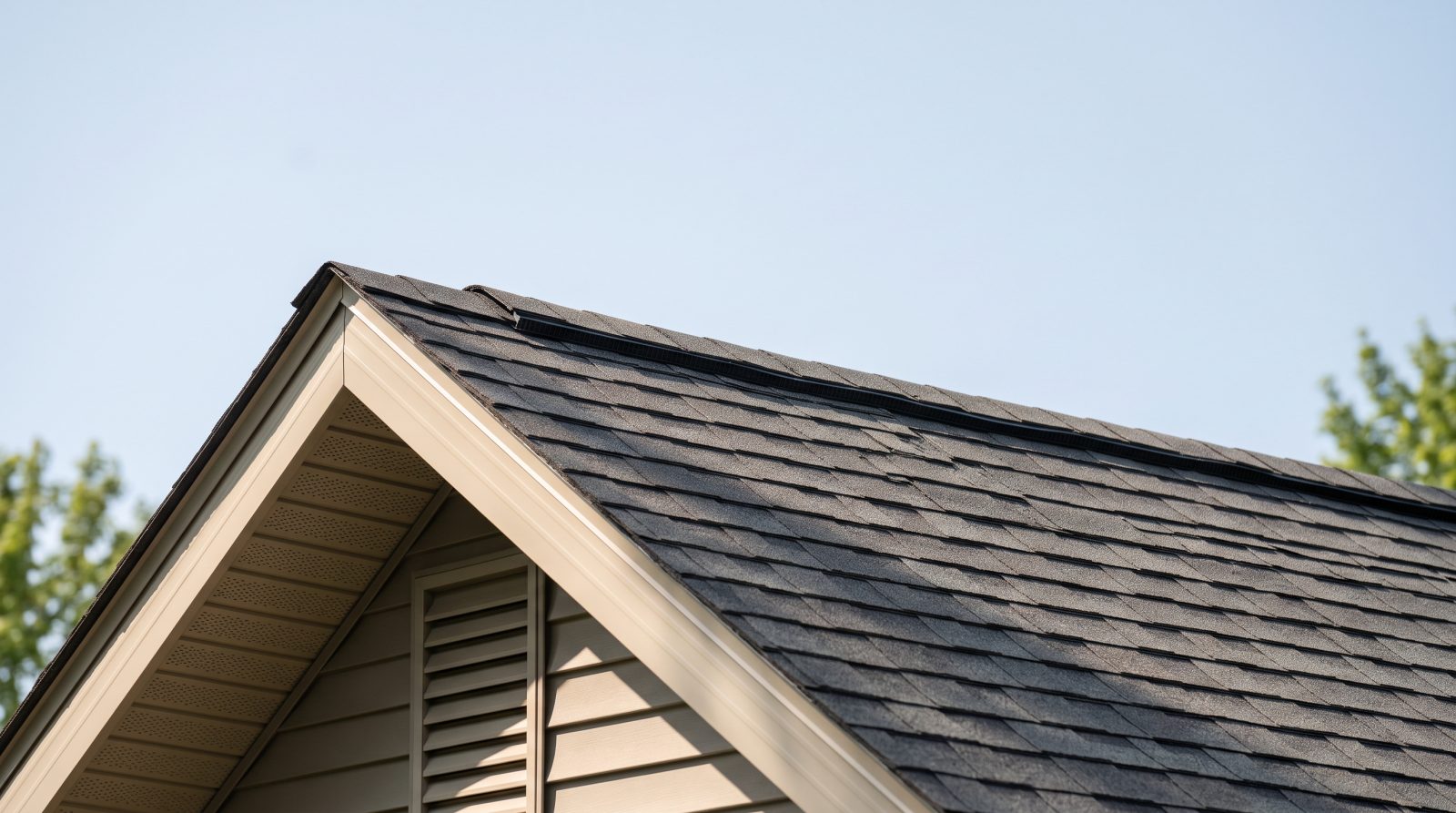
Why roof ventilation matters more than most homeowners realize
Your attic is not just empty storage space — it is a buffer zone between the outside air and your living space, and it behaves very differently depending on whether air can move through it. The core job of roof ventilation is simple to state: continuously exchange the air inside your attic with outside air. That single function solves two completely different problems that show up in different seasons.
In summer, the sun heats your roof deck and radiates that heat downward. An unventilated attic can climb well above the outdoor temperature, turning into a heat reservoir that bakes your shingles from below and forces your air conditioner to fight a losing battle. Moving that hot air out and pulling cooler air in keeps roof and attic temperatures closer to ambient, which protects roofing materials and eases the load on your cooling system.
In winter — and this surprises people — the bigger enemy is moisture, not heat. Everyday living (showers, cooking, laundry, even breathing) pushes warm, humid air up into the attic. When that moist air hits a cold roof deck, it condenses into water. Over a season, that condensation soaks insulation, rusts fasteners, rots sheathing, and grows mold. Proper ventilation carries that humid air out before it can condense. This is why ventilation is a year-round system, not a hot-weather add-on.
- Protects shingle life by keeping the roof deck from overheating from underneath
- Reduces summer cooling load by flushing trapped attic heat
- Prevents winter condensation that rots decking and ruins insulation
- Helps prevent ice dams in cold climates by keeping the roof deck cold and even
- Is frequently required to keep manufacturer shingle warranties valid
How a balanced ventilation system actually works: intake and exhaust
A working attic ventilation system is not one vent — it is two halves working together. You need intake vents low on the roof (usually at the eaves or soffits) and exhaust vents high on the roof (at or near the ridge). Cool outside air enters low, warms and rises, picks up heat and moisture, and exits high. This continuous bottom-to-top flow is what does the work. Remove either half and the system stalls.
The key word professionals use is balance. Most building codes and shingle manufacturers reference a ratio of roughly 1 square foot of net free vent area for every 150 square feet of attic floor, which can often be relaxed to about 1:300 when intake and exhaust are properly split and a vapor barrier is present. Just as important, intake and exhaust should be roughly equal — many experts favor slightly more intake than exhaust. An attic with plenty of ridge vent but blocked or missing soffit intake is one of the most common real-world failures.
There are several vent types, and the right mix depends on your roof shape, climate, and existing structure. The biggest design mistake is mixing exhaust types that fight each other — for example, combining a ridge vent with powered or box vents on the same roof plane. Instead of both pulling air out, the upper vent can pull air back in from the lower one, short-circuiting the flow and even drawing weather into the attic.
- Intake (low): soffit vents, edge/drip-edge vents, fascia vents — these feed fresh air in
- Exhaust (high): ridge vents (most common and effective), static box vents, gable vents, turbines
- Powered options: solar or electric attic fans — useful in some cases but easy to misapply
- Rule of thumb: keep intake and exhaust balanced; do not mix competing exhaust types on one roof plane
- Net free area is the real measurement — a vent's hole size matters more than its outer dimensions
Warning signs your attic ventilation is failing
Most ventilation problems are invisible until they become expensive, which is why knowing the symptoms is so valuable. The good news is that many warning signs are things a homeowner can spot from the ground, the attic hatch, or a utility bill. If you notice several of these together, it is worth having the roof and attic assessed before damage compounds.
Inside the attic, look (and smell) for the signatures of trapped heat and moisture: a musty odor, visible mold or dark staining on the underside of the roof deck, damp or matted insulation, rusted nail tips, or frost on the sheathing in winter. On a hot day, an attic that feels like an oven well into the evening is telling you heat is not escaping. In winter, condensation droplets or 'attic rain' point to moist air with nowhere to go.
From outside and around the home, watch for shingles that look prematurely curled, cracked, or aged; recurring ice dams along the eaves in cold climates; peeling exterior or interior paint near the roofline; and unusually high cooling bills in summer. None of these alone proves a ventilation problem, but in combination they strongly suggest the attic cannot breathe.
- Attic stays hot long after sunset, or feels stifling and stuffy
- Musty smell, visible mold, or dark water staining on the roof deck underside
- Damp, compressed, or stained insulation; rusted nails; winter frost or condensation
- Premature shingle curling or cracking across the whole roof
- Recurring ice dams in winter (cold climates)
- Rising cooling costs without a change in usage
How ventilation needs change by region and climate
Because Roof Repairs helps homeowners across the country, it is worth being clear that the right ventilation strategy is not identical everywhere. The physics are universal — intake low, exhaust high, keep it balanced — but the priorities shift with climate, and good design accounts for that.
In hot, sunny regions, heat removal tends to dominate the conversation. Generous, well-balanced passive ventilation keeps attic temperatures down, protects shingles from heat aging, and reduces cooling costs through the long warm season. Humid climates add a moisture dimension year-round, so airflow and proper attic sealing both matter.
In cold and snowy regions, condensation and ice dams move to the front. Here the goal is often to keep the roof deck cold and uniform: warm air leaking from the house plus poor ventilation creates melt-and-refreeze cycles at the eaves that force water under the shingles. Mixed climates need a system that handles both summer heat and winter moisture. In every case, ventilation works hand in hand with attic insulation and air sealing — you cannot ventilate your way out of a house that is leaking conditioned air into the attic, and you should never block soffit intake with insulation.
- Hot/sunny climates: prioritize heat removal and shingle protection with balanced passive airflow
- Humid climates: manage moisture year-round alongside heat
- Cold/snowy climates: keep the deck cold and even to limit condensation and ice dams
- Mixed climates: design for both summer heat and winter moisture
- Everywhere: pair ventilation with proper insulation and air sealing; keep soffit intake clear
Common ventilation mistakes — and what good installation looks like
Many ventilation problems are not the absence of vents but the wrong combination of them, installed without attention to balance. The single most common issue is exhaust without intake: a roof with a ridge vent or box vents but soffits that are blocked by insulation, painted shut, or never installed. Without low intake, the exhaust vents have nothing to pull, and the system barely moves air.
The second classic mistake is mixing exhaust systems. A ridge vent paired with gable vents or powered fans on the same roof can short-circuit airflow, with one vent feeding the other instead of exchanging attic air with the outdoors. Powered attic fans deserve special caution: if intake is inadequate, a powerful fan can actually pull conditioned air out of your living space (and even backdraft combustion appliances), raising bills instead of lowering them. They can help in specific situations, but only as part of a properly balanced design.
Good installation, by contrast, is unglamorous and methodical. It starts with measuring attic floor area and calculating required net free vent area, then verifying that intake and exhaust are balanced and compatible. It keeps soffits open and baffled so insulation cannot choke them, uses a continuous ridge vent where the roof geometry allows, and confirms the attic is properly insulated and air-sealed so ventilation isn't fighting indoor air leakage. The result is a roof that breathes evenly across its whole surface.
- Mistake: exhaust vents with blocked or missing soffit intake — the most common failure
- Mistake: mixing ridge vents with gable or powered vents that short-circuit airflow
- Mistake: powered fans installed over inadequate intake, pulling air from the house
- Mistake: insulation jammed into the eaves, choking off intake (use baffles instead)
- Good practice: calculate net free area, balance intake and exhaust, keep soffits open, pair with insulation and air sealing