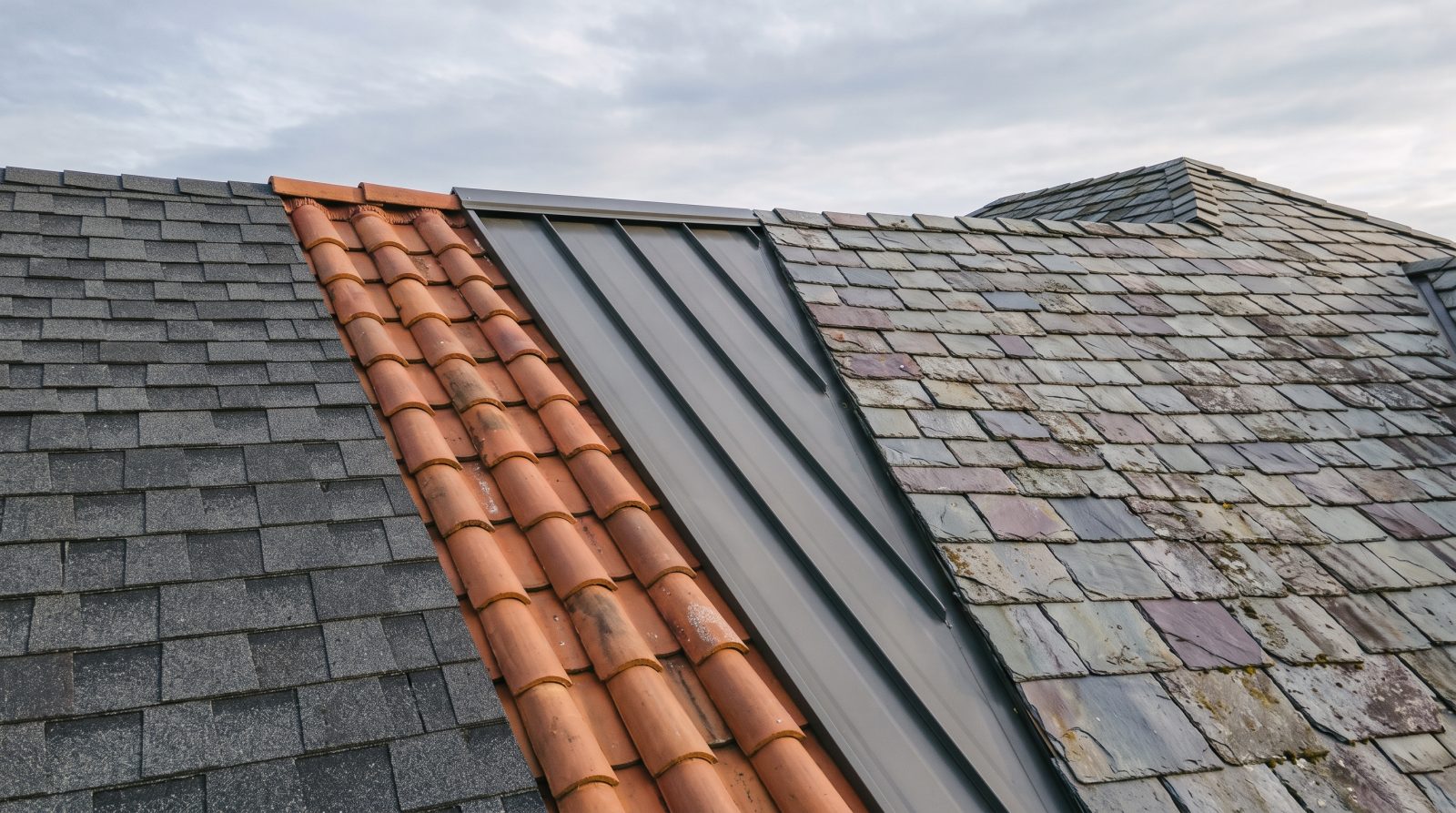
Why roof lifespan is a range, not a number
Every lifespan figure you will see below is a range, and that is not hedging, it is physics. A roof is a system exposed to sun, water, wind, temperature swings, and gravity every hour of every day, and the rate it ages depends on the brutal combination of material, climate, installation quality, ventilation, and maintenance. The same asphalt shingle that comfortably reaches 25 years on a shaded, well-ventilated home in a mild climate may struggle to reach 15 on a south-facing roof under relentless desert sun or in a coastal zone hammered by salt air and storms.
Climate is the single biggest variable most homeowners underestimate. Intense UV exposure in the Southwest bakes the oils out of asphalt and dries out wood. Freeze-thaw cycles across the northern states and mountain regions pry at every seam and crack as trapped water expands. Humidity and shade in the Southeast feed algae, moss, and rot. Coastal salt accelerates corrosion on metal fasteners and flashing. High-wind and hail-prone corridors through the Plains and Southeast can take years off any roof in a single severe season.
Two factors are fully in your control and quietly decide whether a roof lands at the top or bottom of its range: installation quality and attic ventilation. A roof installed with correct underlayment, proper fastening, and well-sealed flashing simply lasts longer. And a poorly ventilated attic traps heat and moisture, cooking shingles from underneath and shaving years off the lifespan no matter what the material is rated for. The numbers below assume competent installation and reasonable upkeep.
- Material: the base lifespan, which can vary 2x to 5x across roof types
- Climate and region: UV, freeze-thaw, humidity, salt air, wind, and hail all age roofs differently
- Installation quality: correct underlayment, fastening, and flashing add years; shortcuts subtract them
- Ventilation: a hot, damp attic prematurely ages the roof from the inside out
- Maintenance: catching small leaks, clearing debris, and replacing cracked sealant extends service life
- Slope and color: steeper roofs shed water faster; darker roofs run hotter in sunny climates
Asphalt shingles: the national workhorse (15 to 30 years)
Asphalt shingles cover the majority of homes in the United States for good reason: they are affordable, widely available in every region, and reasonably durable. But asphalt is also where lifespan ranges are widest, because there are real differences between product tiers. Knowing which type you have tells you a lot about how much road is left.
Three-tab shingles are the thinnest and least expensive option and typically last around 15 to 20 years. Architectural (also called dimensional or laminate) shingles are thicker, heavier, and more wind-resistant, and commonly reach 25 to 30 years. Premium or designer asphalt shingles, the heaviest grade, can push toward 30 years or a bit beyond under good conditions. In harsh-sun or storm-prone regions, expect the lower end of each range; in mild, shaded climates, the upper end is realistic.
Asphalt tends to fail visibly, which is helpful for planning. You will see granules collecting in gutters and at downspout outlets, shingles that curl or cup at the edges, cracked or brittle tabs, and bald spots where the protective granule layer has worn away. Dark streaks are usually algae rather than failure, but moss that lifts shingles is a genuine problem. Once a significant share of the roof shows curling and granule loss, you are near the end of its service life rather than facing a one-spot repair.
- Three-tab asphalt: roughly 15 to 20 years
- Architectural / dimensional asphalt: roughly 25 to 30 years
- Premium / designer asphalt: up to around 30 years or slightly more
- End-of-life signs: granules in gutters, curling or cracked tabs, bald spots, widespread wear
Metal roofing: the long-haul upgrade (40 to 70+ years)
Metal roofing has moved from barns and commercial buildings to mainstream residential use, and its appeal is longevity. A quality metal roof commonly lasts 40 to 70 years or more, often outliving the homeowner who installed it. It sheds snow and rain efficiently, resists fire, and stands up well to wind, which makes it popular in snow country, wildfire-prone areas, and high-wind regions alike.
Not all metal is equal. Standing-seam panels, where the fasteners are concealed beneath raised seams, are the premium choice and tend to last the longest because there are no exposed fastener holes to leak or back out over time. Exposed-fastener panels are more affordable but rely on rubber washers that can dry out and need attention every couple of decades. Metal shingles and stone-coated steel offer the durability of metal with a more traditional look. Material matters too: aluminum resists corrosion well in coastal salt air, while steel is strong and economical when properly coated.
Metal roofs rarely fail dramatically; they age slowly and telegraph it. Watch for faded or chalking paint finish, loosening or backing-out fasteners on exposed-fastener systems, scratches or scuffs that expose bare metal to rust, and any separation or sealant failure at the seams and flashing. Most metal-roof problems are maintainable for decades rather than replacement-level, which is a large part of the long-term value.
- Standing-seam metal: roughly 50 to 70+ years, fewer leak points
- Exposed-fastener panels: roughly 40 to 50 years, periodic fastener service
- Stone-coated steel / metal shingles: durable with a traditional appearance
- Aluminum favored in coastal/salt environments; coated steel is strong and economical
- Watch for: chalking finish, loose fasteners, scratches exposing bare metal, seam sealant failure
Tile, slate, and other premium roofs (50 to 100+ years)
At the top of the lifespan ladder sit the premium materials, and here the numbers become generational. Natural slate is the longest-lived common roofing material, frequently lasting 75 to 100 years or more when properly installed and maintained; many historic buildings still wear their original slate. Clay tile, common across the Southwest and in Mediterranean-style architecture, often reaches 50 to 100 years, with the tiles themselves outlasting the underlayment beneath them. Concrete tile is heavier and somewhat less long-lived than clay but still commonly delivers 40 to 75 years.
There is an important catch with tile and slate: the visible tiles are not the whole roof. The waterproof underlayment underneath ages on a normal schedule and may need replacement once or more during the life of the tiles, and individual tiles crack from impact, foot traffic, or freeze-thaw. Because these are heavy materials, the roof structure must be engineered to carry the load, so they are not a casual swap onto any home. The payoff is a roof that, with periodic underlayment and tile maintenance, can genuinely last a lifetime.
Wood shakes and shingles deserve a mention as a mid-tier natural option, typically lasting 25 to 40 years depending on wood species, climate, and upkeep. They look beautiful and weather to a silvery gray, but they demand attention: they are vulnerable to rot, insects, and fire, and they fare poorly in damp, shaded, or wildfire-prone regions. In wet climates they sit at the lower end of the range; in dry, well-maintained settings they reach the higher end. Many areas now have fire codes that limit or restrict wood roofing, so local rules matter here more than with other materials.
- Natural slate: roughly 75 to 100+ years, the longest-lived common material
- Clay tile: roughly 50 to 100 years; tiles outlast the underlayment beneath them
- Concrete tile: roughly 40 to 75 years, heavier than clay
- Wood shakes/shingles: roughly 25 to 40 years, climate- and maintenance-sensitive
- Tile and slate require structural capacity for the weight and periodic underlayment renewal
Flat and low-slope roofs: a different clock (10 to 50 years)
Flat and low-slope roofs, common on commercial buildings, modern homes, and additions, play by different rules because water sits and drains slowly rather than shedding fast. Lifespan depends heavily on the membrane type. Older built-up roofing (BUR), the classic tar-and-gravel system, and modified bitumen typically run 15 to 30 years. Single-ply membranes such as TPO and EPDM commonly last 20 to 30 years, with EPDM (a rubber membrane) known for resilience. Spray polyurethane foam (SPF) can last decades with periodic recoating. PVC membranes are durable and chemical-resistant, often in the 20 to 30 year range.
The defining factor for low-slope roofs is drainage and standing water. Because the slope is minimal, ponding water, clogged drains, and seam failures are the usual culprits behind early aging. Regular inspection of seams, flashings, and drainage paths matters more here than on a steep roof, and proactive recoating on foam and certain membranes can meaningfully extend service life. For business owners especially, a maintained flat roof is far cheaper to keep than to neglect into a full tear-off.
Across all of these systems, the lower end of the range usually reflects deferred maintenance, ponding water, or harsh exposure, while the upper end reflects good drainage, periodic upkeep, and quality installation. If you have a flat roof and cannot remember the last time anyone walked it, that is the strongest argument for a professional assessment.
- Built-up roofing (BUR) and modified bitumen: roughly 15 to 30 years
- TPO and EPDM single-ply membranes: roughly 20 to 30 years
- PVC membrane: roughly 20 to 30 years, strong chemical resistance
- Spray foam (SPF): decades of service with periodic recoating
- Standing water and poor drainage are the top causes of early flat-roof failure
How to extend your roof's life and know when it's time
Whatever material is over your head, a handful of habits push it toward the top of its range. Keep gutters and drains clear so water moves off the roof instead of backing up under shingles or pooling on flat surfaces. Trim overhanging branches that scrape the surface, drop debris, and shade the roof into staying damp. Make sure the attic is properly ventilated and insulated so heat and moisture do not cook the underside of the deck. And deal with small problems early, a single lifted shingle, a cracked sealant bead, or a loose piece of flashing is cheap to fix now and expensive to ignore.
Annual inspections, plus a check after any major storm, are the highest-return maintenance you can do, because most roof failures start small and hidden. A professional eye catches the loose flashing, the soft spot, or the failing seam while it is still a repair rather than a replacement. The goal is not to chase perfection but to never be surprised by your roof.
Knowing when a roof has reached the end is partly age and partly evidence. If your roof is near or past the lifespan for its material, or you are seeing widespread curling and granule loss, multiple active leaks, sagging areas, daylight through the roof boards, or interior water staining that keeps returning, you are likely past the point of spot repairs. The honest call between repair and replacement depends on what the inspection actually finds. For a clear, no-pressure read on where your roof stands and how much life is left in it, call Roof Repairs at (669) 259-2777 for a free roof assessment and quote.
- Keep gutters, drains, and valleys clear so water sheds properly
- Trim back overhanging branches that abrade and shade the roof
- Ensure proper attic ventilation and insulation to prevent heat and moisture damage
- Inspect annually and after major storms; fix small issues before they spread
- Replacement signals: widespread wear, recurring leaks, sagging, daylight through the deck, returning water stains