
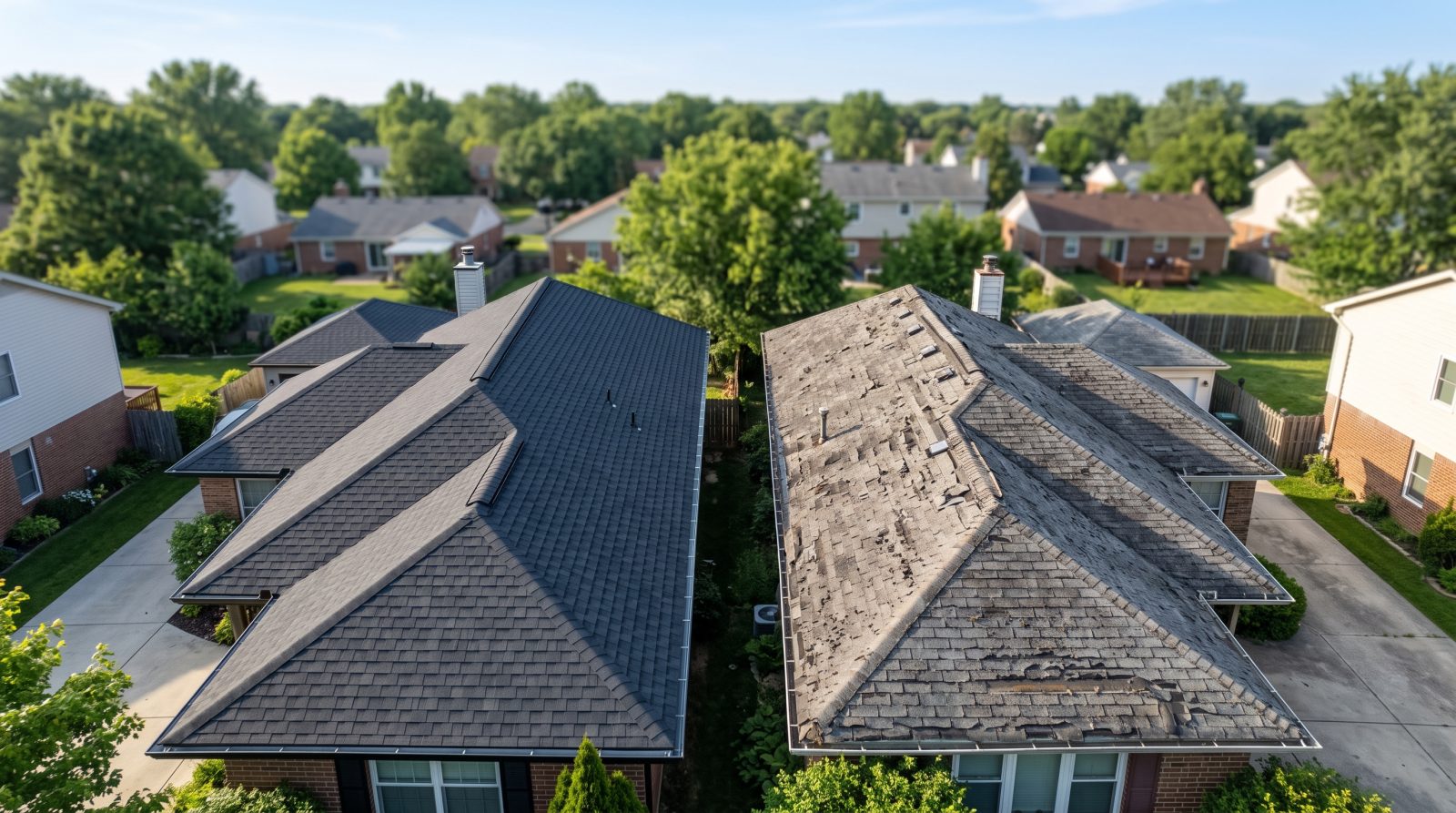
Why Some Roofs Fail in 15 Years and Others Last 30
Two roofs on the same street, same shingle, same weather — one taps out early, the other sails past 30. The difference almost always comes down to five things, and most of them have nothing to do with the shingle.
The Shingle Wrapper Lies to You
Walk down any street and you'll see it: two homes built around the same time, roofed with what looks like the same material, weathering the same storms. One roof still looks crisp decades in. The other is curling, balding, and leaking far sooner. Same product on the box — wildly different outcomes. So what gives?
Here's the uncomfortable truth most homeowners never hear: the shingle is the least important variable in how long your roof lasts. A roof is a system — decking, underlayment, flashing, ventilation, and the install itself — and a weak link in any one of those will drag the whole thing down years early, no matter how good the shingle on top is. The lifespan you were quoted at purchase is a best-case figure under ideal conditions. What you actually get depends on the five factors below.
Understanding these isn't academic. It changes how you buy a roof, how you maintain one, and how you spot a roof that's quietly failing before it costs you a ceiling, a wall, or a mold remediation bill.
Factor 1: Ventilation — The Silent Roof Killer
If we had to name the single most underrated reason roofs die young, it's bad attic ventilation. A roof is supposed to breathe. Cool, dry air enters low at the soffits and warm, moist air exits high at the ridge. When that airflow is choked off — by insulation jammed into the eaves, painted-over vents, or a ridge vent that was never cut in properly — your attic turns into an oven in summer and a sweat lodge in winter.
Both extremes are brutal. Trapped summer heat literally bakes shingles from underneath, cooking out the oils that keep them flexible. They get brittle, curl, and shed granules ahead of schedule. In winter, trapped moisture condenses on the underside of the decking, rotting the wood your shingles are nailed to and feeding mold. In cold climates, that same imbalance fuels ice dams that force water backward under the shingles. You can buy the best shingle made and still lose the roof early if the attic underneath can't breathe.
The frustrating part is that ventilation problems are invisible from the curb and easy to get wrong on install. It's one of the first things a competent roofer checks — and one of the first things a cheap, fast crew ignores.
- Warning signs: an attic that's stifling hot in summer, frost or damp on the underside of the roof deck in winter, or shingles that curl earliest on the sunniest slope.
- The fix is often modest: balanced intake (soffit) and exhaust (ridge) vents, plus keeping insulation out of the soffit airflow channel.
Factor 2: Installation Quality Is the Whole Ballgame
You can hand two crews the exact same materials and get two roofs with a wide gap in lifespan. Installation is that decisive. Roofing is unforgiving of shortcuts, and the shortcuts are easy to hide — for a while.
Nailing is the classic example. Nails driven too high miss the reinforced nailing strip, so shingles aren't truly fastened and lift in the first serious wind. Nails overdriven by an air gun crush the shingle and create a tear point. Then there's flashing — the metal that seals the vulnerable transitions around chimneys, valleys, skylights, and walls. Flashing is where most roofs actually leak, and it's exactly where a rushed crew reuses old, corroded metal or relies on a smear of caulk instead of properly integrated step flashing. Caulk is not a flashing strategy; it's a countdown timer.
Add in skipped starter strips at the eaves, missing ice-and-water shield in valleys and along the eaves where it's needed, and decking that was never inspected for soft spots before the new roof went on — and you've got a roof that looks perfect on day one and fails from the inside out. This is the strongest argument for not shopping on price alone. The cheapest bid is frequently the most expensive roof you'll ever own, because you can end up paying for it twice.
- Quality tells: proper flashing at every penetration and wall, ice-and-water membrane in valleys and eaves, a clean starter course, and decking inspected (and repaired) before shingles go down.
- Ask any roofer how they handle flashing and old decking. Vague answers are a red flag.
Factor 3: Material Grade — You Get a Range, Not a Number
Material absolutely matters — just not in the way the marketing implies. The familiar 3-tab shingle is the thinnest, lightest option and typically the first to age out. Architectural (dimensional) shingles are heavier, layered, and generally hold up longer and resist wind better. Step up again to premium designer shingles, standing-seam metal, tile, or slate, and you're into materials that can outlast several rounds of cheaper roofs — at a meaningfully higher upfront cost.
But notice the language: 'typically,' 'generally,' 'can.' Material sets the ceiling on lifespan, not the floor. A premium shingle installed over a roasting, unventilated attic by a crew that botched the flashing will still fail early. A solid architectural shingle installed correctly on a roof that breathes can deliver the service life it was designed for. Spend on material after you've secured the things that actually protect that investment: ventilation and installation.
Costs vary widely and we won't pretend otherwise — pricing swings with your region, roof size and pitch, tear-off complexity, the material you choose, and current labor and supply conditions. Treat any number you see online as a rough, illustrative range, not a quote. The only real number is the one a roofer gives you after looking at your actual roof.
- Where extra material budget pays off: high-wind regions, intense sun exposure, steep or complex roofs, and homes you plan to keep long-term.
- Where it can be overkill: a short hold before selling, or a simple roof in a mild climate — though correct install still matters everywhere.
Factor 4: Climate — Your Roof's Real Workload
Your roof's lifespan isn't decided in a lab; it's decided by what your local weather throws at it day after day. The same shingle ages very differently depending on where it lives.
Relentless sun and UV are quietly destructive — they break down the binders in shingles and accelerate that brittle, granule-shedding decline, which is why south- and west-facing slopes almost always wear first. Big daily temperature swings make materials expand and contract until seals fatigue. Coastal salt air corrodes fasteners and flashing. Hail bruises shingles in ways you may not see until leaks appear. Freeze-thaw cycles and ice dams pry at every seam. High winds find any shingle that wasn't nailed exactly right and peel it. None of this means a roof is doomed — it means the climate raises the bar for how well the roof has to be specified and installed to hit its full lifespan.
The practical takeaway: match the roof to the workload. A roof built for a mild, dry climate is under-built for a hail belt or a sun-blasted desert slope. The harsher your environment, the more those first three factors — ventilation, install, material grade — have to be dialed in.
Factor 5: Maintenance — The Cheapest Years You'll Ever Buy
Here's the factor entirely within your control, and the one most owners ignore until there's a stain on the ceiling. A roof that gets looked at and lightly cared for routinely outlives an identical roof that gets ignored. Small problems on a roof don't stay small — a single lifted shingle, a cracked pipe boot, or a clogged valley is a slow leak waiting for the next storm, and water damage compounds quietly inside the structure long before it shows up indoors.
Maintenance isn't dramatic or expensive. It's keeping gutters and valleys clear so water actually drains, clearing debris that traps moisture against the surface, trimming branches that scrape and drop leaves, and getting eyes on the roof periodically — especially after major storms — to catch lifted shingles, failing sealant, and tired flashing while they're still a cheap fix. Catching a small problem before it becomes a major repair is the entire game.
A quick word of caution on storm season: after big weather, areas often see a wave of out-of-town crews going door to door pushing fast, full-roof replacements and urgent-sounding pitches. Slow down. A reputable local assessment will tell you honestly whether you need a targeted repair or a replacement — and won't pressure you into the bigger ticket. Get a real look before you sign anything.
- Easy wins: keep gutters and valleys clear, remove debris, trim overhanging limbs, and inspect after major storms.
- Don't ignore: granules collecting in gutters, daylight or stains in the attic, lifted or missing shingles, and crumbling sealant around flashing.
So — Which Roof Are You Living Under?
The roof that lasts decades isn't lucky and it isn't magic. It's a roof that breathes, was installed by people who respected the details, uses material matched to its climate, and gets a little attention along the way. The roof that fails early usually looked identical on day one — it just had a hidden weak link nobody caught: a smothered attic, caulk where flashing should be, or years of skipped maintenance quietly adding up.
The good news is that you can find out which roof you have before it surprises you. Most early failures announce themselves to a trained eye long before they reach your living room. The earlier you catch a ventilation problem, a tired flashing detail, or a small leak, the cheaper and simpler the fix — and the more years you pull back from the roof you already paid for.
Not sure which side of the line your roof is on? Call (669) 259-2777 for a free roof assessment, and get an honest read on what's quietly aging your roof — and how many years you can still protect.
Frequently asked questions
How long should a roof actually last?
It depends far more on ventilation, installation quality, climate, and upkeep than on the shingle brand. Basic 3-tab shingles tend to age out soonest, architectural shingles generally last longer, and premium materials like metal, tile, or slate can last the longest — but only when the attic breathes and the install is done right. Treat any lifespan figure as a best-case range, not a promise. The honest answer for your roof comes from an assessment of your actual roof and climate.
What's the number one reason roofs fail early?
Poor attic ventilation is one of the most common and most overlooked. When trapped heat bakes shingles from below and trapped moisture rots the decking, even a premium roof can fail ahead of schedule. Rushed installation — especially bad flashing and improper nailing — is the other major culprit. Both are invisible from the ground, which is why a real inspection matters.
Can I really extend my roof's life with maintenance?
Yes, and it's one of the most cost-effective things you can do. Keeping gutters and valleys clear, removing debris, trimming overhanging branches, and getting the roof checked after major storms lets you catch small issues — a lifted shingle, a cracked boot, tired sealant — while they're cheap to fix. A neglected roof routinely fails years before an identical one that gets light, regular attention.
Need roofing help? Get a free assessment.
Call now and get a straight answer about your roof — repair, replacement, or just peace of mind.
Call (669) 259-2777