
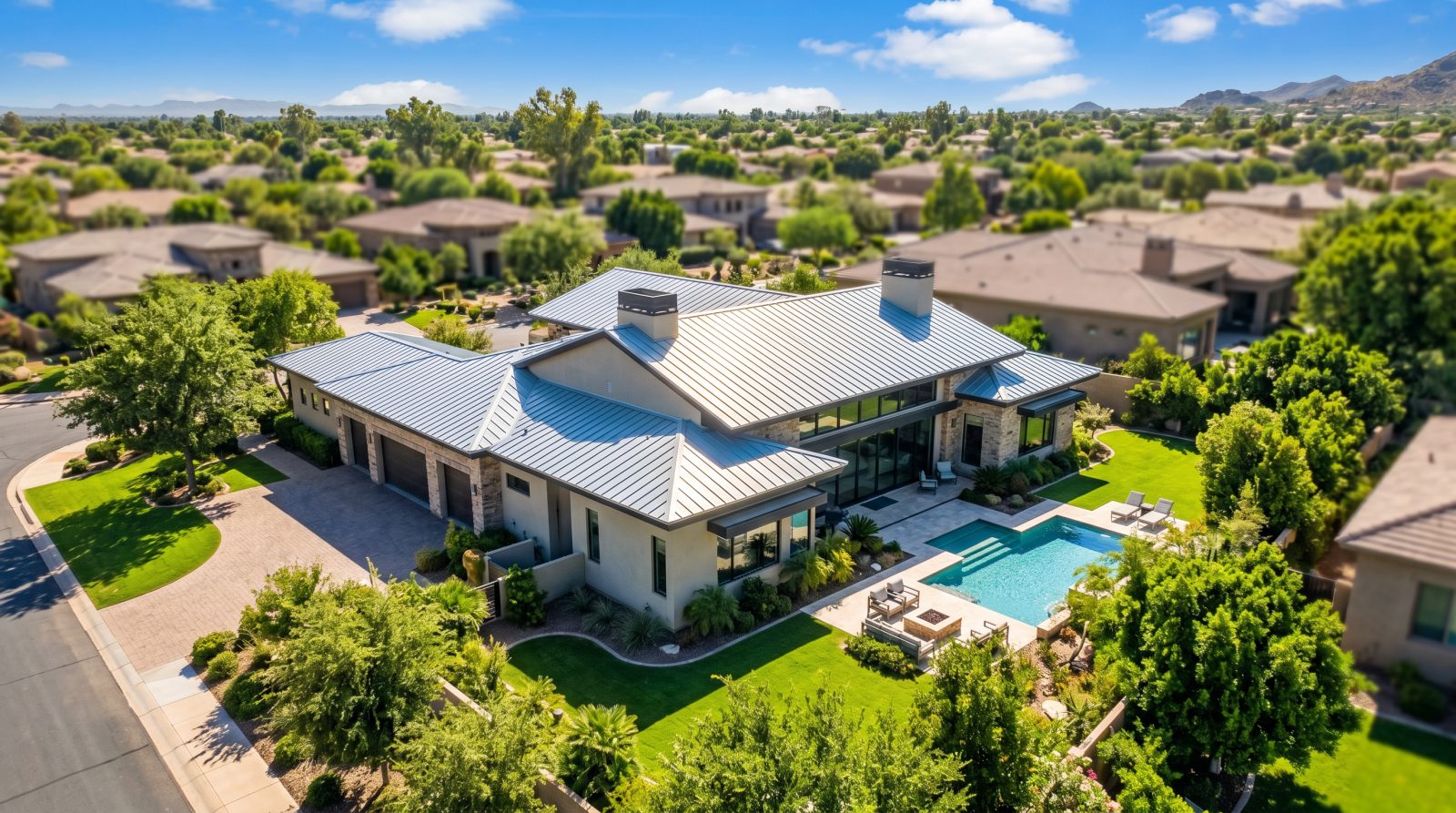
Cool Roofs and Rising Energy Bills: Do They Actually Pay for Themselves?
Reflective "cool" roofing gets pitched as free money on your energy bill. The truth is more interesting — and it depends heavily on where you live and what's on your roof now.
What a "Cool Roof" Actually Is
Walk across a black asphalt parking lot on a July afternoon and you've felt the entire physics lesson. Dark surfaces soak up sunlight and convert it to heat. A standard dark roof can climb dramatically hotter than the air around it on a sunny day, and a chunk of that heat marches straight down through your attic and into the rooms you're paying to keep cool.
A cool roof flips that dynamic. It's any roofing system engineered to reflect more sunlight and release absorbed heat faster than a conventional roof. The two properties that matter are solar reflectance (how much sunlight bounces off instead of being absorbed) and thermal emittance (how readily the roof sheds the heat it does take on). High marks on both mean the roof stays closer to the outside air temperature instead of becoming a giant radiator over your living space.
The instinct is to picture a stark white roof, and reflectivity does correlate with lighter colors. But this is 2026, and the category has matured well past that. Manufacturers now make tile, metal, and shingle products in deep, attractive tones that use special pigments to reflect a surprising amount of the sun's near-infrared energy. You can get much of the performance without your house looking like a giant ice cube.
How Reflective Roofing Lowers Your Bill
The mechanism is refreshingly simple. Less heat entering your attic means your air conditioner runs less often and for shorter cycles during the hottest part of the day. That shows up as lower cooling costs in summer, and often as a more comfortable home — fewer hot upstairs bedrooms, less of that oven-like feeling when you open the attic hatch.
There's a second, less obvious benefit that matters for the long game. Heat is hard on roofing materials. A roof that runs cooler tends to expand and contract less and bake less under UV punishment, which can ease wear over time. Real-world lifespan still depends on the material, the installation, ventilation, and your climate — but a cooler-running roof is generally a roof under less daily stress.
Here's the caveat most sales pitches skip: a reflective surface helps most when the sun is actually beating down and you're actively cooling the house. If your region spends much of the year needing heat instead of air conditioning, a cool roof can slightly increase winter heating demand because you lose a little of that free solar warmth. In hot, sunny climates that trade-off is a clear win. In cold ones, the math gets murkier.
Where Cool Roofs Genuinely Pay Off
Geography is the single biggest factor in whether reflective roofing earns its keep. The payoff is strongest where three things line up: long, hot cooling seasons, intense sunshine, and electricity prices that make every kilowatt-hour worth saving.
Think of the hot-and-sunny belt of the country — the Southwest, the Gulf states, the Southeast, and the hotter pockets of California and the southern plains. Homes and businesses there run air conditioning hard for many months, so a roof that knocks down attic heat works for you nearly all year. Flat-roofed commercial buildings are especially strong candidates, since their large, sun-exposed surfaces make reflectivity pay off at scale.
Mixed and cold climates are where you should temper expectations. In the upper Midwest, the Northeast, and the mountain states, the summer cooling savings are real but smaller, and they're partly offset by that winter heating penalty. It can still make sense — especially if your existing roof is dark and your summers are getting hotter — but treat the energy savings as a nice bonus rather than the headline reason to do it.
Worth knowing: some regions also offer utility rebates or incentives for qualifying reflective roofing, and certain building codes now require minimum reflectivity on some new roofs. Those programs change constantly and vary by location, so check what's currently available where you live rather than assuming.
Materials and the Ratings That Actually Mean Something
You don't have to take a contractor's word that a product is "cool." There's an independent ratings body — the Cool Roof Rating Council — that publishes measured solar reflectance and thermal emittance values for roofing products. Looking up a product's rated numbers is the single best way to compare apples to apples instead of relying on marketing adjectives. The ENERGY STAR program also certifies qualifying reflective roofing, which is another quick credibility check.
Cool options exist across nearly every roof type, so you're rarely forced to compromise on the look or structure you want:
Most homeowners are choosing between reflective shingles for a familiar look, painted or coated metal for longevity and strong reflectivity, and tile for hot, sunny regions where it's a natural fit. For flat or low-slope roofs, single-ply membranes and reflective coatings dominate. The right pick depends on your roof's slope, your climate, and your budget — which is exactly the kind of thing worth talking through before you buy.
- Reflective asphalt shingles — special granules boost reflectivity while keeping the traditional shingle look most neighborhoods expect
- Metal roofing with reflective or "cool" coatings — durable, sheds heat well, and available in many colors
- Clay and concrete tile — naturally suited to hot, sunny climates and available in cool-rated formulations
- Single-ply membranes (common on flat and low-slope roofs) — light-colored options reflect strongly across big surfaces
- Reflective roof coatings — a liquid-applied layer that can boost the reflectivity of certain existing roofs
Setting Realistic Savings Expectations
Let's talk numbers without pretending anyone can predict your exact bill. A contractor who quotes you a precise savings percentage sight-unseen is guessing. Your actual savings hinge on your climate, how dark your current roof is, how well your attic is insulated and ventilated, how aggressively you run the AC, and your local electricity rate. Swap a dark roof for a reflective one in a scorching desert metro and the difference can be meaningful; do the same in a mild coastal climate and it may be modest.
The most important reframe is this: a cool roof is rarely worth replacing a perfectly good roof just to chase energy savings. The standalone payback period on a tear-off-and-replace project, funded by cooling savings alone, can stretch out a long time. Where it makes real financial sense is when you're already replacing or recoating the roof anyway. At that point the incremental cost to choose a reflective product over a standard one is often small — and that's where the energy savings, comfort, and reduced heat stress genuinely tilt the decision.
Don't think of the roof in isolation, either. Reflective roofing works best as one piece of a sensible attic strategy. Good attic insulation, proper ventilation, and sealed air leaks often deliver comfort and savings on par with, or better than, the roof surface alone. The combination is where homes get noticeably cooler and bills get noticeably lighter.
The bottom line: in a hot, sunny climate, choosing a reflective product at replacement time is usually an easy yes. In a cold climate, or as a reason to replace a healthy roof early, the case is much weaker. The smart move is to match the product to your specific home rather than to the brochure.
How to Decide for Your Home
Start with three questions. How many months a year do you actually run air conditioning? How dark and hot does your current roof get? And are you already due for a roof replacement or recoat? If you're cooling for much of the year, your roof is dark, and you're replacing soon, a cool roof is close to a no-brainer. If you answered no to all three, slow down and weigh it carefully.
From there, get a real assessment rather than a generic pitch. A good roofer will look at your roof's slope and condition, your attic's insulation and ventilation, your climate, and the look you want — then recommend a rated product that fits, not just the one with the highest margin. Ask to see the CRRC or ENERGY STAR ratings on whatever they propose, and ask whether any current local rebates apply.
Done right, a cool roof isn't a gimmick or a guaranteed jackpot. It's a smart, climate-dependent upgrade that, in the right situation, makes your home more comfortable and your summer bills lighter while you're replacing the roof anyway. The key is making the call based on your house — not a one-size-fits-all promise. If you'd like a straight answer for your specific roof and climate, call us at (669) 259-2777 for a free roof assessment, and we'll tell you honestly whether a cool roof is worth it for you.
Frequently asked questions
Will a cool roof really lower my electric bill?
It can, especially in hot, sunny climates where you run air conditioning for much of the year. By reflecting sunlight instead of absorbing it, a cool roof reduces the heat reaching your attic, so your AC works less during peak heat. Actual savings vary widely based on your climate, electricity rate, attic insulation and ventilation, and how dark your current roof is — so treat any savings as a meaningful bonus rather than a fixed guarantee.
Do cool roofs make sense in cold climates?
They're less compelling there. In cold or mixed climates, the summer cooling savings are smaller and can be partly offset by a slight increase in winter heating, since you lose a bit of free solar warmth. It can still be worthwhile if your existing roof is dark and your summers are intense, but the energy case is far stronger in hot, sunny regions.
Are cool roofs only available in white?
No. While lighter colors reflect more, modern cool roofing uses special pigments that reflect a large share of the sun's invisible infrared energy even in darker shades. You can get reflective shingles, metal, and tile in attractive tones that fit your neighborhood's look. To verify performance, check the product's Cool Roof Rating Council ratings or ENERGY STAR certification rather than relying on color alone.
Need roofing help? Get a free assessment.
Call now and get a straight answer about your roof — repair, replacement, or just peace of mind.
Call (669) 259-2777