
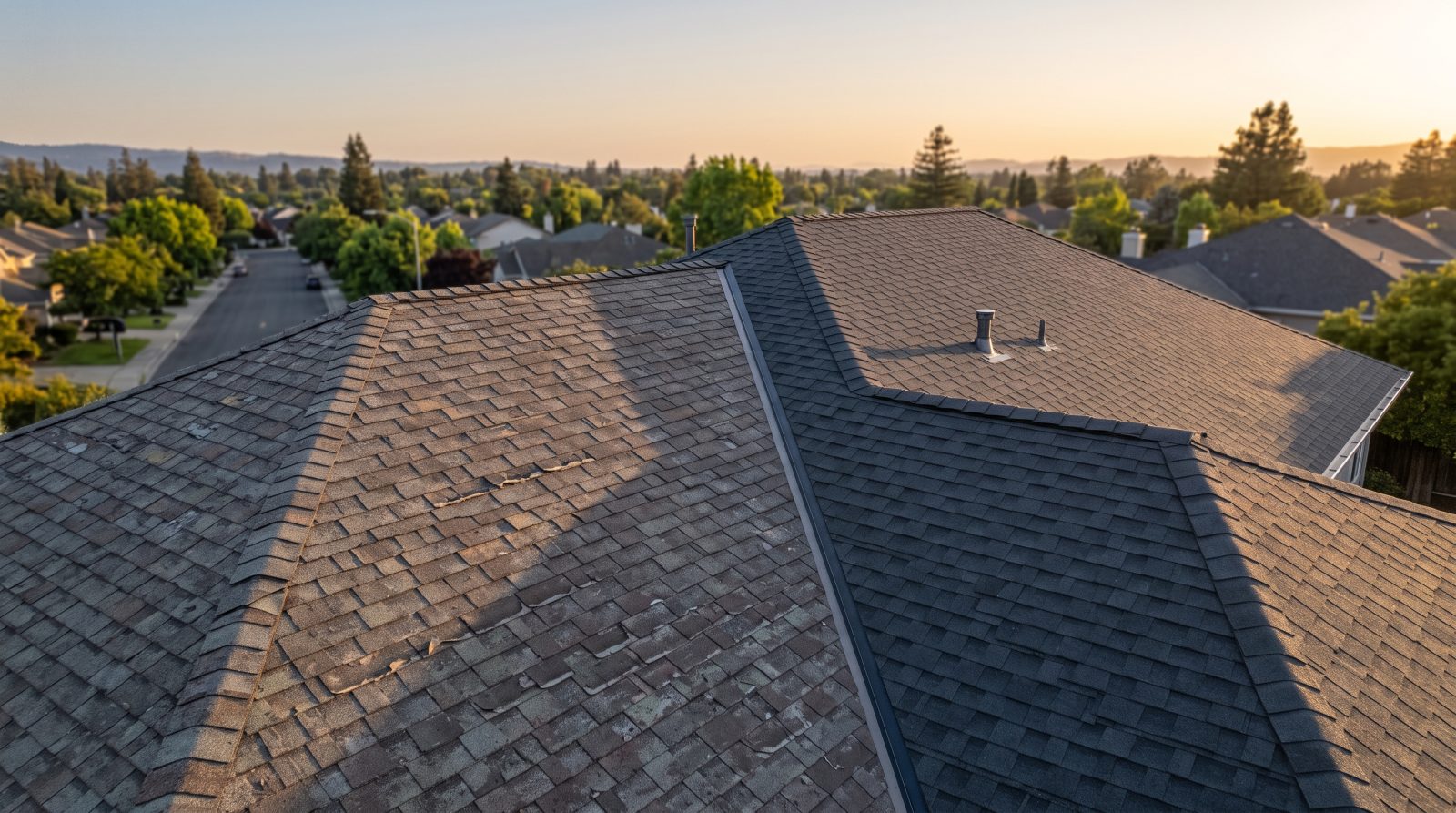
Repair or Replace? Being Honest About an Aging Roof
The most expensive roofing mistake isn't replacing too soon — it's patching a roof that's already past saving. Here's how to tell the difference before you spend.
The Question Behind the Question
Here's the uncomfortable truth most homeowners discover only after writing the check: the repair-or-replace decision is rarely about a single leak. It's about whether you're investing in a roof or just renting a little more time from one that's already on its way out. Spend smart, and a repair buys you years. Spend wrong, and you pour money into a surface that needs to come off entirely within a season or two.
The good news is that this isn't a guessing game. There's a real framework professionals use to make the call, and it's built on a few honest variables you can actually assess: how old the roof is relative to what it's made of, how the damage is distributed, and how many times you've already paid to fix the same problem. Get clear on those three things and the answer usually stops being a coin flip.
This post walks you through that framework the way a straight-shooting roofer would explain it at your kitchen table — not to scare you toward a replacement, and not to talk you out of one, but to help you spend your money where it actually does the most good.
Start With Age vs. Material Lifespan
Every roofing material has a working life — a window during which it does its job well and repairs make sense. Push past that window and you're maintaining something that's fundamentally tired, where one fix simply exposes the next weak spot. So the first move is always the same: figure out how old your roof is, then compare that to what it's made of.
Typical service-life ranges vary widely by climate, installation quality, ventilation, and maintenance, so treat these as general industry expectations rather than promises. As a rough guide, asphalt shingle roofs commonly last in the neighborhood of 15 to 30 years; architectural (dimensional) shingles tend toward the upper end of that. Metal roofing often runs several decades longer. Tile and slate can last generations when the underlayment and flashing beneath them are maintained. Wood shakes sit somewhere in the middle and demand more upkeep.
The practical rule: if your roof is in the first half to two-thirds of its expected life and the damage is isolated, repair is usually the rational choice. Once you're in the final stretch — say, an asphalt roof past the 20-year mark showing widespread wear — repairs start to feel like bailing water. You're not solving the problem; you're delaying the inevitable bill while it quietly grows.
- Don't know your roof's age? Check closing documents, permit records, or ask the previous owner — and look for a paper trail on prior re-roofs.
- Two layers of shingles is a red flag: it usually means the roof was covered over once already and a full tear-off is likely next.
- Climate matters. Intense sun, hail, freeze-thaw cycles, and coastal salt air all shorten real-world lifespan below the textbook range.
The 50% Rule: A Gut Check That Works
When the math gets murky, professionals lean on a simple sanity check often called the 50% rule. The idea: if the cost of repairs approaches roughly half the cost of a full replacement — or if more than about half the roof surface is compromised — replacement is usually the smarter long-term spend. Below that threshold, a targeted repair tends to win. Think of it as a rule of thumb, not a formula; the real numbers depend on your roof, your region, and the scope of the work.
It works because it forces you to weigh the repair against the thing it's competing with. A patch that costs a quarter of a new roof and buys you several more good years is a bargain. A patch that costs nearly as much as starting fresh, on a roof that's already aging, is throwing money at a problem you'll be revisiting soon — this time with the original repair cost already sunk.
The same logic applies to coverage area. Fixing one section of an otherwise sound roof is maintenance. But when damage is scattered across multiple slopes, around several penetrations, and along large stretches of flashing, you're no longer repairing a roof — you're reassembling one piece by piece, at a premium.
- Repair cost near half of replacement on an older roof → lean replace.
- Damage confined to one area on a roof with years of life left → lean repair.
- Always get the replacement number too, even when you think you only need a repair — you can't apply the 50% rule without both figures.
When Repeat Repairs Are Telling You Something
If you've called for the same leak twice, pay attention — that pattern is worth heeding. One repair is normal wear. A second visit to the same trouble spot, or a string of new leaks appearing in different places over a short stretch, usually means the underlying system is failing rather than a single component breaking. The fixes aren't wrong; the roof is simply running out of sound material to fix to.
There's a psychological trap here worth naming. Each individual repair feels affordable, so it's easy to keep saying yes — a little here, a little there. But add up two or three years of those calls and you've often spent a meaningful fraction of a replacement, with nothing durable to show for it and the original roof still aging underneath. Repairs are an expense; a sound new roof is an asset that travels with the home.
This is also where interior signs start mattering more than what's visible from the curb. Recurring water stains, a sagging deck, persistent attic moisture, or daylight visible through the roof boards point to problems that surface repairs won't reach. At that stage, more patching usually just hides the symptom while the deck and structure keep absorbing the damage.
- Same spot leaking twice → investigate the system, not just the shingle.
- Track your spending: tally repair invoices from the past 2-3 years against a replacement quote.
- Interior warning signs (sagging, recurring stains, attic moisture) escalate the case for replacement.
When Patching Genuinely Wastes Money
Some situations almost always favor replacement, no matter how tempting the cheaper fix looks today. Widespread granule loss on asphalt shingles — where the surface looks bald and grit is collecting in your gutters — signals the protective layer is gone across the whole roof, not just one patch. So does brittle, curling, or cracking across multiple slopes: that's the material itself breaking down, and a repair only highlights how much of the rest is right behind it.
Color-matching is another quiet money-waster. Shingles weather over time, so a repair on an older roof rarely blends in — you end up with a visible patch that signals 'aging roof' to buyers and appraisers alike. If you're planning to sell, a fresh roof often does more for value and buyer confidence than a string of mismatched repairs ever will.
And then there's the structure. Once moisture has reached the decking and rot has set in, surface repairs are cosmetic at best. You can replace shingles all day, but if the wood beneath them is compromised, you're building on a bad foundation. In these cases, the honest answer is that patching isn't saving you money — it's delaying a replacement that's quietly getting more expensive as the damage spreads. The kindest thing a roofer can tell you is to stop patching.
- Bald spots and gutters full of granules → the whole surface is spent.
- Curling, cracking, or brittle shingles across multiple slopes → systemic breakdown.
- Rotted or soft decking → repairs are cosmetic until the structure is addressed.
- Selling soon? A new roof usually beats visible patchwork on value and buyer confidence.
How to Make the Call With Confidence
Put it all together and a clear-eyed decision usually emerges. Walk through the three variables in order: Where is the roof in its lifespan? How is the damage distributed — isolated or spread out? And how many times have you already paid to fix it? When all three point the same direction, your answer is rarely ambiguous. It's the in-between cases — a mid-life roof with damage in two spots — where a thorough, honest inspection earns its keep.
That inspection matters because the most important variable is the one you can't see from the ground: the condition of the flashing, underlayment, and decking. A trustworthy assessment looks past the shingles to the system underneath and gives you both numbers — the cost to repair and the cost to replace — so you can actually apply the 50% rule instead of guessing. Be wary of anyone who quotes a replacement before they've genuinely looked, and equally wary of anyone who insists on patching a roof that's clearly at the end of the road.
You don't have to make this call alone or in the dark. The goal is simple: spend your money where it does the most good, with a clear picture of what you're actually buying — more time, or a roof you won't have to think about for a long while. If you're staring at an aging roof and you're honestly not sure which way to go, that's exactly when a second set of eyes pays for itself. Call (669) 259-2777 for a free roof assessment, and get both numbers in hand before you spend a dime.
- Newer roof + isolated damage + first-time fix → repair with confidence.
- Older roof + scattered damage + repeat repairs → replacement is the honest answer.
- Caught in the middle? A full inspection with both numbers (repair and replace) breaks the tie.
Frequently asked questions
How do I know how many years my roof has left?
Start with two facts: the roof's age and its material. Compare the age to the typical service-life range for that material (asphalt shingles commonly run roughly 15-30 years; metal, tile, and slate considerably longer), keeping in mind that climate, ventilation, and installation quality all shift the real number. A professional inspection sharpens the estimate by checking what you can't see from the ground — the flashing, underlayment, and decking — which often tell the real story about remaining life.
Is it ever worth repairing a roof that's near the end of its lifespan?
Sometimes — for example, a small, isolated repair to get safely through a season while you plan and budget for a full replacement can be reasonable. What rarely pays off is treating repeated repairs on an old roof as a long-term strategy. If the surface is broadly worn, the costs tend to stack up toward replacement money without giving you a durable result. The 50% rule is a useful gut check: when repair costs approach about half of replacement on an aging roof, replacement is usually the smarter spend.
Will a new roof actually add value when I sell?
A sound, recent roof typically supports value and buyer confidence because it removes a major unknown from the transaction — buyers and appraisers tend to view visible patchwork or an obviously aging roof as a looming expense. While the exact effect varies by market, home, and region, a fresh roof generally does more for a sale than a series of mismatched repairs. If you're selling soon, factor that into the repair-or-replace math.
Need roofing help? Get a free assessment.
Call now and get a straight answer about your roof — repair, replacement, or just peace of mind.
Call (669) 259-2777