
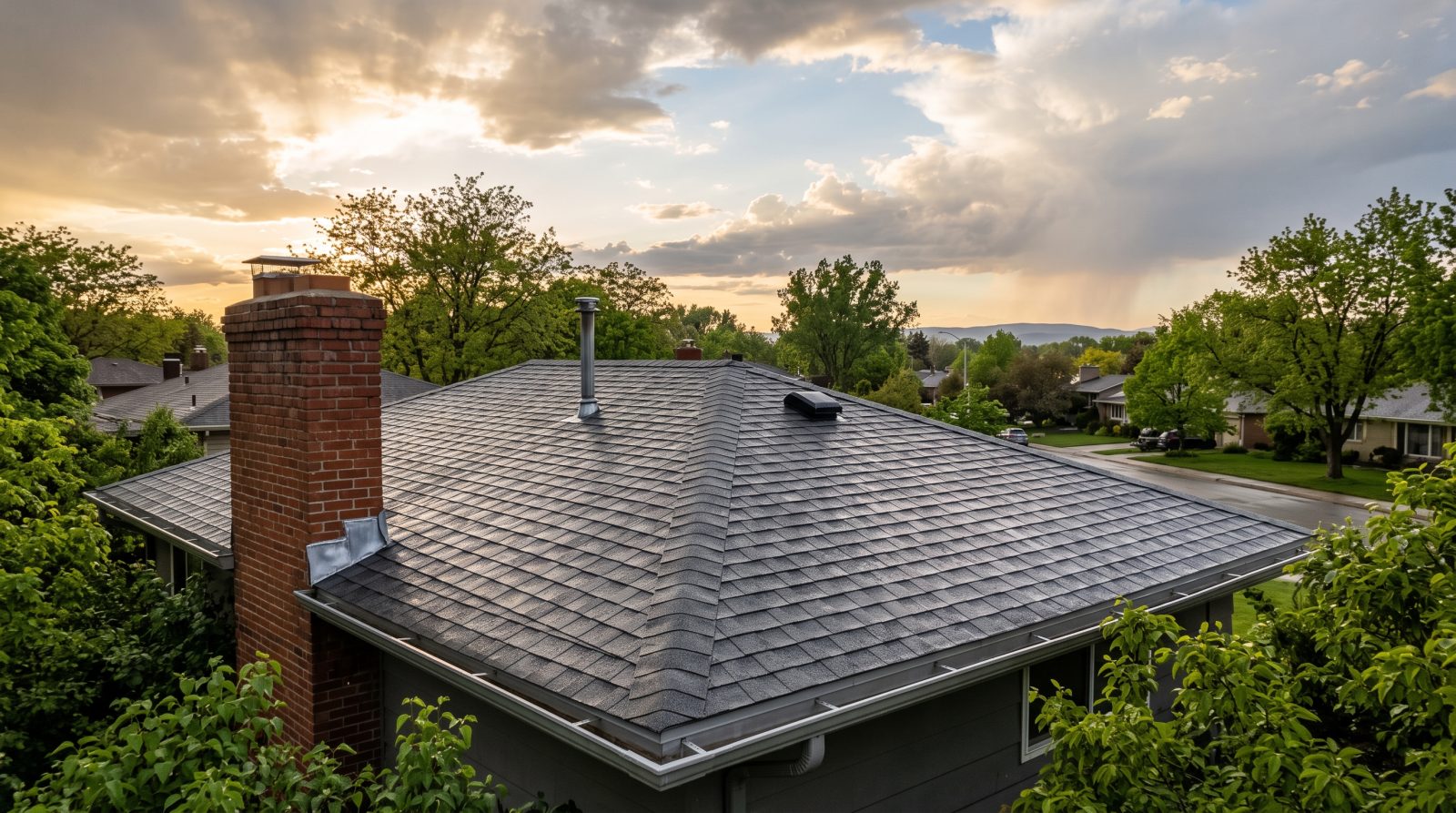
Storm Season Is Coming: A 10-Minute Roof Check That Can Save You Real Money
Before the next big storm rolls through, ten minutes with your own two eyes can catch the small problems that quietly grow into major repairs. Here's exactly what to look for.
Why Ten Minutes Beats a Surprise Leak
Here's the uncomfortable truth about roofs: they rarely fail all at once. A roof tends to give you warning signs for months, sometimes years, before water ever shows up on your ceiling. The problem is that almost nobody looks up until there's already a brown stain spreading across the drywall, and by then a small, cheap fix has often quietly become a bigger one.
That's the whole case for a seasonal self-check. You're not trying to do a roofer's job. You're trying to catch the early tells: the loose flashing, the lifted shingle, the clogged valley, the soft spot in the attic. Those are the things that, left alone through one rough storm season, can turn into rotted decking, soaked insulation, and interior damage that tends to cost far more to put right than the original repair would have.
Think of it like checking your tire pressure before a road trip. It takes a few minutes, it feels almost too simple, and it's the kind of small habit that can save you from being stranded at the worst possible moment. Do this once in spring and once in fall, plus a quick look after any serious storm, and you'll be well ahead of where most homeowners ever bother to be.
- Small issues tend to be cheap to fix; the water damage they cause usually isn't
- Many roof problems announce themselves early if you know where to look
- A twice-a-year rhythm plus a post-storm glance catches a lot of trouble early
The Ground Check: What You Can See Without a Ladder
You can learn a surprising amount about your roof while standing safely on the ground with your feet planted. Grab your phone for the zoom camera and walk the full perimeter of your home. Look at the roof from several angles, including across the street if you can, because distance often reveals sagging or unevenness that you'd miss up close.
Start with the shingles themselves. A healthy roof reads as a clean, uniform surface. What you're hunting for are the things that break that pattern: shingles that curl up at the edges or cup in the middle, shingles that look bald or shiny where the protective granules have worn off, and any spots that are flat-out missing. Dark streaks are often algae, which is usually cosmetic, but bare patches and missing pieces are doorways for water.
Then let your eye travel to the lines of the roof. The ridgeline along the top should look straight, not swaybacked. Any visible dip or wave can hint at a structural or decking issue underneath. Check around anything that pokes through the roof, chimneys, vents, skylights, because the metal flashing sealing those penetrations is one of the most common places leaks begin.
Finally, look down. Your gutters tell a story. A buildup of shingle granules that looks like coarse black sand can be a sign your shingles are aging and shedding their protective layer. Gutters pulling away from the house, sagging, or overflowing during rain put water exactly where you don't want it: against your fascia and foundation.
- Curling, cupping, bald, or missing shingles
- A sagging or wavy ridgeline instead of a straight line
- Damaged, lifted, or rusted flashing around chimneys, vents, and skylights
- Granule buildup in gutters, plus gutters that sag or overflow
- Any debris piled in roof valleys where two slopes meet
The Attic Check: Where Leaks Confess First
If the ground check is the outside story, the attic is the inside confession. Roofs often leak into the attic long before water reaches a finished ceiling, which means a five-minute look up there can buy you real warning time. Bring a bright flashlight, wear a dust mask if you have one, and step only on the joists, never the insulation between them.
The first thing to do is turn off your flashlight for a moment and look up. If you can see pinpoints of daylight coming through the roof deck, water can follow that same path. Then turn the light back on and scan the underside of the roof and the wood framing for dark stains, streaks, or discoloration. Water leaves tracks, and stained wood means moisture has been getting in, even if everything looks dry the day you check.
Use your senses beyond sight. A musty, damp smell is a classic sign of trapped moisture. Touch the insulation in a few spots; it should feel dry and fluffy, not flattened and damp. Look for any sign of mold or mildew on the rafters, and check that your attic vents aren't blocked, because poor ventilation traps heat and moisture that can slowly degrade the roof from the inside.
A good time to run an attic check is right after rain or during daylight, when leaks and light gaps are easiest to spot. If you find a fresh wet spot, place a bucket and note its location relative to the roof above so a professional can trace it quickly.
- Pinpoints of daylight showing through the roof deck
- Dark water stains or streaks on the underside of the deck and rafters
- A musty smell or visibly damp, matted insulation
- Mold or mildew on wood framing
- Blocked vents or signs of poor airflow
Before the Storm: Quick Wins That Lower Your Risk
A little prep before storm season tends to do more good than almost any repair you can make after. Most of it isn't glamorous, and most of it you can do yourself in an afternoon. The goal is simple: give wind and water as few easy targets as possible.
Clear your gutters and downspouts so heavy rain has somewhere to go instead of backing up under your shingles. Trim back any tree limbs that hang over or near the roof, since a single falling branch in high wind can do more damage in a second than years of weathering. Walk your yard and secure or store loose items, patio furniture, trampolines, anything that can become a projectile.
If your ground or attic check turned up something minor, this is the window to address it. A lifted shingle or a small gap in flashing is far easier and cheaper to handle on a calm, dry day than to discover mid-storm when water is already coming in. The whole idea of prepping early is that you get to choose the timing instead of the weather choosing it for you.
- Clean gutters and downspouts so water drains freely
- Trim overhanging and dead branches near the roofline
- Secure or store loose outdoor items that could become projectiles
- Address any minor issues you found while the weather is calm
After the Storm: The Walk-Around That Catches Hidden Damage
When the weather clears, resist the urge to assume you got lucky. Wind and hail damage is sneaky; a roof can look fine from the curb and still have lifted shingles, bruised spots, or compromised flashing that will leak the next time it rains. A careful post-storm walk-around is one of the higher-value ten minutes you'll spend all year.
Repeat your ground check, paying special attention to anything that's changed since the last time you looked. Scan the yard and around the base of the house for shingle pieces, granules washed into clumps, or chunks of flashing, because debris on the ground is often the first evidence of damage above. Check fences, gutters, and any soft metal surfaces for dents, which can indicate hail large enough to bruise your shingles too.
Then go back into the attic, ideally after the first rain following the storm, and look for any new stains, drips, or daylight that weren't there before. Document anything you find with photos and notes. If you suspect storm damage, a professional inspection is worth it, both to catch what you can't see and to have proper documentation if you decide to involve your insurance.
- Look for shingle pieces, granule clumps, or flashing on the ground
- Check gutters and soft metal for hail dents
- Re-check the attic after the next rain for new stains or drips
- Photograph and note any damage for your records
Know Your Limits: When to Stay Off the Roof and Call a Pro
Here's the part we'll be blunt about: this whole check is designed to be done from the ground and from inside your attic, on purpose. Climbing onto a roof, especially one that may be damaged, wet, or steep, is genuinely dangerous, and falls cause serious injuries. No granule check is worth a trip to the emergency room. If the only way to see something is to get on the roof, that's the signal to call someone who does this safely for a living.
Beyond safety, some findings simply call for a trained eye. Active leaks, daylight through the deck, sagging rooflines, widespread missing or damaged shingles, suspected hail or wind damage, and anything involving flashing around chimneys or skylights all benefit from a professional assessment. A pro can tell the difference between a quick repair and a sign of something larger, and can spot the subtle damage that's easy to miss from below.
The smart play is to treat your self-check as triage, not diagnosis. You're identifying what deserves a closer look, then handing the risky climbing and the expert judgment to people equipped for both. That division of labor is exactly how you protect your home without putting yourself in harm's way.
- Any active leak or water actively entering the home
- Daylight visible through the roof deck or a sagging roofline
- Widespread missing or damaged shingles, or suspected hail and wind damage
- Flashing problems around chimneys, vents, or skylights
- Anything that would require you to climb onto the roof to inspect
Frequently asked questions
How often should I check my roof?
A good rhythm is twice a year, once in spring and once in fall, plus a quick walk-around and attic look after any major storm. That cadence catches most issues while they're still small and inexpensive to address.
Can I do this whole check without getting on the roof?
Yes, and that's the point. Everything in this guide is designed to be done safely from the ground with your eyes and phone camera, and from inside your attic. If something can only be seen by climbing onto the roof, that's your cue to call a professional rather than risk a fall.
I found a small problem. Should I fix it myself or call someone?
Simple, ground-level tasks like clearing gutters or trimming branches are reasonable to handle yourself. But anything involving climbing, flashing, active leaks, or possible structural sagging is worth a professional inspection. Repair costs vary widely by region, materials, roof size, and scope, so a pro assessment is the best way to understand what you're actually dealing with.
Need roofing help? Get a free assessment.
Call now and get a straight answer about your roof — repair, replacement, or just peace of mind.
Call (669) 259-2777