
Roof Insurance Adjuster Visit Checklist for Homeowners
A roof claim isn't won at the kitchen table — it's won on the documentation. Here's how adjusters tend to think, and how to walk into the inspection already two steps ahead.
The Inspection Starts Before the Adjuster Climbs the Ladder
Here's something a lot of homeowners never realize: by the time an insurance adjuster pulls up to your house, they've often already formed half an opinion. They've typically looked at weather data for your area on the date of loss, pulled satellite or aerial imagery of your roof, reviewed your policy's coverage terms, and noted how old the roof is. The on-site inspection usually isn't where the claim begins — it's where they confirm or kill the story your claim already told.
That matters because it reframes the whole game. You're not trying to convince a stranger that your roof is damaged in 30 minutes on the lawn. You're trying to make the physical evidence match a clear, dated, weather-linked event so the adjuster can comfortably say 'yes, this is covered.' Adjusters are people working a queue of claims, and the cleanest, best-documented claim is usually the one that moves smoothly. Ambiguity is what tends to get a claim delayed, kicked upstairs, or denied.
So the real question isn't 'will they find damage?' It's 'will the damage they find clearly point to a sudden, covered event rather than slow wear-and-tear?' Everything that follows in this post comes back to that single distinction.
- Date of loss tied to a real, verifiable weather event in your area
- Damage that reads as sudden and accidental, not gradual deterioration
- Roof condition and age consistent with the claimed cause
- A clear, consistent story from first report through final inspection
What an Adjuster Is Actually Looking At on the Roof
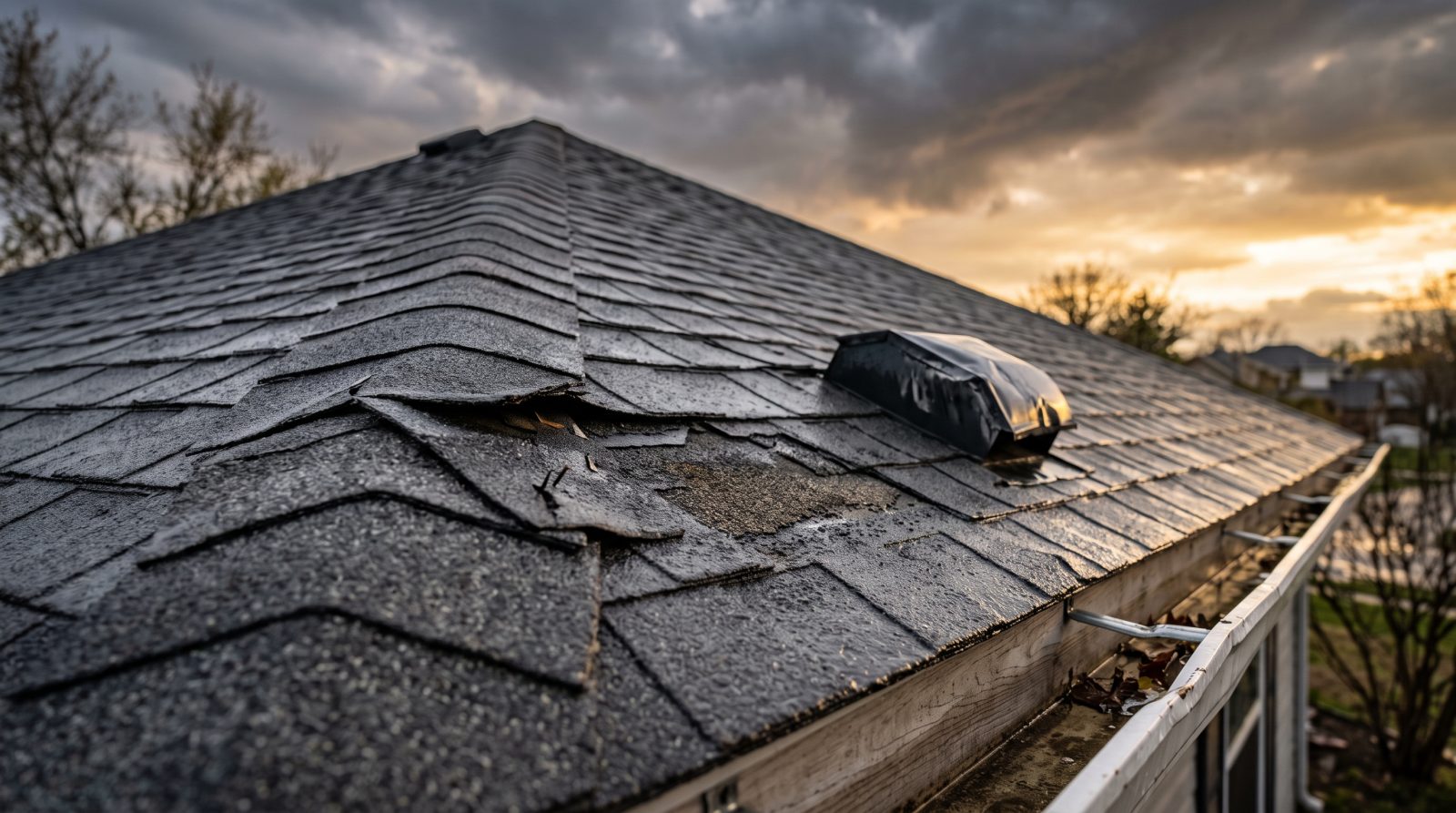
When an adjuster gets up top, they're generally not eyeballing your roof for 'is it bad.' They're looking for specific, recognizable signatures of covered damage — and, just as importantly, for evidence that rules covered damage out. On an asphalt shingle roof after a hail event, for example, they're often hunting for bruised or fractured shingles where the protective granules have been knocked loose and the soft mat underneath is exposed. Many will run a chalk grid on a test square and count hits within it to gauge whether the damage is widespread or isolated.
Wind claims look different. There they're typically checking for creased, lifted, torn, or fully missing shingles, exposed nail heads, and damage that follows the direction a storm would have driven it. They also inspect the 'soft' parts of the roof system that take damage first and tend to tell the truth fastest: metal vents, ridge caps, flashing, gutters, and any soft metal that dents predictably under hail. A roof can look fine from the ground while the vents and gutters are quietly documenting exactly what hit it.
What tends to work against you is anything that reads as maintenance instead of event. A core part of the job is separating storm damage from ordinary aging, and that line is where most disputes live. Curling from age, granule loss from a roof simply getting old, prior unrepaired damage, mismatched patch jobs, and signs of poor original installation can all push a claim toward 'this isn't a sudden covered loss.' If wear and a storm both touched your roof, the adjuster's job becomes deciding which one is really responsible — and you want the evidence pointing the right way.
- Hail: bruised/fractured shingles, granule loss exposing the mat, dents in soft metals
- Wind: creased, lifted, torn, or missing shingles and exposed fasteners
- Collateral clues: dented vents, gutters, flashing, and downspouts
- Red flags against you: age-related curling, prior damage, sloppy past repairs
The Documentation That Quietly Wins Claims
If there's one thing that tends to separate approved claims from denied ones, it's documentation — and the strongest documentation usually exists before the adjuster ever arrives. An ideal position to be in is having clear, dated photos of the roof in good condition from before the storm, then dated photos of the damage immediately after. That single before-and-after pairing does more to push back on a 'pre-existing wear' argument than almost anything you can say out loud.
After a loss, document everything as if you'll need to prove it to a skeptic, because you might. Take wide shots that establish the whole roof and tight shots that show individual damaged shingles, dented vents, and torn flashing. Capture interior damage too — water stains on ceilings, wet insulation, damaged drywall — because that's often what connects the roof to the claim value. Keep receipts for any emergency measures you took, like tarping, since reasonable steps to prevent further damage are typically something a policy expects of you. Save the original report, every email, and a log of who you spoke with and when.
This is also where having your own roofing professional present can pay off. An adjuster represents the insurance company's interpretation of the loss; an independent roofer documents the roof's condition separately and speaks the same technical language. When both inspect together and agree on what they're seeing, the claim tends to move faster with less back-and-forth. When they disagree, you at least have a second, expert record rather than just your word against the file. A free roof assessment before you ever file can help you understand whether you even have a real claim worth pursuing.
- Before-and-after dated photos that pre-empt the 'old roof' argument
- Wide and close-up shots of every damaged area, plus interior water damage
- Receipts for emergency repairs and temporary protection like tarping
- An independent professional inspection alongside the adjuster's visit
Why Claims Get Denied — and How to Stay Off That List
Most denials aren't dramatic, and they rarely come down to anyone accusing you of anything. They tend to trace back to a few quiet, recurring reasons that are largely avoidable if you know them in advance. One of the most common is the wear-and-tear ruling: the adjuster decides the damage is the result of normal aging or deferred maintenance, neither of which standard policies typically cover. Another is the deductible problem — if the cost to repair the covered damage comes in at or below your deductible, there's simply nothing for the insurer to pay, so the claim can close with no benefit even though the damage is real.
Other denials trace back to timing and paperwork. Many policies expect you to report a loss within a reasonable window, and waiting too long can let the insurer argue the damage worsened from neglect or can no longer be tied to a specific event. Exclusions matter too — some perils or specific roof situations may be limited or carved out of your particular policy, which is why reading your actual coverage beats assuming. And then there's the storm-chaser pattern worth describing generically: out-of-area crews that sweep in after big storms, knock on doors, urge you to file fast, and in some cases inflate or even create damage. That kind of work can taint an otherwise valid claim and leave you exposed long after they've moved on.
Staying off the denial list is mostly about discipline. File promptly, document thoroughly, understand your own policy's deductible and exclusions before you call, and work with established, reputable professionals rather than whoever showed up uninvited. A claim that's clean, timely, and well-evidenced gives the adjuster every reason to say yes.
- Wear-and-tear: damage ruled as aging or deferred maintenance
- Damage below your deductible, leaving nothing payable
- Late reporting that breaks the tie to a specific covered event
- Policy exclusions you didn't know applied to your roof
- Tainted claims from transient, pressure-driven door-knockers
ACV vs. RCV: The Most Important Words in Your Policy
Two acronyms tend to decide how much money actually reaches your pocket, and many homeowners don't learn the difference until a check arrives smaller than they expected. ACV stands for Actual Cash Value: the cost to replace your roof minus depreciation for its age and condition. RCV stands for Replacement Cost Value: what it actually costs today to replace what was damaged, with like materials and quality, no depreciation subtracted. The gap between those two numbers, on an older roof, can be substantial.
Here's how an RCV policy commonly pays in practice, and it surprises people: the insurer often first issues the ACV amount — the depreciated value — and holds back the rest, called recoverable depreciation. You typically receive that second portion only after the work is completed and you submit proof, usually the final invoice. That structure exists to help ensure the money goes into an actual roof rather than into something else, but it means you need to understand the two-payment rhythm so the holdback doesn't catch you off guard. With a pure ACV policy, there is generally no second check; the depreciation is simply gone, and you cover the difference yourself.
Because of this, two homeowners with visually identical roof damage can have very different out-of-pocket costs purely based on which coverage they bought. It's worth finding out which one you have before a storm, not after. If your roof is older and you're carrying ACV coverage, you may be more exposed than you assume — and that's a conversation to have with your agent at renewal, not in the middle of a claim.
- ACV: replacement cost minus depreciation — you absorb the age penalty
- RCV: full replacement cost; depreciation is recoverable after work is done
- RCV often pays in two parts: ACV up front, the rest on completion
- Check which you carry before storm season, ideally at renewal
How to Walk Into the Inspection Already Ahead
By the time an adjuster is scheduled, the homeowners who tend to fare best have done their homework. They've read their declarations page and know their deductible, their coverage type, and any roof-specific limitations. They've gathered their before-and-after photos and the date the damage occurred. They've had an independent professional look at the roof so they walk in knowing what's actually there rather than hoping for the best. None of this is about gaming the system — it's about making a legitimate claim legible and hard to misread.
On inspection day, be present, be calm, and be factual. Point out the damage you've documented, including the easy-to-miss collateral like dented vents and torn flashing, but don't exaggerate or speculate about cause — let the evidence carry it. If your roofer can be there to inspect alongside the adjuster, that side-by-side review is one of the more effective things you can arrange, because two professionals agreeing on the same physical facts removes a lot of room for dispute. If you disagree with the adjuster's findings, you generally have the right to ask for a re-inspection or to escalate, and a documented second opinion is what makes that productive.
The throughline of this entire post is simple: clarity helps. A sudden, covered event, tied to a real date, backed by clean photos and an independent professional record, gives an adjuster an easy yes. The homeowners who struggle are usually the ones who filed late, documented little, and showed up hoping the adjuster would connect dots they never laid out. Don't be that homeowner — lay the dots out for them.
- Know your deductible, coverage type, and any roof limits going in
- Have before/after photos and the date of loss ready
- Get an independent inspection so you know your roof's true condition
- Arrange a side-by-side review with your roofer if possible
- Stay factual; you can request re-inspection if you disagree
Frequently asked questions
Should I file a roof claim before or after getting it inspected?
Get it inspected first whenever you can. A professional assessment can tell you whether you actually have storm or accidental damage worth claiming, roughly how the cost compares to your deductible, and what the real condition of your roof is. Filing blind risks opening a claim that gets denied as wear-and-tear or comes in under your deductible, leaving you with a claim on record and nothing to show for it. Call (669) 259-2777 for a free roof assessment before you decide.
What's the difference between ACV and RCV, and how do I know which I have?
ACV (Actual Cash Value) pays replacement cost minus depreciation for your roof's age, so you absorb that loss yourself. RCV (Replacement Cost Value) pays the full cost to replace what was damaged, though it often comes in two parts — the depreciated amount up front and the recoverable depreciation after the work is finished and documented. Your declarations page or your insurance agent can tell you which you carry. It's worth confirming before storm season rather than discovering it mid-claim.
Why would an adjuster deny a claim when there's clearly damage on my roof?
Real damage isn't the same as covered damage. Common reasons include the adjuster attributing the damage to age or deferred maintenance rather than a sudden event, the repair cost falling below your deductible, the loss being reported too late to tie to a specific storm, or a policy exclusion applying. Clean before-and-after documentation, prompt reporting, and an independent professional inspection are among the best ways to keep a legitimate claim from being misread.
Need roofing help? Get a free assessment.
Call now and get a straight answer about your roof — repair, replacement, or just peace of mind.
Call (669) 259-2777